

AI Chatbot or AI Agent: Which Fits Customer Service Operations?
Compare AI chatbots and AI agents for customer service. Explore their differences, benefits, costs, use cases, and how to choose the right solution.
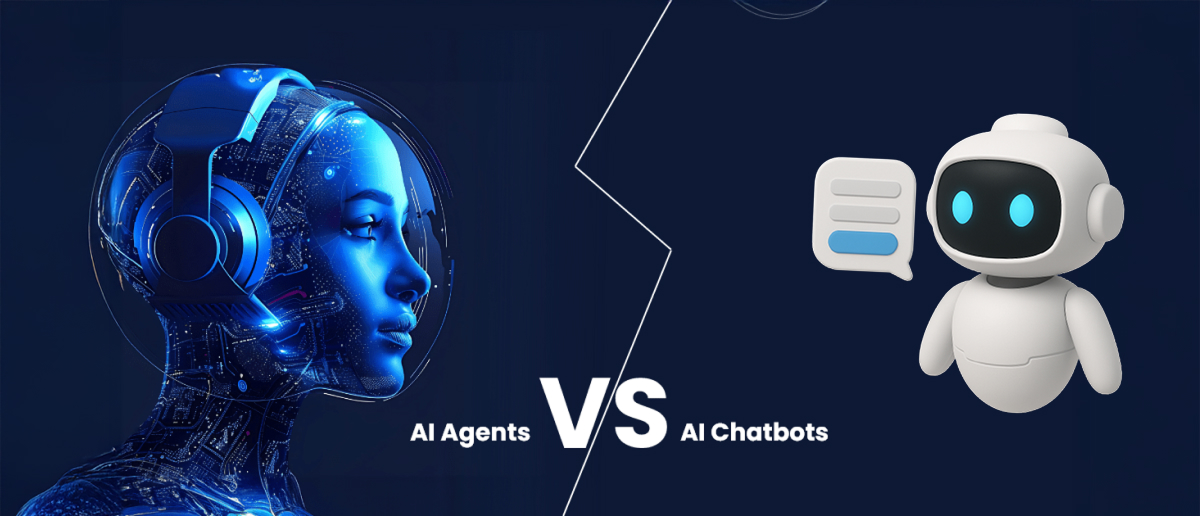
Customer service has moved beyond answering questions and resolving complaints manually. Businesses now use artificial intelligence to manage customer inquiries, reduce response times, and improve support efficiency.
However, choosing between an AI chatbot and an AI agent is not always straightforward. Both technologies can automate customer interactions, but their capabilities, operational requirements, and levels of autonomy differ.
An AI chatbot primarily helps customers find information and complete defined interactions. An AI agent can go further by investigating problems, making decisions within approved limits, and executing tasks across connected business systems.
Understanding these differences helps businesses invest in technology that solves actual customer service challenges rather than adding unnecessary complexity.
TL;DR: AI chatbots are generally suitable for FAQs, routine inquiries, and guided support. AI agents are better suited to complex, multi-step service workflows requiring decisions and system actions. Many businesses benefit from combining both.
What Is an AI Chatbot in Customer Service?
An AI chatbot is a conversational application that communicates with customers through text or voice. It uses natural language processing, machine learning, or large language models to understand questions and generate relevant responses.
Unlike traditional rule-based chatbots, modern AI chatbots can interpret different ways of asking the same question, retrieve information from knowledge bases, and maintain conversational context.
Common customer service applications include answering product questions, explaining refund policies, providing shipping information, and collecting support requests.
A chatbot can also perform predefined actions when integrated with business systems. However, its responsibilities are usually limited to specific conversational flows or approved tasks.
What Is an AI Agent in Customer Service?
An AI agent is a goal-oriented system capable of reasoning through problems, selecting appropriate tools, and taking actions to achieve a defined outcome.
Instead of only explaining how to resolve an issue, an AI agent may complete parts of the resolution process.
For example, when a customer reports a missing delivery, an AI agent could check order records, review tracking information, verify eligibility for a replacement, and create a support case.
Its actions depend on available integrations, permissions, and business rules.
The defining difference is not conversational intelligence alone. It is the ability to coordinate actions toward completing a customer service task.
AI Chatbot vs AI Agent: Key Differences
| Comparison | AI Chatbot | AI Agent |
|---|---|---|
| Primary purpose | Answer and guide | Investigate and resolve |
| Decision-making | Usually limited or predefined | Context-based within controls |
| Task complexity | Simple to moderate | Moderate to complex |
| System integration | Optional or task-specific | Often central to execution |
| Autonomy | Generally lower | Configurable, potentially higher |
| Implementation | Usually simpler | Often more complex |
| Ideal applications | FAQs and routine support | Multi-step service resolution |
These categories can overlap. A sophisticated chatbot may initiate transactions, while an AI agent can operate through a conversational chatbot interface.
The most useful distinction is the complexity of the work each system is authorized to perform.
4. When Is an AI Chatbot the Better Choice?
AI chatbots are particularly effective when customer questions are repetitive, answers are well documented, and resolution requires little investigation.
For example, an online retailer receiving hundreds of questions about delivery timelines or return policies may not need an autonomous agent.
A chatbot connected to an updated knowledge base can answer these questions consistently and remain available outside business hours.
Chatbots also suit businesses introducing AI into customer support for the first time. Their narrower scope makes testing, maintaining, and controlling responses more manageable.
However, chatbot effectiveness depends on accurate knowledge sources, clear escalation rules, and the ability to recognize unsupported questions.
5. When Should Businesses Consider AI Agents?
AI agents become valuable when resolving customer requests requires several connected actions rather than a single answer.
Consider a subscription customer who has been charged incorrectly.
A chatbot might explain billing policies or provide instructions for contacting support. An AI agent could retrieve billing records, compare subscription details, identify a possible discrepancy, and prepare a correction.
With appropriate authorization, it could also execute an approved adjustment.
This approach is useful for billing investigations, account updates, service scheduling, order exceptions, and complex ticket management.
However, not every customer service process needs agent-level autonomy. Predictable workflows can often be handled more reliably through conventional automation.
How Do AI Chatbots and AI Agents Affect Customer Experience?
Customers generally care more about resolving their problems than understanding which technology handles their requests.
A chatbot can improve accessibility by providing immediate answers without requiring customers to navigate documentation or wait in a support queue.
An AI agent may improve resolution by reducing the number of manual steps involved in complex service requests.
However, greater automation does not automatically produce better experiences.
Incorrect decisions, repeated questions, unnecessary system actions, and difficult escalation processes can damage customer trust.
Both technologies should preserve conversation context when transferring cases to human representatives, preventing customers from having to repeat information.
What Role Does System Integration Play?
Integration determines how much practical value either technology can deliver.
A chatbot connected only to static documentation may provide general guidance but cannot reliably answer questions requiring live account information.
Connecting it to approved APIs enables more personalized responses.
AI agents typically require deeper integration with systems such as CRM platforms, payment services, inventory databases, and ticket management tools.
An ai software development company can help businesses evaluate these integrations, design controlled workflows, and determine which tasks genuinely require AI-driven decisions.
The objective should be reliable service execution, not connecting an AI system to every available application.
What Are the Security and Privacy Considerations?
Customer service systems frequently process personal information, account details, and financial records.
Both chatbots and agents require appropriate data protection. AI agents introduce additional risks when they can modify records or initiate transactions.
According to OWASP's AI Agent Security guidance, important safeguards include least-privilege access, input validation, monitoring, and human approval for high-risk actions.
For example, an agent might be allowed to check refund eligibility independently but require approval before issuing a high-value refund.
Businesses should also maintain audit logs, verify customer authorization, protect sensitive information, and test for prompt injection vulnerabilities.
Human oversight remains essential for sensitive or irreversible decisions.
How Do Development and Operational Costs Compare?
AI chatbots generally have lower implementation complexity when they handle limited support scenarios using existing knowledge sources.
Costs typically include conversational design, AI model usage, knowledge retrieval, integration, testing, and ongoing content maintenance.
AI agents may require additional investment in workflow orchestration, API permissions, monitoring, security controls, and recovery mechanisms.
Their operating costs can also increase when each request triggers multiple model calls and external system actions.
However, comparing initial development expenses alone can be misleading.
A more useful calculation considers the cost per successfully resolved customer issue, including human involvement, infrastructure expenses, and error correction.
How Should Businesses Measure Customer Service AI Performance?
Traditional chatbot performance is often measured through response speed and automated conversation volume.
These indicators are useful but do not necessarily show whether customers received satisfactory resolutions.
A stronger evaluation framework considers:
-
First-contact resolution: How many issues are resolved without repeat interactions?
-
Customer satisfaction: Are customers satisfied with the support experience?
-
Escalation quality: Are complex cases transferred with sufficient context?
-
Resolution accuracy: Are answers and completed actions correct?
-
Cost per resolution: Is automation reducing the overall cost of delivering effective support?
For AI agents, businesses should additionally track unauthorized action attempts, workflow failures, and cases requiring correction.
These measurements connect automation performance to real operational outcomes.
Can AI Chatbots and AI Agents Work Together?
Yes. A hybrid approach is often more practical than treating chatbots and agents as competing technologies.
A chatbot can serve as the initial customer-facing interface, identifying requests, collecting necessary details, and answering straightforward questions.
When a request requires additional investigation, the system can transfer it to an AI agent operating within defined permissions.
For example, a chatbot might answer a delivery question immediately. If the customer reports an unresolved shipping problem, an AI agent could investigate the order and create an appropriate service request.
Human representatives would continue handling sensitive exceptions, disputes, and situations requiring judgment.
This arrangement balances efficiency, automation, and accountability.
How Can Businesses Choose the Right Solution?
The selection process should begin with customer service requirements rather than technology trends.
Businesses should examine their most frequent support inquiries, identify where customers experience delays, and determine which tasks require access to operational systems.
If most requests involve retrieving information, a well-designed AI chatbot may be sufficient.
If employees repeatedly move between applications to investigate and resolve cases, AI agents may offer greater operational value.
Working with an experienced ai software development company can help establish realistic requirements, assess technical feasibility, and implement a phased solution.
Starting with a limited pilot allows businesses to measure outcomes before expanding automation across additional support workflows.
Conclusion
The choice between an AI chatbot and an AI agent depends on the nature of customer requests, operational complexity, and the level of automation a business can safely support.
AI chatbots are effective for conversational assistance and routine service needs. AI agents offer greater potential for completing complex, multi-step workflows.
For many customer service operations, the strongest approach combines chatbot accessibility, agent-driven workflow execution, and human expertise.
Ultimately, successful customer service automation is not about deploying the most advanced AI technology. It is about resolving customer problems accurately, securely, and efficiently.
Slash Software is a trusted custom software development and digital solutions company that transforms complex ideas into scalable, secure, and future-ready products. From custom web and mobile applications to enterprise systems, AI solutions, and seamless system integrations, Slash Software delivers results, not just code. With transparent communication, agile workflows, and a focus on user-centered design, we help businesses grow with confidence and real-world impact. Visit:https://slash.software/














Comments (0)