How AR and VR Solutions Transforming the Way Businesses Create Experiences
 mages-institute
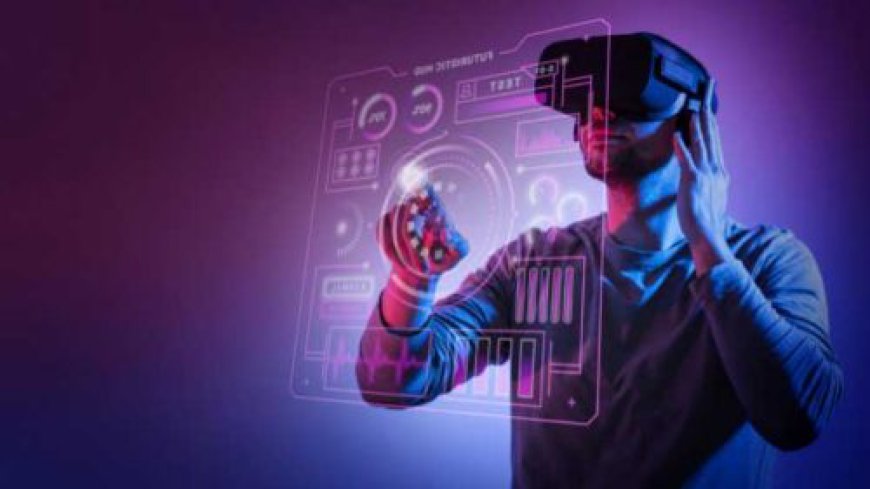
Digital technology is no longer limited to screens and interfaces. Today, businesses are creating immersive environments where users can interact with digital content in entirely new ways.
AR and VR solutions are at the center of this transformation, allowing organizations to blend the physical and digital worlds to create more engaging experiences.
Augmented Reality (AR) overlays digital elements onto the real world, while Virtual Reality (VR) places users inside fully simulated environments.
Together, these technologies are reshaping industries across gaming and entertainment, education, healthcare, and retail.
The Growing Impact of AR and VR Technologies
Immersive technologies are expanding rapidly as businesses look for innovative ways to engage customers and improve training and simulation processes.
Recent industry insights highlight the scale of growth:
• The global AR and VR market is projected to reach over $450 billion by 2030
• More than 171 million people worldwide currently use VR technology
• Companies using VR training have reported up to 40% faster learning compared to traditional classroom training
These numbers demonstrate how immersive technologies are becoming a major part of the digital economy.
Real-World Examples of AR and VR Solutions
AR and VR technologies are already being used by leading companies and organizations to enhance user experiences.
• IKEA Place App allows customers to visualize furniture in their homes using AR before purchasing
• Pokémon GO brought augmented reality gaming into the mainstream with millions of global players
• VR training simulations are used by companies like Walmart to train employees in realistic scenarios
• Medical institutions use VR environments to train surgeons and medical students
These examples show how immersive technologies are being applied far beyond entertainment.
How AR and VR Solutions Benefit Businesses
Organizations are adopting AR and VR solutions because they offer interactive experiences that traditional digital platforms cannot.
Key advantages include:
• Enhanced user engagement through immersive experiences
• Improved training and simulation environments for employees
• Better product visualization for customers before purchasing
• Interactive learning experiences in education and professional training
• Innovative marketing campaigns that attract attention and increase brand recall
As businesses compete for user attention, immersive experiences are becoming a powerful differentiator.
Skills Behind AR and VR Development
Developing AR and VR solutions requires a blend of creative design and technical development. Professionals working in this field typically develop expertise in areas such as:
• 3D modeling and environment design
• Interactive experience design
• Game engines used for immersive development
• Programming for interactive applications
• User experience design for immersive environments
These skills allow developers and designers to build virtual environments that feel realistic and engaging.
The Future of Immersive Technology
The future of AR and VR extends far beyond gaming. As hardware becomes more accessible and technology improves, immersive solutions are expected to transform industries such as education, architecture, healthcare, tourism, and remote collaboration.
Businesses are increasingly investing in immersive technology to create experiences that go beyond traditional digital interfaces.
At MAGES Institute, students interested in immersive technology explore the creative and technical foundations for developing AR and VR experiences. Through hands-on learning and project-based training, aspiring developers and designers gain exposure to the tools and techniques used to build interactive virtual environments.
Because the future of digital interaction is not just about what users see on a screen, but about the worlds they can step into and experience.