How BIM Clash Detection Improves Design Coordination and Reduces Errors?
Learn how BIM Clash Detection improves design coordination, detects conflicts early, reduces project errors, and supports smoother, more efficient construction workflows.
 oliviagray
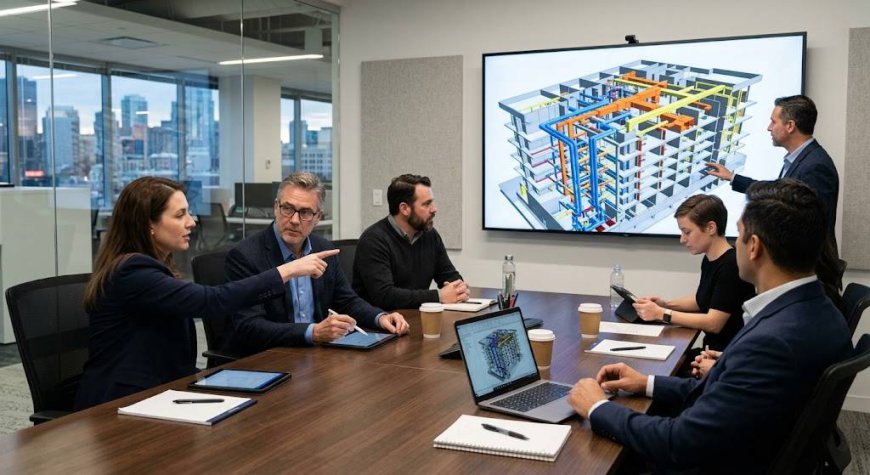
Design errors that surface during construction rank among the costliest problems a project can face. A duct routed without checking a structural beam, a sprinkler line crossing a steel connection, or an electrical panel placed behind ductwork all trace back to the same root cause, which is weak coordination between design disciplines before drawings ever reach the field. BIM clash detection & Coordination solves this by giving architects, engineers, and contractors a shared three dimensional model where conflicts can be identified and resolved long before construction begins.
This article examines how clash detection strengthens design coordination, why it prevents so many field errors, and what role it plays for general contractors, MEP contractors, and project teams working on construction projects across the United States.
The Real Cost of Coordination Errors in Design
When design disciplines work in isolation, even experienced teams miss conflicts. An architect finalizes ceiling heights, a structural engineer sets beam depths, and an MEP engineer routes ductwork and piping, often without a reliable way to confirm that all three fit together in the same physical space. Errors that go unnoticed during design review surface later as field conflicts, and by that stage the cost of correction has multiplied many times over.
A misaligned duct caught on a drawing review costs a few minutes of redesign. The same conflict discovered onsite after the duct has been fabricated and partially installed can cost days of labor, material waste, and a formal change order. The earlier a conflict is found, the less it costs to fix, which is the central reason coordination quality during design has such a direct effect on project budgets.
From Isolated Drawings to a Federated Design Model
Clash detection works by combining architectural, structural, and MEP models into a single federated model rather than reviewing separate 2D drawing sets side by side. This gives every discipline a common spatial reference, removing the guesswork involved in manually cross checking sheets. Professional BIM Clash Detection Services manage this federated model and run automated checks across disciplines at defined points throughout design development.
As explained in the Wikipedia overview of Building Information Modeling, one of the defining advantages of working in a shared digital model is the ability to detect interferences between building systems before construction, since all disciplines contribute to and reference the same coordinated dataset rather than separate, disconnected drawings.
How Automated Clash Checks Catch What Manual Review Misses
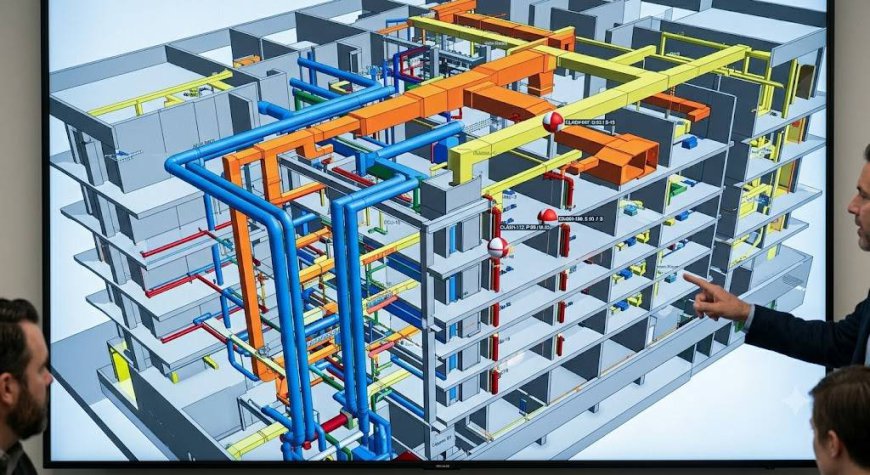
Clash detection software scans the combined model and flags every location where two elements physically overlap, along with near misses that may not leave enough clearance for insulation, access panels, or routine maintenance. This level of scrutiny is difficult to replicate manually, particularly in congested zones such as mechanical rooms, ceiling plenums, and vertical shafts where dozens of systems compete for the same limited space.
Because the checks are automated and repeatable, teams can rerun clash detection every time a discipline updates its model, catching new conflicts introduced by late design changes rather than discovering them only at the final review.
Strengthening MEP Coordination Through Early Detection
Mechanical, electrical, and plumbing systems are usually the most spatially demanding part of any building, and they are also the systems most likely to conflict with structural elements and with each other. Dedicated MEP Coordination Services bring ductwork, piping, conduit, and structural models together early in the design process, resolving routing conflicts and confirming that ceiling cavities and equipment rooms have adequate space before construction documents are finalized.
This early resolution also benefits fabrication. MEP contractors working from a model that has already been checked against architectural and structural elements can proceed with shop drawings and prefabrication with far more confidence that field dimensions will match what was modeled.
The General Contractor's Role in Managing Design Coordination
General contractors sit at the center of the coordination process, since they typically bring design consultants and trade contractors into a single, shared workflow. BIM for General Contractors includes setting clash detection schedules, defining model standards for each discipline, and making sure flagged conflicts are tracked through to resolution rather than left open in a report that nobody revisits.
This responsibility becomes especially important during the shift from design development to construction documents, when the cost of an unresolved conflict starts climbing quickly. General contractors who treat coordination as a continuous process throughout design, rather than a single review near the end, consistently report fewer surprises once construction begins.
Measurable Outcomes Once Errors Are Caught Early
Reducing the number of design conflicts that reach the field has effects that show up throughout the project. Change orders tied to spatial conflicts drop, since most issues are caught before construction documents are issued. Field productivity rises, since trade crews are not pausing work to resolve unexpected interferences. Schedule reliability improves as well, since unplanned rework caused by design error is one of the more common sources of delay on active job sites.
Project teams working with experienced Clash Detection & Coordination Services have a structured way to manage this process, which matters most on projects involving multiple design consultants and trade contractors who all need a shared platform to coordinate against.
Building a Reliable Coordination Workflow
Project teams looking to strengthen design coordination through clash detection should consider the following practices.
-
Begin clash checks early in design. Running detection during schematic design and design development catches conflicts before they become locked into construction documents.
-
Set shared model standards across disciplines. Agreeing on coordinate systems, level of detail, and exchange formats ahead of time prevents models from misaligning when combined.
-
Hold recurring coordination reviews. Regular review meetings keep the design team aligned and stop unresolved clashes from piling up late in the schedule.
-
Track every clash through to resolution. A clash report only adds value when each conflict is assigned an owner, resolved, and verified rather than simply logged.
Conclusion
Design coordination errors are among the most preventable sources of cost and delay in construction, yet they remain common on projects that depend solely on manual drawing review. BIM clash detection closes this gap by giving architects, engineers, MEP contractors, and general contractors a shared model where conflicts surface and get resolved during design rather than in the field. For project teams across the United States construction industry, this shift leads directly to fewer errors, more dependable fabrication, and projects that move from design into construction with far greater confidence.