How Peptide COA Transparency Is Changing Research Procurement in the U.S.
Learn how peptide COA transparency helps U.S. labs verify batches, assess suppliers, reduce purchasing risks, and maintain dependable research records.
 vbpeptiddes
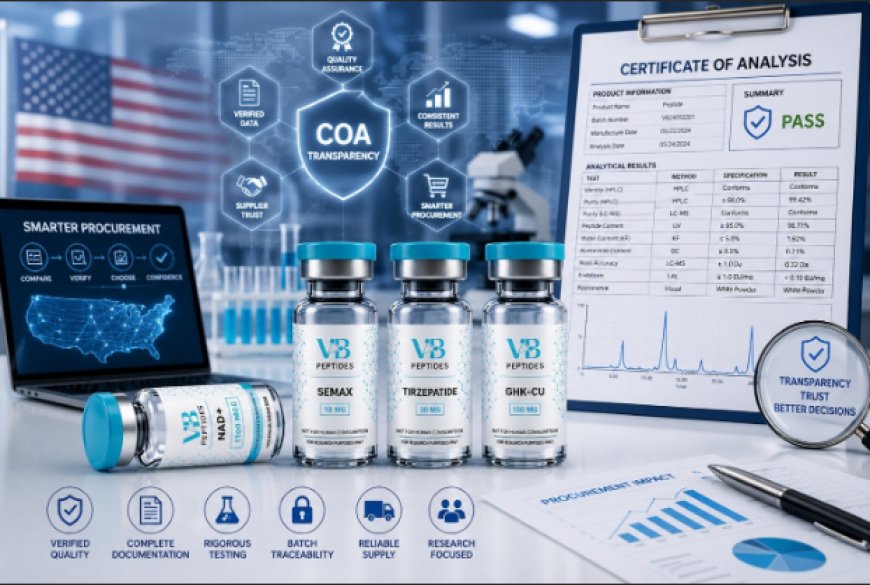
A peptide shipment reaches your laboratory just before a scheduled experiment, but the attached certificate does not clearly match the batch number on the vial. Your team must either delay the work or rely on documentation that raises more questions than answers. That procurement headache is becoming harder to ignore. Peptide COA transparency helps U.S. research buyers verify materials before approval, compare suppliers more carefully, and reduce preventable recordkeeping gaps. When time, budgets, and experimental consistency are on the line, clear documentation gives you greater confidence before the research begins.
Key Takeaways
-
Batch-specific COAs connect laboratory findings to the material you actually receive.
-
Testing methods now influence purchasing decisions as much as purity percentages.
-
Early document reviews help you identify weak suppliers before placing an order.
5 Ways Peptide COA Transparency Is Reshaping U.S. Research Procurement
The U.S. peptide synthesis market is estimated to grow at an annual rate of 8.22% through 2035. As research, biotech, and contract laboratory activities expand, you may face more supplier options and a greater need for verifiable batch documentation. This growing complexity is raising the standards that research teams use for evaluating a peptide shop. Now, here is how those higher expectations are restructuring peptide procurement processes across the USA.
Batch Verification Becomes Standard
A shipment can arrive on time and still leave your team stuck if the paperwork does not match the vial. When the lot number, product name, test date, or sample identifier differs, the COA cannot reliably confirm the material you received.
That is why peptide COA transparency is turning batch matching into a routine part of procurement. Instead of accepting a general report, you can confirm that the results belong to the exact batch in front of you. This makes approval easier, reduces unnecessary follow-up with the supplier, and gives your team a clear record linking the order, the delivered vial, and the test results.
Analytical Evidence Gains Priority
Even when the batch details match, a bold purity percentage does not tell the whole story. You still need to know what was tested, which method was used, and whether the report confirms purity, identity, or both.
The U.S. Pharmacopeia’s peptide standards guidance helps put that into perspective by emphasizing validated methods, clear acceptance criteria, and properly characterized reference materials. For you, that means looking beyond a simple “99%” claim.
When comparing research-grade peptides, HPLC can help assess purity, while mass spectrometry can help confirm identity. Procurement is becoming more evidence-led because buyers now want to understand how the result was produced, not just what number appears on the page.
Compliance Screening Starts Earlier
A complete-looking COA is helpful, but it should never be the only thing you review. The way a supplier describes the product matters too, especially when “research use only” language appears beside claims that sound medical or therapeutic.
This is why compliance checks are moving earlier in the buying process. A February 2025 FDA warning letter made clear that research-use wording did not cancel out website claims suggesting human use. The takeaway for your team is simple: review the document and the marketing side by side. Peptide COA transparency supports laboratory verification, but it does not prove safety, effectiveness, or regulatory approval.
Supplier Credibility Gets Tested Earlier
Price, stock, and delivery speed still matter, but they no longer tell you everything you need to know about a supplier. Procurement teams now want to see whether the company provides batch-specific reports, identifies the testing laboratory, explains its methods, and answers technical questions clearly.
That closer review makes sense. An independent 2026 provider evaluation reviewed more than 550 providers and found that about 40% exhibited at least one major red flag. It also reported that roughly one in eight had COAs that could not be verified. While this is not a formal U.S. procurement census, it shows why your team cannot rely on a polished website, low pricing, or popularity alone when approving a supplier.
Procurement Traceability Gets Stronger
The value of a COA does not disappear once the order is approved. Keeping the quotation, purchase confirmation, batch number, receipt date, storage notes, supplier messages, and certificate together gives your team a complete history of the material.
That record becomes especially useful when an experiment must be reviewed, repeated, or explained months later. The NIH replication and reproducibility initiative, launched in 2026, reflects the broader push for research practices that are easier to track and repeat. At the procurement level, peptide COA transparency supports that same goal by showing what entered the workflow and which documentation supported its use. A COA cannot guarantee repeatable results, but it can remove one avoidable source of uncertainty.
Final Thoughts
Research procurement is becoming more evidence-driven, and clear documentation now carries real weight in supplier selection. Peptide COA transparency helps you verify what was tested, match reports to specific batches, and preserve a reliable record from purchase to experiment.
It does not replace scientific judgment, regulatory review, or proper laboratory controls, but it gives you a stronger basis for every buying decision. As supplier options continue to grow, the vendors that make verification simple, specific, and accessible are more likely to earn lasting trust.
FAQs
What should an AOD 9604 COA include?
An AOD 9604 peptide COA should show a matching lot number, test date, analytical methods, identity findings, reported purity, and issuing laboratory.
Does a Semax COA prove safety?
No. A Semax peptide COA may report analytical results, but it does not establish clinical safety, effectiveness, sterility, or FDA approval.
How can you spot an unreliable COA?
Look for missing batch numbers, unnamed laboratories, outdated reports, absent methods, generic QR codes, or results that do not match your shipment.