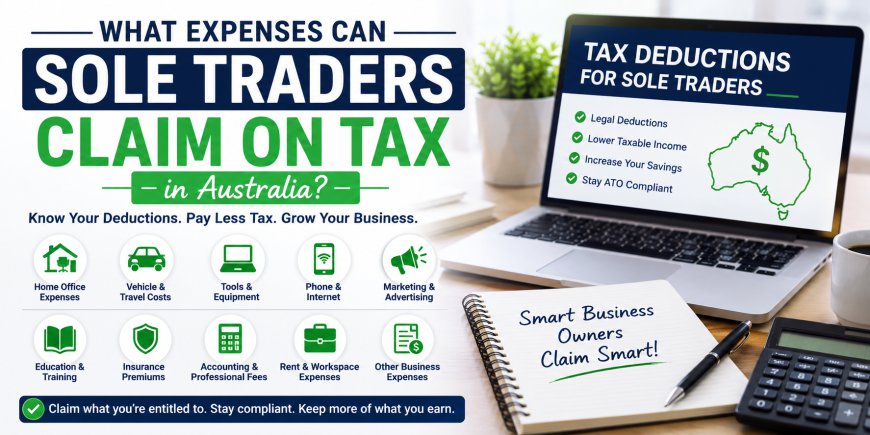
What Expenses Can Sole Traders Claim on Tax in Australia?
Learn which sole trader tax deductions you can legally claim in Australia, including home office, vehicle, travel, and business expenses.
 anguspedley
Running a business as a sole trader in Australia comes with flexibility and independence, but it also brings tax responsibilities that many business owners find confusing. One of the biggest questions sole traders ask every year is which business expenses they can legally claim to reduce their taxable income.
Understanding sole trader tax deductions is important because claiming eligible expenses correctly can help reduce tax while keeping your business compliant with Australian Taxation Office (ATO) rules.
Many sole traders either miss legitimate deductions or accidentally claim expenses incorrectly due to lack of knowledge. Both situations can become costly over time. Claiming too little may mean paying more tax than necessary, while incorrect claims can increase the risk of ATO reviews or penalties.
The good news is that Australian tax law allows sole traders to claim a wide range of business-related expenses, provided those expenses are directly connected to earning business income.
This guide explains the most common tax deductions sole traders may claim in Australia and how proper record-keeping helps support those claims.
What Are Sole Trader Tax Deductions?
Tax deductions are business expenses that reduce your taxable income.
If you spend money while operating your business, and the expense directly relates to generating income, you may generally claim part or all of that cost as a deduction.
For example, a freelance designer purchasing software for client work or a tradesperson buying tools for daily jobs may usually claim those business expenses.
However, the ATO requires sole traders to keep proper records showing:
-
what was purchased
-
when it was purchased
-
how it relates to business activities
Personal expenses usually cannot be claimed unless a clear business-use percentage applies.
Home Office Expenses
Since many Australians now work remotely or run businesses from home, home office deductions have become increasingly common.
Sole traders working from home may be able to claim:
-
internet expenses
-
electricity costs
-
phone bills
-
office furniture
-
computer equipment
The claim amount generally depends on how much of the home is used for business purposes.
For example, someone using a dedicated home office regularly for client work may claim a portion of running costs related to that space.
Keeping accurate records is important when calculating home office deductions.
Vehicle and Travel Expenses
Vehicle expenses are one of the most commonly claimed sole trader tax deductions in Australia.
If a car is used for business purposes, sole traders may claim:
-
fuel costs
-
registration
-
insurance
-
servicing
-
repairs
-
depreciation
However, travel between home and a regular workplace is usually considered personal travel and may not qualify.
The ATO generally requires:
-
logbooks
-
kilometre records
-
receipts
-
travel documentation
for larger vehicle-related claims.
Business travel expenses such as accommodation, parking, and flights may also be deductible if directly connected to work activities.
Tools and Equipment
Many sole traders purchase equipment needed to operate their business.
This may include:
-
laptops
-
cameras
-
power tools
-
office desks
-
mobile phones
-
printers
Small business owners can sometimes claim an immediate deduction for lower-cost assets, while more expensive items may need to be depreciated over time.
The treatment depends on:
-
asset value
-
business structure
-
current tax rules
Because deduction rules can change, many sole traders check eligibility carefully before lodging their return.
Phone and Internet Expenses
If you use your personal phone or internet connection for business, you may claim the business-use portion.
For example:
-
client calls
-
online meetings
-
business emails
-
invoicing systems
-
cloud software usage
may contribute toward deductible usage.
The ATO expects sole traders to calculate a reasonable business percentage rather than claiming personal usage entirely.
Simple usage records can help support these claims if reviewed later.
Marketing and Advertising Costs
Promoting a business is generally considered a deductible expense.
Sole traders may claim:
-
website costs
-
social media advertising
-
Google Ads
-
business cards
-
logo design
-
printing costs
As digital marketing becomes more important, advertising deductions have become increasingly relevant for small businesses across Australia.
Education and Training Expenses
In many cases, sole traders may claim self-education expenses if the training directly improves skills related to their current business activities.
Examples may include:
-
industry courses
-
certifications
-
professional workshops
-
online business training
However, courses designed for starting a completely new career may not qualify.
The training generally needs to relate directly to your existing income-producing work.
Accounting and Professional Fees
Professional services connected to your business are often deductible.
This may include:
-
accounting fees
-
bookkeeping services
-
BAS preparation
-
tax advice
-
business consulting
Many sole traders choose to work with an experienced Sole Trader Accountant because managing deductions, GST obligations, and tax compliance alone can become time-consuming as the business grows.
Insurance Premiums
Business-related insurance policies are generally tax deductible.
This may include:
-
public liability insurance
-
professional indemnity insurance
-
business equipment insurance
-
income protection insurance in some cases
Personal insurance policies not connected to business activities are usually treated differently.
Rent and Workspace Costs
If you rent commercial premises for business use, the rent may generally be deductible.
This may include:
-
office rent
-
coworking spaces
-
studio rental
-
workshop facilities
Some sole traders operating partially from home may also claim a percentage of occupancy expenses in specific situations.
Employee and Contractor Payments
Sole traders who hire workers may usually claim:
-
employee wages
-
contractor payments
-
superannuation contributions
-
payroll-related expenses
Proper records and payment documentation are extremely important for these deductions.
Businesses employing staff must also meet payroll and superannuation obligations correctly.
Business Software and Subscriptions
Modern businesses rely heavily on software tools for daily operations.
Deductible subscriptions may include:
-
accounting software
-
design software
-
project management tools
-
cloud storage
-
scheduling systems
These recurring expenses are commonly overlooked by smaller businesses despite being legitimate deductions.
Bad Debts
If a customer fails to pay for goods or services already included as income, the bad debt may sometimes be deductible.
However, strict record-keeping rules apply before claiming bad debt deductions.
The business generally needs evidence showing:
-
attempts to recover payment
-
outstanding invoices
-
debt write-off records
What Sole Traders Usually Cannot Claim
Not every expense qualifies as a deduction.
Common non-deductible expenses may include:
-
private expenses
-
personal holidays
-
family costs
-
non-business clothing
-
fines and penalties
The ATO closely monitors claims that appear personal rather than business-related.
Keeping clear separation between business and personal spending is extremely important.
Why Record-Keeping Matters
Even legitimate deductions can become problematic without proper documentation.
The ATO recommends sole traders keep:
-
receipts
-
invoices
-
bank statements
-
mileage logs
-
expense records
for at least several years.
Digital bookkeeping tools now make record-keeping much easier than before.
Good records not only support deductions but also help businesses understand cash flow and profitability more clearly.
Common Mistakes Sole Traders Make With Deductions
Many sole traders accidentally create tax problems through poor record management.
Common mistakes include:
-
overclaiming personal expenses
-
losing receipts
-
failing to track mileage
-
mixing personal and business bank accounts
-
forgetting smaller recurring expenses
Some business owners also avoid claiming legitimate expenses because they are unsure about ATO rules.
Seeking professional guidance early often helps prevent these issues.
Working with an experienced accountant in perth can also help sole traders understand which deductions apply specifically to their business activities and industry.
Tips to Maximise Sole Trader Tax Deductions Legally
Some practical ways to improve tax management include:
-
using separate business bank accounts
-
tracking expenses regularly
-
storing digital receipts
-
reviewing deductions before EOFY
-
using accounting software consistently
Waiting until tax season to organise records usually creates unnecessary stress and increases the risk of missing deductions.
Final Thoughts
Understanding sole trader tax deductions is essential for Australian business owners wanting to manage tax obligations correctly while maximising legitimate claims. From vehicle expenses and home office costs to software subscriptions and marketing expenses, many business-related costs may qualify as deductions when properly documented.
However, accurate record-keeping remains just as important as claiming the deductions themselves. Poor documentation or incorrect claims can create unnecessary compliance risks with the ATO.
For many sole traders, staying organised throughout the financial year makes tax time far easier and helps ensure they only pay the amount of tax they legally owe.