United States Automatic Train Control Market Trends Transforming Passenger and Freight Rail Operations
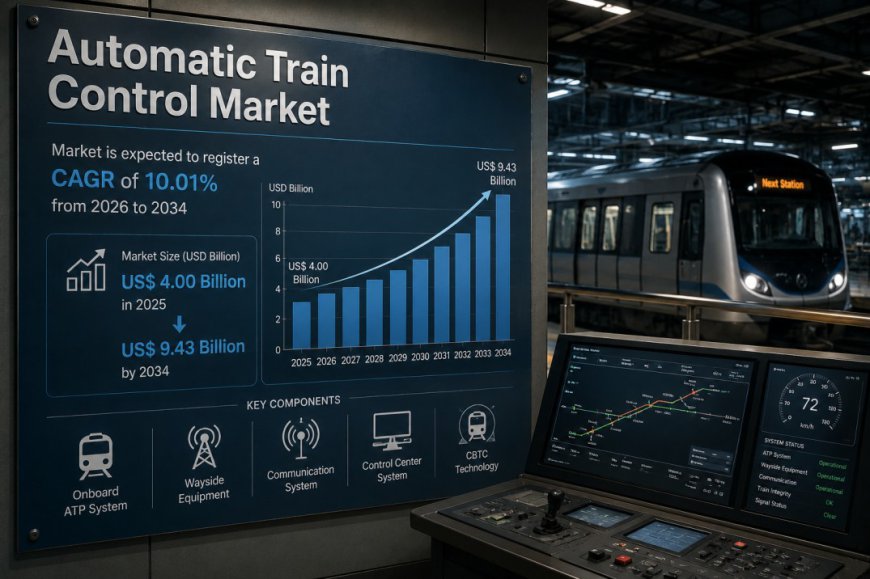
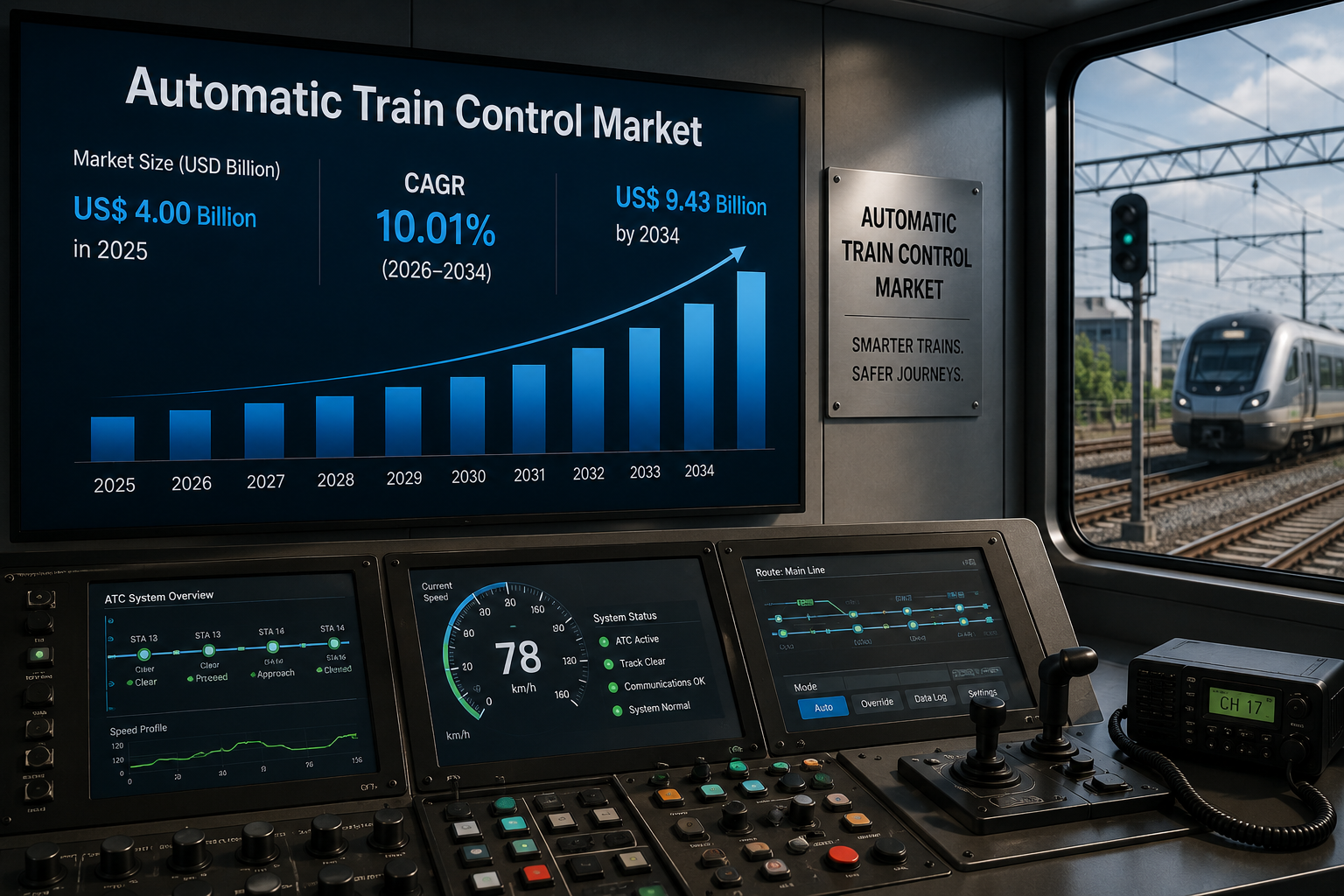
Automatic Train Control market is expected to register a CAGR of 10.01% from 2026 to 2034, with the market size expanding from US$ 4.00 Billion in 2025 to US$ 9.43 Billion by 2034.
 newswires
Automatic train control systems play a crucial role in improving the safety, efficiency, and reliability of railway operations. These systems utilize advanced communication, signaling, and monitoring technologies to regulate train movement, prevent collisions, optimize scheduling, and enhance overall network performance. As railway operators seek to modernize transportation infrastructure and improve passenger experiences, automated train control technologies are becoming increasingly important across urban transit, freight rail, and high-speed rail applications.
The adoption of intelligent railway solutions is accelerating due to growing urbanization, increasing passenger traffic, and rising investments in smart transportation infrastructure. Advanced technologies such as communication-based train control (CBTC), positive train control (PTC), artificial intelligence, and real-time analytics are transforming rail operations globally. These developments are helping operators achieve higher operational efficiency while improving safety standards and reducing system downtime.
Automatic Train Control Market Overview
The Automatic Train Control Market is experiencing strong growth as governments and transportation authorities invest in railway modernization and intelligent transportation systems. According to The Insight Partners, the market is expected to register a CAGR of 10.01% during the forecast period from 2026 to 2034.
The market size is projected to expand from US$ 4.00 Billion in 2025 to US$ 9.43 Billion by 2034. The increasing focus on rail safety, capacity enhancement, and operational efficiency is driving demand for advanced train control technologies. Furthermore, the expansion of metro rail projects, high-speed rail networks, and urban transit systems is creating substantial growth opportunities for market participants.
Market Drivers and Emerging Opportunities
Several factors are contributing to the growth of the Automatic Train Control Market. One of the primary drivers is the increasing need for enhanced railway safety. Railway operators are adopting automated train control technologies to minimize human error, prevent accidents, and improve network reliability.
The growing investment in urban transit systems and smart city initiatives is another major growth factor. As cities experience rising population densities and transportation demands, governments are focusing on expanding rail infrastructure to provide efficient and sustainable mobility solutions. Automatic train control systems play a vital role in optimizing train frequency, reducing congestion, and improving passenger experiences.
Technological advancements such as artificial intelligence, machine learning, predictive analytics, and cloud-based monitoring systems are also creating new opportunities. These innovations enable real-time decision-making, predictive maintenance, and intelligent traffic management, further supporting market expansion.
Get a Sample PDF Report: https://www.theinsightpartners.com/sample/TIPRE00004127
Automatic Train Control Market Segmentation Analysis
The Automatic Train Control Market can be segmented based on technology, component, application, and railway type. Key technologies include communication-based train control systems, positive train control systems, automatic train protection systems, and automatic train operation solutions.
From a component perspective, the market consists of hardware, software, and services. Software platforms are gaining prominence due to their ability to support advanced analytics, centralized control, and predictive maintenance capabilities. Hardware components such as sensors, communication devices, signaling systems, and onboard control units remain essential for system deployment.
Applications span metro rail systems, high-speed rail networks, freight rail operations, and urban transit infrastructure. Metro and urban transit systems continue to represent significant adoption areas due to increasing urbanization and public transportation investments.
North America Automatic Train Control Market Analysis
North America represents a key region within the Automatic Train Control Market due to significant investments in railway safety, modernization projects, and advanced transportation technologies. Regulatory initiatives promoting rail safety and operational efficiency are encouraging transportation authorities to deploy advanced train control systems throughout the region.
The growing adoption of positive train control systems across freight and passenger rail networks has strengthened market growth in North America. Railway operators are investing in digital signaling solutions, automated traffic management systems, and intelligent rail infrastructure to improve operational performance and compliance with safety standards.
The presence of leading technology providers and transportation infrastructure companies further supports innovation and adoption within the regional market.
United States Market Trends and Growth Outlook
The United States plays a significant role in the North American Automatic Train Control Market. Investments in railway modernization, smart transportation systems, and safety enhancement programs continue to drive demand for advanced train control technologies.
The implementation of positive train control systems across major rail corridors has accelerated the adoption of intelligent rail management solutions. Transportation agencies are increasingly leveraging digital technologies to improve operational visibility, optimize train scheduling, and enhance passenger safety.
Furthermore, increasing investments in urban transit systems, commuter rail networks, and infrastructure upgrades are expected to generate new opportunities for market participants. The integration of artificial intelligence and predictive maintenance technologies is also helping railway operators improve asset utilization and reduce operational disruptions.
Recent Developments and Technological Advancements
The Automatic Train Control Market continues to evolve through ongoing technological innovation and strategic industry developments. Companies are introducing advanced automation solutions that integrate artificial intelligence, real-time analytics, and cloud-based monitoring capabilities.
Communication-based train control systems are becoming increasingly sophisticated, enabling higher network capacity and improved operational efficiency. Predictive maintenance technologies powered by machine learning algorithms are helping operators identify potential equipment failures before they impact service reliability.
Additionally, the adoption of digital twins, IoT-enabled sensors, and automated traffic management platforms is enhancing rail network performance. These advancements are expected to play a critical role in supporting future market growth and transportation modernization efforts.
Key Companies in the Automatic Train Control Market
Major companies operating in the Automatic Train Control Market include:
- Siemens Mobility
- Alstom SA
- Hitachi Rail
- Wabtec Corporation
- Thales Group
- Mitsubishi Electric Corporation
- Toshiba Corporation
- CAF Group
- Hyundai Rotem Company
- CRRC Corporation Limited
These companies are focusing on technological innovation, strategic partnerships, research and development activities, and infrastructure modernization projects to strengthen their competitive positions.
Competitive Landscape and Market Share Analysis
The Automatic Train Control Market is characterized by strong competition among global railway technology providers and transportation infrastructure companies. Market participants are investing significantly in research and development to introduce advanced automation, signaling, and traffic management solutions.
Strategic collaborations between technology providers, railway operators, and government agencies are becoming increasingly common as stakeholders seek to accelerate transportation modernization. Companies are also pursuing acquisitions and partnership agreements to expand product portfolios and strengthen regional presence.
As railway systems continue to embrace digital transformation, competition is expected to intensify, encouraging further innovation and technological advancement across the industry.
Future Outlook
The future of the Automatic Train Control Market remains highly promising as governments and transportation authorities continue to prioritize railway safety, operational efficiency, and sustainable mobility. Growing investments in metro rail projects, high-speed rail infrastructure, and smart transportation initiatives are expected to support long-term market growth.
Emerging technologies such as artificial intelligence, IoT connectivity, predictive analytics, and cloud-based rail management platforms will continue to enhance the capabilities of automatic train control systems. As global rail networks become increasingly connected and automated, demand for advanced train control solutions is expected to remain strong throughout the forecast period.
Related Market Research Reports
Security & Surveillance Robots Market Growth, Share & Trends by 2034
Drive By Wire Market Size, Demand & Growth by 2034
About The Partners
Contact Us:
- Contact Person: Ankit Mathur
- E-mail:ankit.mathur@theinsightpartners.com
- Phone: +1-646-491-9876