

Ethnic Tote Bag: How to Style Tradition the Modern Way
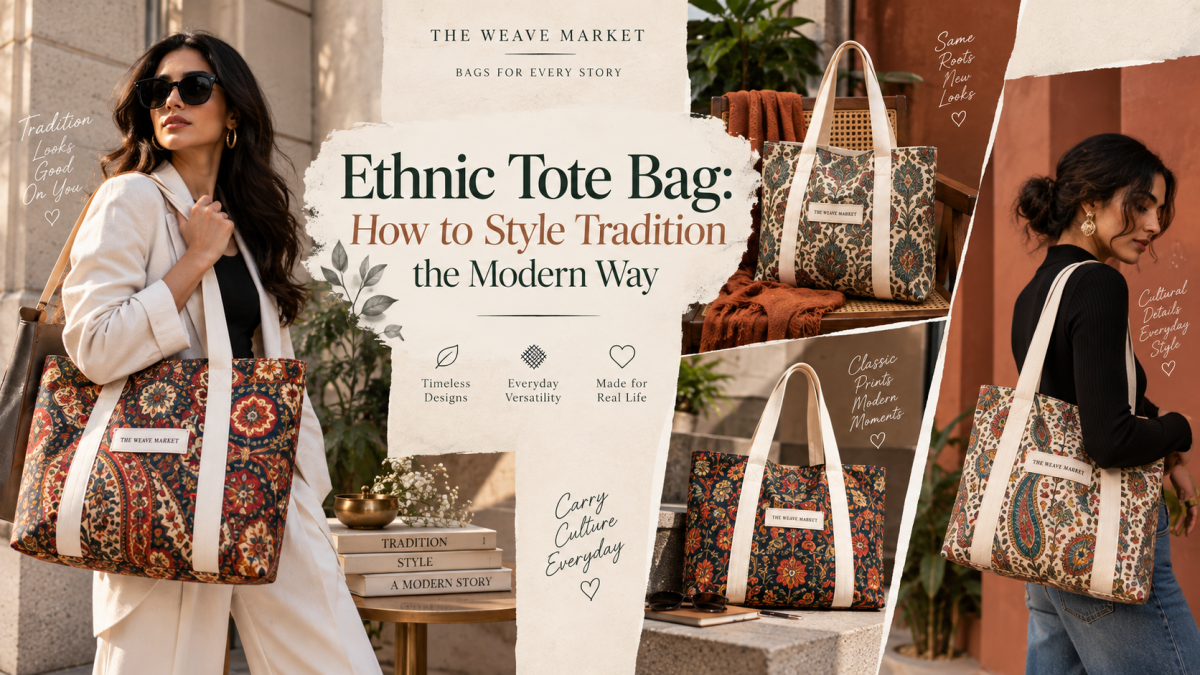
Traditional patterns do not require traditional outfits. That is the easiest thing to remember when styling an ethnic tote bag. A textile can carry history, motifs and craft techniques while the clothes around it remain completely modern. In fact, contrast is often what makes the bag look most interesting.
Traditional patterns do not require traditional outfits. That is the easiest thing to remember when styling an ethnic tote bag.
A textile can carry history, motifs and craft techniques while the clothes around it remain completely modern.
In fact, contrast is often what makes the bag look most interesting.
Start With Denim
Denim is one of the easiest bridges between traditional prints and contemporary wardrobes.
Pair an ethnic printed tote with: straight jeans, a white shirt and flat sandals. The jeans make the outfit familiar. The bag becomes the point of difference.
This approach works particularly well with geometric, floral or Ajrak-inspired prints because the simplicity of denim gives detailed patterns enough space.
Keep Tailoring Clean
Traditional prints can also sit beside modern tailoring. Try beige trousers, an oversized blazer and an artisan tote. Instead of making the look feel “ethnic”, the print becomes an artful accessory.
This is a useful approach for Dubai wardrobes where one outfit may move between work, lunch and evening plans.
A structured outfit keeps a softer printed tote looking intentional.
Use One Traditional Element
You do not need to coordinate the bag with matching clothing. If your tote carries a strong traditional print, allow it to be the cultural focal point.
Too many similar motifs can make the styling feel like a costume rather than everyday dressing. Modern ethnic style often works best when one element carries most of the detail.
That could be the printed tote bag.
Understand the Craft Behind the Pattern
Many textile motifs associated with Indian craft come from regional printing traditions.
Hand block printing bags uses carved wooden blocks to repeatedly transfer designs onto cloth, while traditions such as Bagru and Ajrakh developed distinctive approaches to colour and pattern.
Understanding that background changes how you look at the accessory. The pattern is not simply a generic decorative graphic. It belongs to a wider design language.
Wear It With an Abaya
An ethnic tote bag in Dubai can pair beautifully with a plain abaya.
Black provides strong contrast for brighter prints, while beige, olive, navy and brown create softer combinations.
The trick is to avoid forcing every colour to match.
If the handmade bag contains many shades, choose a solid abaya and let the print stay visually independent.
This makes the outfit feel modern rather than over-coordinated.
Keep Jewellery Simple
A detailed textile already brings visual information. Simple gold hoops, a watch or delicate jewellery are often enough.
If the blockprinted bag is more geometric or restrained, you can add bolder accessories. Balance is more useful than rules.
Ask which piece you want people to notice first.
Traditional Print, Contemporary Bag
The Weave Market uses Indian-inspired hand-block prints across modern tote shapes, including floral and geometric patterns. Its Ajrak Mosaic tote, for example, draws on the visual language of Ajrak-style geometric printing.
That combination shows why an ethnic tote does not have to feel old-fashioned. The shape is practical and familiar. The surface carries the heritage.
Tradition Looks Best When It Is Lived In
Traditional craft does not have to be treated as something fragile that only appears on special occasions.
Carry the tote to work. Take it for coffee. Wear it with jeans. Pair it with a simple dress.
The more naturally an tote bag becomes part of everyday dressing, the less it feels like an occasional “traditional” accessory.
That is how heritage stays contemporary: not by changing everything about it, but by giving it space in modern life.
The Weave Market is a lifestyle and accessories brand offering thoughtfully designed bags that bring traditional textile-inspired patterns into modern everyday style. Our collection includes tote bags, sling bags, duffle bags, and pouches, with a focus on distinctive prints, practical designs, and versatile everyday use. Whether it’s a workday, shopping trip, café visit, gym session, or weekend getaway, The Weave Market offers bags made to complement different lifestyles and occasions.



Comments (0)