Every Major Web Platform Explained So You Can Stop Guessing and Start Building
Compare top web platforms in 2026 WordPress Wix Webflow Squarespace Joomla and Drupal to choose the right solution for your business growth and goals.
 anthony-rodgers
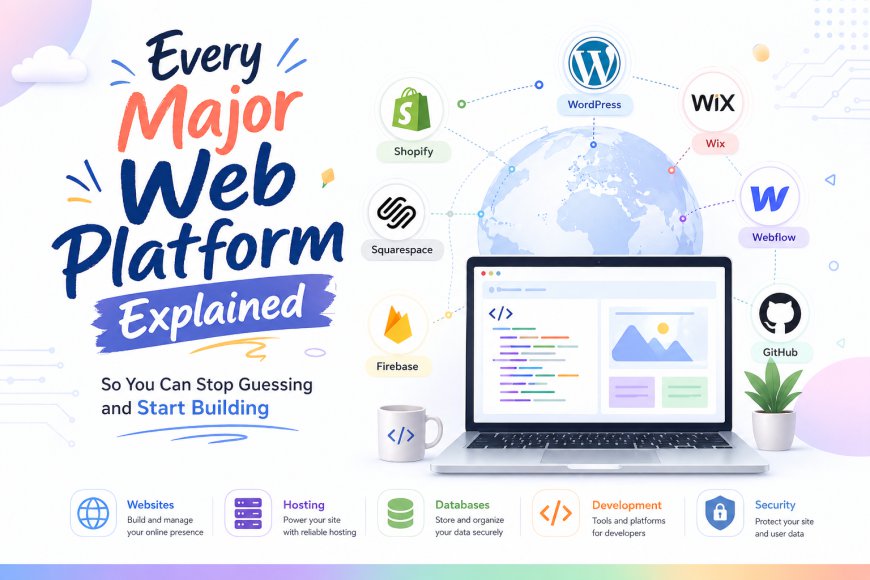
The number of ways to build a website in 2026 has never been greater, and neither has the confusion around which option is actually right for a given business. Squarespace, Wix, Webflow, WordPress, Joomla, Drupal, and Magento each have passionate advocates, each has genuine strengths, and each has real limitations that its advocates rarely mention upfront. The result is that most business owners make platform decisions based on incomplete information, peer recommendation, or whoever they hired to build their last site.
This article exists to fix that. Every major platform, explained clearly, without bias, so the next web decision your business makes is informed rather than accidental.
Why Platform Choice Matters More Than Most Businesses Realize
Choosing a web platform isn't a technical decision that can be quietly undone later. It shapes how much your website costs to maintain, how easily your team can update it, how well it performs in search, and how much a rebuild will cost when you eventually outgrow it. Working with the right website development company means getting platform guidance before a single wireframe is drawn, because the platform determines everything that follows.
in 2026 span an enormous range of complexity and capability. Understanding that landscape is the first step toward making a decision you won't regret two years from now.
CMS Web Development: The Foundation Most Content-Driven Sites Are Built On
For businesses whose websites are primarily built around content, blogs, service pages, resource libraries, and landing pages, a content management system remains the most flexible and scalable foundation available. CMS web development involves building on platforms that give non-technical teams full control over content without requiring developer involvement for everyday updates.
The strength of CMS web development is its adaptability. A well-architected CMS site can grow from five pages to five thousand, support multiple content types, integrate with marketing and analytics tools, and be extended with custom functionality as business needs evolve. For businesses investing in content marketing and SEO as long-term growth channels, a CMS provides the structural depth that makes that investment worthwhile over time.
1. WordPress: The Platform That Powers a Third of the Internet
WordPress remains the most widely used CMS on the planet for good reason; its combination of flexibility, community support, and plugin ecosystem makes it capable of powering everything from simple blogs to complex enterprise websites. A skilled Wordpress CMS development company builds WordPress sites that go well beyond theme installation: custom post types, performance-optimized architecture, security hardening, and seamless integration with the tools a business actually uses.
The limitation is maintenance. WordPress sites require ongoing updates, security monitoring, and occasional developer intervention to stay healthy. For businesses with technical resources or a reliable development partner, this is manageable. For those without, it can become a recurring burden.
2. Squarespace Development: Elegance Without the Overhead
Squarespace has outgrown its reputation as a platform for personal portfolios and small creative businesses. Squarespace development in 2026 delivers polished, fast, and genuinely professional websites for service businesses, restaurants, creative agencies, and local retailers, all without the ongoing maintenance complexity of a traditional CMS.
The real value of Squarespace is operational simplicity. Business owners can update content, add pages, manage products, and adjust layouts without technical help. For businesses that need a great website they can actually run themselves, Squarespace is frequently the most practical choice available and significantly more capable than its price point suggests.
3. Wix Development: Flexibility for Businesses That Want Control
Wix has matured considerably from its drag-and-drop origins. Wix development now encompasses genuinely sophisticated websites with custom functionality, dynamic content, membership areas, and e-commerce capabilities that rival dedicated platforms. Its visual editor gives non-technical users more layout freedom than almost any other platform, while its app marketplace extends functionality without custom code.
Where Wix excels is in speed to market and ease of ongoing management. Its limitations are in SEO ceilings and scalability for high-traffic or highly complex sites. For small to mid-sized businesses that want control over their own web presence without developer dependency, Wix is a more capable platform than it is often given credit for.
4. Webflow Web Development: Designer-Grade Output Without Developer Bottlenecks
Webflow occupies a unique position in the platform landscape; it gives designers and marketers visual control over layout, interactions, and content while producing clean, performant code that developers respect. Webflow web development is particularly well-suited to businesses with active marketing teams that need to iterate quickly on campaigns, landing pages, and site design without raising a development ticket every time.
The output is genuinely impressive, fast-loading, visually sophisticated, and well-structured for search. The learning curve is steeper than Squarespace or Wix, and the platform is less suited to complex e-commerce or heavy backend logic. But for marketing-led businesses that prioritize design quality and campaign agility, Webflow sits in a category of its own.
5. Joomla Web Development: The Underrated Middle Ground
Joomla rarely gets the attention it deserves in platform conversations dominated by WordPress and no-code tools. Joomla web development offers a compelling middle ground, more structured and secure than WordPress out of the box, more flexible than most no-code platforms, and particularly well-suited to membership sites, community platforms, and multilingual websites.
For businesses with complex user management requirements, structured content needs, or international audiences requiring multiple language support, Joomla offers capabilities that WordPress requires significant plugin architecture to replicate. It's not the right choice for every project, but for the projects it suits, it's often the best choice available.
6. Drupal Development Company: Enterprise-Grade Power for Complex Requirements
At the top end of the CMS spectrum sits Drupal, the platform of choice for government websites, large media organizations, universities, and enterprises with genuinely complex content architecture requirements. A Drupal development company builds websites that handle massive content volumes, sophisticated user permission structures, deep API integrations, and security requirements that consumer platforms simply aren't designed to meet.
Drupal is not the right choice for most businesses, and any honest development partner will tell you that. The cost of implementation, the technical expertise required to maintain it, and the complexity of the platform are justified only when the requirements genuinely demand it. But when they do, nothing else comes close.
How to Match Platform to Business Reality
The pattern across every platform covered here is the same: each one is the right answer for a specific kind of business with a specific set of needs, resources, and growth plans. The mistake isn't choosing the wrong platform; it's choosing without asking the right questions first.
What does your team need to be able to do without developer help? How much content will you be managing, and how often will it change? What integrations does your business depend on? Where are you likely to be in three years, and will this platform still fit? A good website development company asks these questions before making any recommendations, because the answers determine everything that follows.
The platform is not the product. The right platform, built properly, maintained consistently, and aligned with how your business actually operates, that's the product. And it's one of the highest-return investments a business can make when the decision is made deliberately.
Conclusion
The web platform landscape in 2026 offers more genuine capability than at any point in the history of the internet, across every budget, every team size, and every level of technical complexity. What it doesn't offer is a universal right answer. Squarespace for the business owner who wants simplicity. Webflow for the marketing team that wants design agility. WordPress or Joomla for content-heavy, flexible requirements. Drupal for enterprise complexity. The right web development services don't push a preferred platform; they match the platform to the business, build it properly, and set it up to grow.