

From Soft Fiber to Signature Luxury: What Defines a Premium Cashmere Scarf Manufacturer
What defines a luxurious item can only be seen by paying attention to the details. The feel of a fabric, its weave, the finishing on it, and the effect a product has when used all form part of the value of the product.
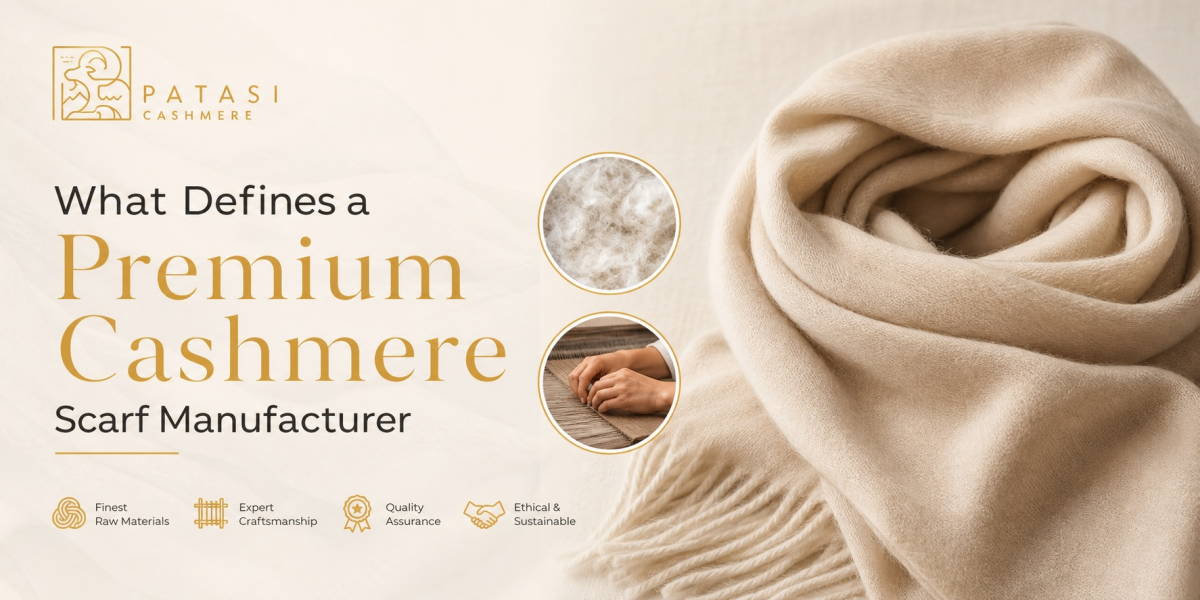
What makes luxury fashion unique? What makes it luxurious is mostly about uniqueness. Luxury fashion is usually characterized by exceptional softness, texture, design, and craftsmanship which are not easy to duplicate. The same qualities that make cashmere so unique make it such an ideal choice for luxury fashion accessories such as scarves. Making a truly unique cashmere scarf requires a lot more than selecting a soft fabric.
For fashion houses, boutiques, wholesalers, and private label brands, the selection of the right manufacturer of the Cashmere Scarf plays a great role in ensuring that they offer products of unique quality.
Patasi Cashmere, a company from Kathmandu, Nepal produces custom-made women and men's scarves from materials such as cashmere, Pashmina, silk, wool, and cotton. Their scarves range includes: Woven, Printed, Knit, Jacquard, Herringbone, Reversible, Lightweight and blended scarves.
The Journey Starts With the Right Fiber
The right material is essential for the manufacture of an exclusive scarf. The properties that give cashmere its value include its softness, lightness, and luster. Nevertheless, the end result depends not only on the name of the fiber used.
The characteristics of the yarn, its composition, count, construction, and processing methods may affect the appearance and quality of the finished scarf. An experienced producer of high-quality fabrics will know how to take into account all of these factors and help brands select the right specifications.
For instance, Patasi Cashmere produces scarves from cashmere as well as blends that contain such fibers as merino wool, silk, cotton, and wool.
Weaving Is Where Character Develops
In order to produce a luxury scarf, one must have not only good materials but also a production process that has the ability to turn the raw material into an aesthetically pleasing fabric.
Various weaving processes could contribute to the character of the fabric in terms of texture, weight, and appearance. Very different looks could be achieved using different construction methods, enabling companies to create various collections of their products.
Patasi Cashmere is proud of the fact that it produces its own fabrics through processes such as dyeing, printing, and Jacquard weaving machines.
The Importance of Design Flexibility in Creating Brand Identity
The demand among fashion brands for designs that speak about their visual languages is rising. This makes it crucial to look at customization while choosing a Cashmere Scarf Manufacturer.
Colour, size, patterns, weave construction, print work, fringes and material blends are just some ways that give identity to a scarf. A manufacturer who can bring the concept of a brand to life will give fashion brands more flexibility during design development.
Patasi Cashmere says that it offers customized scarves for fashion brands and boutiques, from unisex scarves to oversized scarves to tartan, maxi check, herringbone, tie dye, printed, knitted and cashmere silk blends.
Colour Could Be a Distinctive Element
One of the easiest methods for building an identity for a fashion brand is the choice of colour. A colour palette could tie scarves to their seasons of release, brands, and target markets.
Consistency in colour application is necessary when professional manufacturing is required and especially when the design is manufactured in large quantities or re-ordered. Brands need to specify the colours used and collaborate with manufacturers who can maintain correct production standards.
A wide range of colours is available with Patasi Cashmere for its textile products.
Finishing Is Important
Even if the material and the design of the scarf are both great, finishing will decide the end result the buyer sees once the product is finished. The edges of the scarf, fringe, dimensions, surface treatment, printing, and other aspects affect the final product.
For instance, a light cashmere scarf will probably differ in its specifications from a heavy winter scarf. The site Patasi Cashmere gives examples of scarfs that differ in their weight, size, yarn count, pattern, and material composition.
Manufacturing for Various Fashion Firms
An exclusive maker of scarves needs to have the ability to serve different sorts of clients. Some may prefer a small batch of custom made items, while some may be looking for recurring production in multiple designs.
The ability to make different design and materials combinations can make a supplier much more flexible with changes in fashion trends. Patasi Cashmere claims that it collaborates with small, boutique, and bigger brands, making scarves and other cashmere products as per the requirement of the brands.
Why Choose Patasi Cashmere?
Patasi Cashmere offers both production skills and a wide range of scarves, tailored to the needs of fashion enterprises. The company operates from Kathmandu, Nepal, and claims to be a manufacturer, wholesaler, and exporter of custom-made scarves.
The company’s skills include working with cashmere, Pashmina, silk, wool, and cotton materials, while their scarves may consist of woven, knitted, printed, Jacquard, merino, reversible, and printed types.
For brands interested in developing an exclusive accessory line, this set of material options, production skills, and customization possibilities may become a basis for creating a signature collection of scarves.
Selecting an Appropriate Cashmere Scarf Manufacturer
There are some aspects that need to be taken into account before engaging with a manufacturer, such as the quality of materials used, manufacturing abilities, customization possibilities, sample manufacturing, colour uniformity, finishing, capacity for producing sufficient quantities, communication, and quality control.
It is equally vital to have clear criteria for the product before manufacturing it. Size, material composition, yarn, weaving/knitting, colours, patterns, finishing, labeling, and packaging all need to be worked out in advance.
An appropriate manufacturer is not just supposed to make the given design, but also to know the needs of the brand and make them real.
The production of an exquisite cashmere scarf involves several interlinked stages.
It includes fiber selection, yarn selection, weaving, dyeing, printing, design, finishing, and quality control, among others.
Fashion houses looking for a trustworthy Cashmere Scarf Manufacturer would find it particularly useful to be able to incorporate material knowledge with customization and manufacturing consistency.
Being equipped with manufacturing facilities in Kathmandu, a varied collection of scarves, and specialization in custom-made products for fashion labels and boutiques, Patasi Cashmere offers various options for companies that want to produce luxurious accessories from soft material.
In the end, luxury is not formed by materials alone; it appears when all those elements are combined together.

Patasi Cashmere is leading cashmere sweater manufacturer and supplier from Kathmandu, Nepal. We are also manufacturer od cashmere knitwear, cashmere scarf. Cashmere blankets etc. https://www.patasicashmere.com/





Comments (0)