

What Features Should Hospital EMS Software Have?

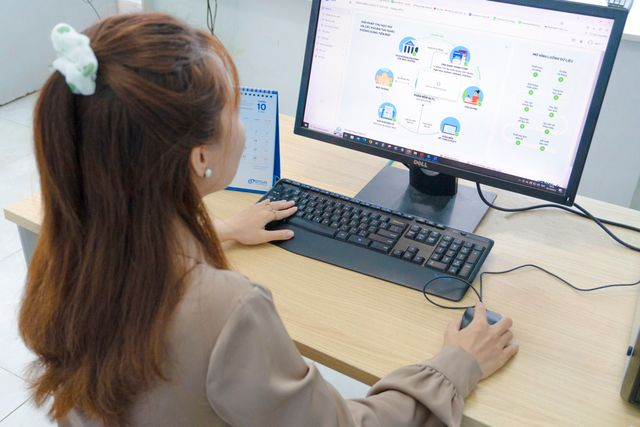
Hospital EMS software in India should provide workflow management, task assignment, SLA tracking, real-time dashboards, department coordination, alerts, audit trails, role-based access, analytics, and integration with HMS and EMR systems. A good electronic management system for hospitals should connect clinical, administrative, and support teams while giving hospital leaders clear visibility into pending work, delays, ownership, and operational performance.
Hospitals manage hundreds of activities every day. Patient transport, housekeeping, nursing requests, diagnostics, billing approvals, engineering complaints, discharge coordination, bed movement, and administrative tasks often involve multiple departments.
When these activities depend on phone calls, paper forms, spreadsheets, or informal messaging, it becomes difficult to know who is responsible for a task, when it was assigned, whether it has been completed, and where a delay occurred.
This is where hospital EMS software India can play an important role.
Electronic Management Software, or EMS, works as an operational layer that connects departments and turns routine requests into structured, trackable workflows. Instead of simply recording information, EMS helps hospitals manage what needs to happen next, who needs to act, and whether the work is completed within the required time.
MediTale describes EMS as the connective layer between departments that digitizes requests, workflows, service-level agreements, dispatch, approvals, escalations, and accountability.
So, what features should hospitals look for when selecting an EMS platform?
What Is Hospital EMS Software?
Hospital EMS software is a digital system designed to coordinate operational workflows across different hospital departments.
An HMS may manage areas such as patient registration, billing, appointments, clinical information, and other hospital transactions. EMS focuses more heavily on the work that moves between departments.
For example, a patient may need to be transferred from a ward to radiology. The process may involve:
- A transfer request being created.
- The appropriate team receiving the request.
- A staff member accepting the task.
- Transport being arranged.
- The patient's location being updated.
- The task being completed.
- The completion time being recorded.
An EMS can make this workflow visible and measurable rather than relying on verbal communication alone.
What Are the Most Important Features of Hospital EMS Software?
A hospital should not select EMS simply because it has a long list of modules. The important question is whether those features solve real operational problems.
Here are the key features to consider.
1. Centralized Task and Service Request Management
One of the most important features is a central place for creating and managing hospital service requests.
Instead of calling different departments, staff can submit requests through the system.
Common examples include:
- Patient transport requests
- Housekeeping requests
- Engineering complaints
- Security assistance
- Bed preparation
- Equipment movement
- Maintenance requests
- Internal department services
- Discharge-related support
Each request can have a status, priority, assigned department, responsible person, location, and deadline.
This creates a shared operational queue and reduces confusion about which requests are still pending.
2. Automated Task Assignment and Routing
A useful EMS should automatically route tasks to the correct department or team.
For example, a request for a broken medical equipment item should not sit in a general queue. It should reach the appropriate engineering or biomedical support team according to hospital rules.
Routing can be based on:
- Department
- Location
- Service type
- Priority
- Staff availability
- Shift
- Patient or bed location
This reduces manual coordination and helps requests reach the right owner faster.
3. SLA and Time Tracking
Hospitals often have expected response and completion times for different services.
For example, a high-priority transport request may have a different expected response time from a routine maintenance request.
An EMS should therefore include SLA tracking.
The system can record:
- Request creation time
- Acknowledgement time
- Start time
- Completion time
- Overdue duration
- SLA status
- Escalation history
Supervisors can then identify tasks that are approaching their deadlines instead of waiting until a complaint is raised.
MediTale's EMS platform, for example, includes SLA timers, overdue alerts, and supervisor dashboards for operational monitoring.
4. Real-Time Dashboards
A hospital's operational situation can change quickly.
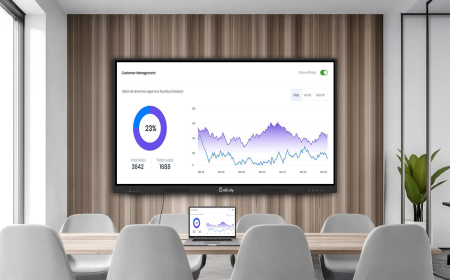
A good EMS should provide real-time dashboards that show what is happening across departments.
A dashboard may display:
- Open requests
- Completed requests
- Delayed tasks
- SLA breaches
- Department workload
- Pending patient transfers
- Housekeeping queues
- Engineering requests
- Service turnaround times
This gives managers a current view of hospital operations instead of relying entirely on end-of-day reports.
For a large hospital, dashboards can also help command-center teams monitor several departments or locations from one screen.
5. Cross-Department Workflow Management
Hospitals do not operate as isolated departments.
A single patient journey can involve registration, nursing, diagnostics, pharmacy, billing, housekeeping, transport, and discharge teams.
Therefore, an electronic management system for hospitals should support workflows that cross departmental boundaries.
For example, discharge may involve:
Doctor clearance → Nursing completion → Pharmacy → Billing → Final documentation → Transport
If one step is delayed, the entire process may slow down.
EMS can provide visibility into each step and identify where the workflow is waiting.
6. Alerts and Escalation Management
Not every task requires the same level of attention.
A hospital EMS should provide configurable alerts and escalation rules.
For example:
- A task approaching its SLA can generate an alert.
- An overdue task can notify a supervisor.
- A high-priority request can be routed immediately.
- Repeated delays can be escalated to department leadership.
This allows managers to focus on exceptions rather than manually checking every request.
Escalation is especially useful during busy shifts when supervisors may not have time to monitor individual tasks continuously.
7. Role-Based Access Control
Hospital systems handle sensitive information, so users should only have access to information and functions relevant to their roles.
Role-based access can provide different permissions for:
- Nurses
- Doctors
- Ward managers
- Administrators
- Housekeeping supervisors
- Engineering teams
- Security teams
- Finance staff
- Hospital leadership
- IT administrators
For example, a housekeeping employee may need to see service requests and locations but should not automatically have access to unrelated clinical information.
WHO guidance on digital health emphasizes privacy, security, patient safety, interoperability, scalability, and functional requirements when evaluating digital health solutions.
8. Audit Trails and Activity History
A hospital needs to know what happened when an operational issue occurs.
An audit trail should record important activities such as:
- Who created the request
- Who accepted it
- Who changed its status
- When the task was completed
- Whether it was escalated
- Which approvals were provided
- What changes were made
This creates an evidence-based history of operational activity.
Auditability is particularly useful for internal reviews, quality management, compliance processes, incident investigations, and service-performance analysis.
9. Integration With HMS and EMR
EMS should not become another isolated software system.
Integration with existing HMS and EMR platforms is therefore an important selection criterion.
Depending on the hospital's technology environment, EMS may need access to information such as:
- Patient identity
- Patient location
- Bed information
- Orders
- Department information
- Admission status
- Discharge status
- Relevant billing or service information
The goal is to prevent staff from entering the same information repeatedly into different systems.
WHO's digital health guidance highlights interoperability and secure data exchange as important components of digital health systems.
For hospitals in India, interoperability can also be important when considering India's broader digital health ecosystem. Government material on ABDM describes common health data standards, registries, consent-based exchange, and interoperability between different digital health systems.
10. Mobile Access
Many hospital employees do not spend their entire shift at a desktop computer.
Nurses, technicians, transport staff, housekeeping teams, engineering staff, and supervisors may work throughout the hospital.
Mobile-friendly EMS can allow authorized staff to:
- Receive assignments
- Accept tasks
- Update status
- View locations
- Add completion notes
- Receive alerts
- Escalate issues
Mobile access can therefore make operational data more current because staff can update tasks while performing the work instead of entering information later.
11. Priority and Queue Management
Not every hospital request has the same urgency.
EMS should allow hospitals to define priorities according to their operational policies.
For example:
High priority: Immediate operational attention required
Medium priority: Should be handled within a defined period
Routine: Can be completed through the normal queue
Priority-based queues help supervisors allocate resources according to the actual workload.
A useful system should also allow hospitals to customize these rules rather than forcing every facility to follow the same workflow.
12. Analytics and Performance Reporting
Collecting task data is only the first step.
Hospitals should also be able to analyze the information.
EMS analytics can help answer questions such as:
- Which departments receive the most requests?
- Which services experience the longest delays?
- Which shifts have the highest workload?
- How often are SLAs breached?
- Which locations generate repeated maintenance requests?
- How long does patient transport normally take?
- Are process changes reducing turnaround time?
MediTale's EMS approach includes heatmaps, trend views, throughput metrics, and operational summaries for performance reviews.
This type of reporting can support continuous process improvement.
13. Multi-Hospital and Multi-Location Support
Hospital groups may operate multiple facilities, towers, departments, or campuses.
An EMS platform should be able to maintain centralized governance while allowing local operational rules where required.
Useful capabilities include:
- Multiple hospital locations
- Site-specific departments
- Central dashboards
- Common workflows
- Local SLA rules
- Centralized reporting
- Location-based access
- Group-level performance monitoring
This is particularly relevant for hospital chains that want consistent operational processes without forcing every location into exactly the same configuration.
14. Configurable Workflows
Every hospital operates differently.
A good EMS should allow authorized administrators to configure workflows according to hospital policies.
Examples include:
- Approval levels
- Department routing
- Escalation rules
- SLA targets
- Priority levels
- Notification rules
- Service categories
- User roles
Configurable workflows reduce the need for hospitals to redesign their entire software system whenever an operational process changes.
WHO's digital transformation guidance also recommends requirements gathering, workflow mapping, data dictionaries, and documenting decision-support logic when developing or improving digital health systems.
15. Security, Backup and Reliability
Hospital operations continue around the clock, so EMS needs appropriate reliability and security controls.
Hospitals should evaluate:
- Encryption
- Role-based access
- Authentication
- Audit logging
- Backup procedures
- Disaster recovery
- Monitoring
- Access reviews
- Data retention policies
- System availability
Security should not be treated as an optional feature.
WHO has highlighted cybersecurity and privacy risks affecting digital health information systems and recommends structured assessment of areas such as governance, data management, transmission security, monitoring, and user behavior.
16. AI-Assisted Operational Intelligence
AI can be useful in EMS when it supports staff rather than replacing human responsibility.
Future-facing hospital EMS platforms may use AI-assisted capabilities for:
- Task prioritization
- Workload balancing
- Delay detection
- Demand forecasting
- Queue analysis
- Operational recommendations
- Identifying repeated bottlenecks
For example, if a system identifies that patient transport requests regularly increase during a particular period, hospital managers may use that information when planning staffing.
However, hospitals should evaluate AI features carefully, including data quality, transparency, security, governance, and human oversight.
What Should Hospitals Check Before Buying EMS Software?
Feature count alone should not determine the purchase decision.
Hospitals should ask vendors:
- Can the software model our actual workflows?
- Can we configure SLAs and escalation rules?
- Can it integrate with our existing HMS and EMR?
- Does it provide role-based access?
- Are audit trails available?
- Can staff use it from mobile devices?
- Can managers monitor real-time workloads?
- Can the system support multiple locations?
- What reporting and analytics are included?
- How are security, backup, and recovery handled?
- What training and implementation support is available?
- Can the system scale as hospital operations grow?
The right solution should fit the hospital's real workflow rather than forcing staff to create workarounds.
How Do These Features Improve Hospital Operations?
The main purpose of EMS is not simply to digitize requests.
Its value comes from connecting people, processes, deadlines, and information.
Consider a patient discharge.
Without structured workflow management, different departments may depend on calls and manual follow-ups.
With EMS, the hospital can create a defined workflow where each responsible team receives its task, updates progress, and completes its step. Supervisors can see where the process is waiting.
The same principle can apply to patient transport, housekeeping, diagnostics coordination, maintenance, and other support services.
This creates a more measurable operational environment.
Final Answer: What Features Should Hospital EMS Software Have?
The best hospital EMS software in India should provide more than basic ticket management. It should support centralized task management, automated routing, SLA tracking, real-time dashboards, cross-department workflows, alerts, escalation, role-based access, audit trails, analytics, mobile access, HMS and EMR integration, configurable workflows, security, and scalability.
An electronic management system for hospitals should ultimately give every important operational task three things: a clear owner, a defined timeline, and measurable status.
For hospitals evaluating EMS, the priority should be workflow depth, integration, usability, security, reliability, and the ability to adapt the platform to real hospital processes.
MediTale's EMS platform is positioned around workflow orchestration, SLA management, real-time operational visibility, cross-department handoffs, auditability, analytics, and integration with existing HMS and EMR systems.







Comments (0)