

The Benefits of Gas-Insulated Substations in Modern Power Systems
Discover how gas-insulated substations improve reliability, safety, space efficiency, maintenance, and performance in modern high-voltage power systems.
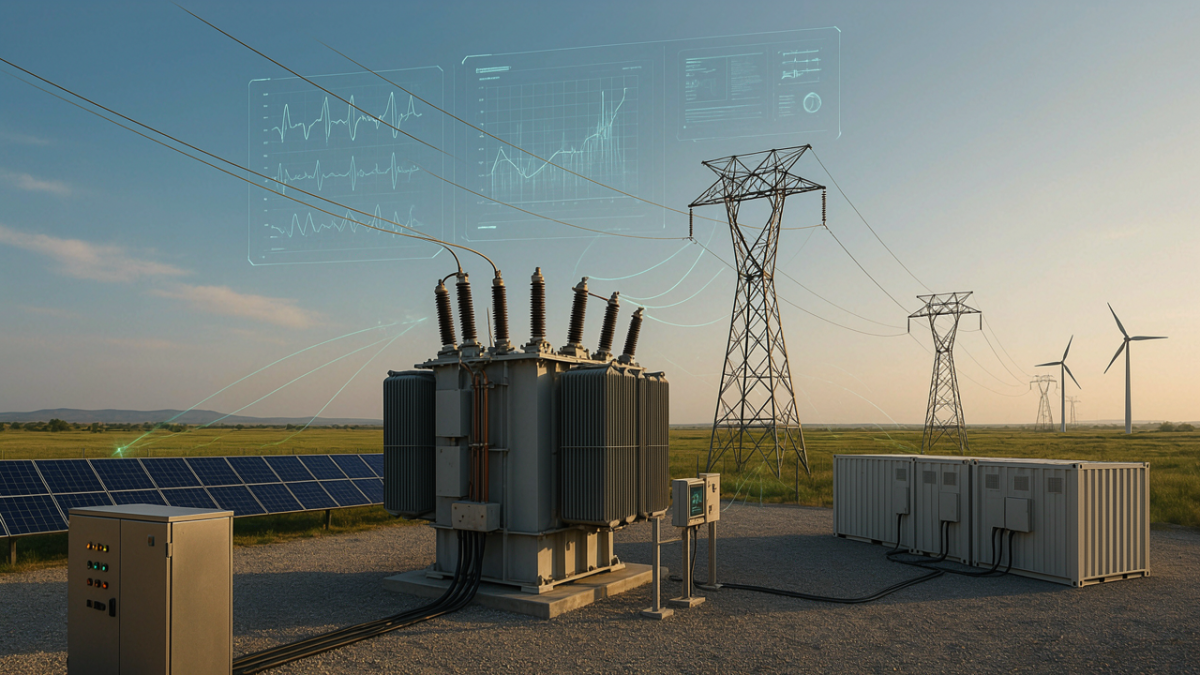
As electricity demand continues to grow, power networks need infrastructure that is reliable, compact, safe, and capable of operating efficiently under demanding conditions. Traditional air-insulated substations have supported electrical grids for decades, but modern projects increasingly require solutions that can work within limited spaces while delivering dependable high-voltage performance.
This is where gas-insulated substations (GIS) provide an important advantage. By enclosing major high-voltage components within a sealed gas-insulated system, GIS technology can significantly reduce the physical footprint of a substation while improving protection against environmental conditions.
For utilities, industrial facilities, renewable energy projects, and other large power infrastructure developments, properly engineered GIS systems can offer a practical approach to modern grid expansion.
1. What Are Gas-Insulated Substations?
A gas-insulated substation is a high-voltage electrical substation in which equipment such as circuit breakers, disconnectors, busbars, and grounding switches is housed inside sealed metal enclosures. Instead of relying primarily on atmospheric air for insulation, the equipment uses an insulating gas or an alternative gas-based insulation technology.
The compact arrangement allows several components to be integrated into a much smaller area than comparable air-insulated equipment.
GIS technology is particularly valuable where land availability is limited or where environmental conditions make conventional outdoor equipment more challenging to operate. Depending on project requirements, GIS installations can be designed for different voltage levels and applications.
Effective GIS substation design considers electrical performance, equipment configuration, site limitations, maintenance requirements, safety, protection, and future expansion.
2. Significant Space Savings
One of the most important benefits of GIS technology is its compact footprint.
Conventional air-insulated substations typically require substantial clearance between energized components and surrounding equipment. GIS equipment, by contrast, places high-voltage components inside enclosed compartments, allowing the overall installation to occupy considerably less space.
This makes gas-insulated substations particularly attractive in:
- Urban and densely developed areas
- Industrial facilities
- Power plants
- Renewable energy installations
- Underground or indoor substations
- Locations where land acquisition is expensive
Reducing the required site area can also simplify project planning. Instead of expanding horizontally, engineers may be able to develop a more compact electrical facility while maintaining appropriate safety and operational requirements.
3. Improved Reliability and Environmental Protection
Modern electrical infrastructure must operate reliably despite changing weather and environmental conditions. Outdoor substations can be exposed to dust, humidity, salt contamination, pollution, rain, and other external factors.
The enclosed construction of GIS provides greater isolation of critical electrical components from many environmental influences. This can help reduce the likelihood of contamination-related insulation problems and support more consistent equipment performance.
For utilities and industrial operators, reliability is particularly important because an unexpected substation outage can affect generation, transmission, distribution, and critical loads.
Well-engineered HV GIS solutions can therefore contribute to a more resilient electrical network when they are selected, configured, installed, and maintained according to project-specific requirements.
4. Enhanced Safety and Operational Performance
Safety is a central consideration in high-voltage engineering. GIS equipment provides an enclosed environment around energized components, reducing direct exposure to high-voltage conductors during normal operation.
The metal enclosure also helps establish controlled equipment boundaries and can reduce the influence of external environmental conditions on internal components.
However, GIS should not be viewed as a substitute for proper safety engineering. Safe operation still requires appropriate grounding, protection systems, isolation procedures, equipment ratings, maintenance practices, and compliance with applicable standards.
During GIS substation design, engineers must evaluate fault levels, insulation coordination, grounding requirements, protection schemes, equipment clearances, switching operations, and other factors that influence overall system safety.
5. Lower Maintenance and Long-Term Efficiency
Another advantage of gas-insulated technology is the potential for reduced routine maintenance compared with certain conventional outdoor substation arrangements.
Because critical components are enclosed and protected from many external contaminants, there may be fewer environmental cleaning requirements. Properly sealed equipment can also reduce exposure to moisture, dust, and pollution.
Maintenance strategies for GIS commonly focus on equipment condition, gas or insulation-system integrity, switching devices, monitoring systems, grounding, and other critical components.
The initial investment in GIS equipment can be higher than some conventional alternatives. However, project economics should consider the complete lifecycle rather than equipment purchase price alone. Reduced land requirements, potentially lower maintenance demands, improved reliability, and efficient use of valuable sites can influence the overall value of a GIS installation.
6. Supporting the Future of Modern Power Networks
Power systems are changing rapidly as utilities integrate renewable generation, battery storage, distributed energy resources, and increasing electrical demand. Substations must therefore be capable of supporting complex network configurations while maintaining reliability and operational flexibility.
Gas-insulated technology can be particularly useful for projects where space, reliability, and high-voltage performance are major considerations. GIS can also support indoor and compact substation configurations that would be difficult to achieve using conventional equipment.
The success of a project, however, depends on more than simply selecting GIS equipment. Engineers must evaluate the complete electrical system, including load requirements, short-circuit levels, protection coordination, grounding, insulation coordination, equipment ratings, future expansion, and site conditions.
A detailed engineering approach ensures that HV GIS solutions are appropriately matched to the requirements of the power network.
Conclusion
Gas-insulated substations offer a combination of compact design, environmental protection, reliability, safety, and efficient land utilization that makes them increasingly valuable in modern power systems.
From urban substations to industrial facilities and large-scale energy projects, GIS technology can help engineers address the growing demand for dependable high-voltage infrastructure within challenging site constraints.
Successful GIS substation design requires careful consideration of electrical, mechanical, civil, protection, grounding, operational, and maintenance requirements. When these elements are integrated properly, gas-insulated substations can provide a robust foundation for modernizing and expanding power networks.
For organizations planning high-voltage infrastructure, selecting the right GIS configuration and engineering approach can play an important role in achieving long-term reliability, safety, and operational performance.

Keentel Engineering is a trusted electrical engineering company specializing in substation design, power system studies, transmission engineering, and renewable energy solutions. With extensive industry experience, we help utilities, EPC contractors, and energy developers deliver reliable, efficient, and compliant power infrastructure projects. Our services include load flow analysis, short circuit studies, relay coordination, grid interconnection support, NERC compliance consulting, and engineering solutions for solar, wind, and battery energy storage systems (BESS). We are committed to providing innovative, cost-effective, and technically sound solutions that improve system performance and long-term reliability.











Comments (0)