

Thyroid and Fertility: How TSH Levels Affect Your Chances of Conceiving
Thyroid function can influence menstrual cycles, ovulation, conception, and pregnancy. Learn how TSH levels, hypothyroidism, hyperthyroidism, and thyroid management may relate to fertility and IVF.
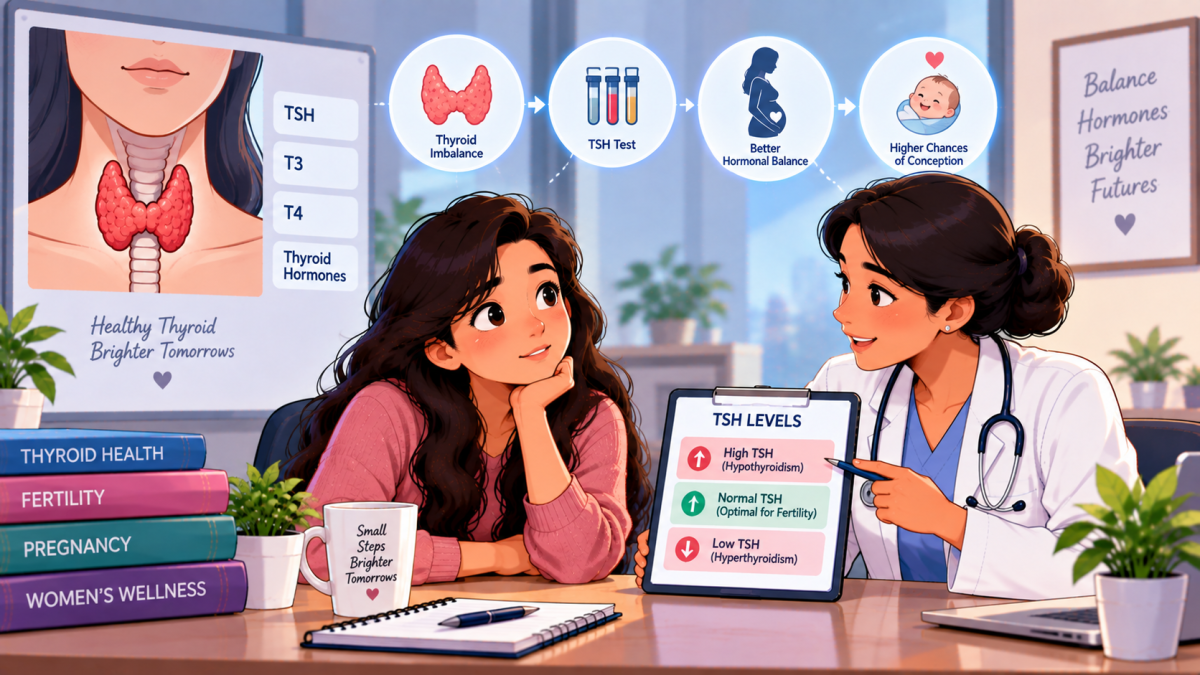
The thyroid gland may be small, but its hormones play an important role in reproductive health. Thyroid hormones help regulate metabolism, menstrual cycles, ovulation, and many processes involved in pregnancy.
When thyroid function is abnormal, it can sometimes make conception more difficult. This is why understanding the connection between thyroid and fertility is important for people who are trying to conceive, particularly those with irregular periods, previous pregnancy problems, or known thyroid disease.
One of the most commonly discussed tests is TSH, or thyroid-stimulating hormone. However, TSH should not be interpreted on its own. Doctors may consider thyroid hormone levels, symptoms, medical history, pregnancy status, and fertility factors when deciding whether treatment is needed.
What Is the Connection Between Thyroid and Fertility?
The thyroid produces hormones that influence many functions throughout the body. Reproductive health is one area that can be affected when thyroid function is significantly abnormal.
Both an underactive thyroid, known as hypothyroidism, and an overactive thyroid, known as hyperthyroidism, can affect menstrual and reproductive function.
Thyroid problems may contribute to:
-
Irregular or absent periods
-
Problems with ovulation
-
Changes in menstrual bleeding
-
Difficulty conceiving
-
Increased risk of some pregnancy complications
-
Problems associated with underlying autoimmune thyroid disease
Not everyone with a thyroid abnormality will experience infertility. The impact depends on the type and severity of the thyroid disorder and other fertility factors.
What Is TSH?
TSH stands for thyroid-stimulating hormone.
It is produced by the pituitary gland and signals the thyroid to produce thyroid hormones.
When thyroid hormone levels are too low, the body may increase TSH production to stimulate the thyroid. When thyroid hormone levels are higher, TSH production may decrease.
A TSH blood test is therefore commonly used to evaluate thyroid function.
However, a TSH result should be interpreted in context. A fertility specialist or endocrinologist may also order tests such as free T4 and thyroid antibody testing depending on the patient's symptoms and medical history.
What TSH Level Is Best for Pregnancy?
There is no single TSH number that applies to every person before conception and throughout pregnancy.
TSH reference ranges can vary according to the laboratory, pregnancy stage, and clinical situation.
This is particularly important because thyroid hormone requirements can change during pregnancy.
People with known hypothyroidism who are planning pregnancy may need their thyroid function reviewed before conception. Once pregnancy occurs, thyroid function may require closer monitoring.
Rather than trying to reach a specific TSH value without medical advice, it is better to discuss the result with a healthcare professional who understands the individual's fertility and pregnancy history.
TSH Levels and Pregnancy
During pregnancy, thyroid hormone requirements can change. This is one reason thyroid function is monitored more closely in people with known thyroid disease.
Untreated or inadequately treated hypothyroidism during pregnancy can be associated with complications affecting both the mother and developing baby.
Depending on the situation, doctors may monitor:
-
TSH
-
Free T4
-
Thyroid antibodies
-
Symptoms
-
Medication dose
-
Pregnancy stage
Treatment targets may differ depending on whether a person is already taking thyroid medication, is newly diagnosed, or has thyroid antibodies.
Can High TSH Affect Fertility?
High TSH can be associated with an underactive thyroid, particularly when accompanied by low thyroid hormone levels.
Hypothyroidism and infertility can be connected because thyroid dysfunction may interfere with normal reproductive function.
Possible effects include:
-
Irregular menstrual cycles
-
Problems with ovulation
-
Changes in sex hormone balance
-
Increased prolactin in some cases
-
Reduced likelihood of conception in certain situations
However, a mildly elevated TSH does not automatically mean that a person cannot become pregnant.
The cause of the abnormal TSH and the individual's overall fertility picture matter.
Hypothyroidism and Infertility
Hypothyroidism occurs when the thyroid does not produce enough thyroid hormone.
Some symptoms may include:
-
Fatigue
-
Feeling unusually cold
-
Weight changes
-
Dry skin
-
Constipation
-
Changes in menstrual periods
-
Difficulty concentrating
Some people have few or no obvious symptoms, which is why thyroid testing may be useful when there is a clinical reason to suspect thyroid dysfunction.
When hypothyroidism is diagnosed, treatment commonly involves thyroid hormone replacement prescribed by a healthcare professional.
For people planning pregnancy, thyroid medication may need to be adjusted because thyroid hormone requirements can increase during pregnancy.
Can Low TSH Affect Fertility?
Low TSH may occur when the thyroid is producing too much hormone, as in hyperthyroidism, although other causes are possible.
Hyperthyroidism can also affect reproductive health.
Potential effects include:
-
Irregular periods
-
Changes in ovulation
-
Difficulty conceiving
-
Pregnancy complications if inadequately controlled
Therefore, fertility concerns are not limited to high TSH.
Both unusually high and unusually low thyroid function may require medical evaluation.
Thyroid and Ovulation
Ovulation is a critical part of conception.
Thyroid dysfunction can interfere with the hormonal systems that regulate the menstrual cycle and ovulation.
For someone with irregular periods, thyroid testing may therefore be part of the fertility evaluation.
But thyroid function is only one possible explanation for irregular ovulation. PCOS, changes in body weight, high prolactin, reduced ovarian reserve, perimenopause, and other reproductive or medical conditions may also play a role.
Thyroid Antibodies and Fertility
Autoimmune thyroid conditions can involve antibodies that target thyroid tissue.
Two commonly discussed antibodies are:
-
Thyroid peroxidase antibodies, or TPO antibodies
-
Thyroglobulin antibodies
The presence of thyroid antibodies does not automatically mean a person will experience infertility.
However, thyroid autoimmunity may be relevant when assessing someone with thyroid dysfunction, pregnancy history, or certain fertility concerns.
Doctors may decide whether antibody testing is appropriate based on the clinical situation.
Thyroid and IVF Success
The relationship between thyroid and fertility also becomes important during assisted reproductive treatment.
People undergoing IVF may have their thyroid function reviewed, particularly when there is a history of thyroid disease or other clinical reasons for testing.
Thyroid IVF success is not determined by TSH alone.
IVF outcomes depend on many factors, including:
-
Female partner's age
-
Egg quantity and quality
-
Sperm quality
-
Embryo quality
-
Uterine health
-
Ovarian reserve
-
Underlying medical conditions
-
Previous fertility treatment
-
Thyroid function when clinically relevant
Correcting significant thyroid dysfunction before or during fertility treatment may be an important part of overall medical management.
It is not accurate to assume that lowering TSH to one particular number will automatically increase IVF success.
Should You Check TSH Before IVF?
Thyroid testing before fertility treatment may be considered based on medical history, symptoms, previous thyroid problems, or clinical practice.
If thyroid disease is already diagnosed, thyroid function should generally be appropriately managed before and during pregnancy.
Your fertility specialist may work with an endocrinologist or other physician when thyroid management requires additional expertise.
The goal is to optimize overall health rather than focus on a single laboratory number.
What Happens If TSH Is Abnormal Before Pregnancy?
If TSH is outside the expected range, doctors may first determine why.
Depending on the situation, they may review:
-
TSH results
-
Free T4 levels
-
Thyroid antibodies
-
Symptoms
-
Current thyroid medication
-
Previous thyroid history
-
Pregnancy status
-
Fertility treatment plans
Treatment depends on the diagnosis.
Someone with established hypothyroidism may need levothyroxine. Someone with hyperthyroidism may require a completely different approach.
Therefore, thyroid medication should not be started, stopped, or changed without medical guidance.
Can Treating Thyroid Problems Improve Fertility?
If thyroid dysfunction is contributing to abnormal ovulation or reproductive problems, appropriate treatment may help restore normal reproductive function.
However, treating the thyroid does not guarantee pregnancy.
A couple may have multiple fertility factors at the same time. For example, thyroid dysfunction may coexist with PCOS, tubal problems, endometriosis, reduced ovarian reserve, or male-factor infertility.
This is why fertility evaluation should consider both partners and the complete clinical picture.
Thyroid Testing During Pregnancy
People with known thyroid disease may require thyroid monitoring after becoming pregnant.
This is because thyroid hormone requirements can change during pregnancy.
Doctors may monitor TSH and free T4 and adjust medication when necessary.
Anyone taking thyroid medication who becomes pregnant should contact their healthcare professional promptly rather than making medication changes independently.
Lifestyle and Thyroid Health
Lifestyle habits can support general health, but they should not replace treatment for diagnosed thyroid disease.
Helpful habits may include:
-
Eating a balanced diet
-
Maintaining a healthy weight
-
Getting adequate sleep
-
Staying physically active
-
Taking prescribed medication consistently
-
Attending recommended blood tests
-
Discussing supplements with a healthcare professional
Iodine is essential for thyroid hormone production, but taking high-dose iodine supplements without medical advice is not recommended. The appropriate iodine intake can depend on individual circumstances and local nutritional factors.
When Should You See a Doctor?
Consider discussing thyroid testing and fertility with a healthcare professional if you have:
-
Known thyroid disease
-
Irregular or absent periods
-
Symptoms suggestive of thyroid dysfunction
-
Difficulty conceiving
-
Recurrent pregnancy loss
-
Previous thyroid surgery
-
A history of autoimmune thyroid disease
-
Abnormal thyroid blood tests
-
A planned IVF or fertility treatment cycle
Earlier evaluation may be appropriate depending on age and reproductive history.
Common Questions About Thyroid and Fertility
Can thyroid problems cause infertility?
Thyroid dysfunction can contribute to reproductive problems and difficulty conceiving in some people, particularly when the condition is untreated or significant. However, thyroid disease is only one possible fertility factor.
What TSH level is needed to get pregnant?
There is no universal TSH level that guarantees conception. The appropriate target can depend on thyroid diagnosis, pregnancy status, laboratory reference ranges, and individual medical circumstances.
Can high TSH make it harder to get pregnant?
High TSH associated with hypothyroidism can sometimes interfere with menstrual cycles and ovulation. Appropriate evaluation and treatment may help when thyroid dysfunction is contributing to fertility problems.
Can low TSH affect fertility?
Low TSH can occur with hyperthyroidism or other conditions. Untreated thyroid overactivity can affect menstrual and reproductive function and should be evaluated.
Does thyroid affect IVF success?
Thyroid function can be relevant to fertility treatment, but thyroid IVF success cannot be predicted from TSH alone. IVF outcomes depend on multiple factors.
Should I test TSH before trying to conceive?
Testing may be appropriate if you have symptoms, a history of thyroid disease, menstrual irregularities, or other clinical reasons. Your doctor can determine which thyroid tests are appropriate.
Can hypothyroidism be treated during pregnancy?
Yes. Hypothyroidism during pregnancy can generally be managed with thyroid hormone replacement under medical supervision. Medication and thyroid levels may need monitoring throughout pregnancy.
Final Takeaway
The relationship between thyroid and fertility is important because thyroid hormones interact with the systems that regulate menstrual cycles, ovulation, conception, and pregnancy.
An abnormal TSH does not automatically mean infertility, and there is no single TSH number that determines whether someone can become pregnant.
For people with hypothyroidism, hyperthyroidism, irregular periods, known thyroid disease, or fertility concerns, appropriate thyroid evaluation can be an important part of preconception and fertility care.
If you are planning pregnancy or IVF, discuss your thyroid results with your fertility specialist or endocrinologist. Treating an underlying thyroid condition when indicated can help create a healthier foundation for conception and pregnancy.
Medical Disclaimer: This article is for educational purposes only and does not replace medical advice, diagnosis, or treatment. TSH targets and thyroid treatment should be determined by a qualified healthcare professional based on individual circumstances, pregnancy status, and current clinical guidelines.

Ferti.health is an evidence-backed fertility education platform helping individuals and couples better understand fertility, reproductive health, and treatment options. The platform provides medically reviewed information on IVF, IUI, ICSI, egg freezing, embryo transfer, fertility conditions, success rates, and treatment costs. Our content is designed to make complex fertility information easier to understand, with practical guidance on treatment procedures, age-based success rates, Indian clinic cost ranges, and fertility-related conditions. Content is reviewed by fertility specialists and supported by evidence from trusted sources, including PubMed, ESHRE, ICMR, and ASRM. Ferti.health also provides fertility tools, including IVF cost and success estimators, to help users better understand their options. Our goal is to provide clear, transparent, and evidence-based fertility information so people can make more informed decisions and have better conversations with qualified fertility specialists. For More Details Please Visit https://ferti.health/








Comments (0)