

Business Suit Fabric Performance Study for Heat, Wrinkling, And All-Day Comfort
Compare business suit fabrics for heat resistance, wrinkling, and all-day comfort using fabric weight, construction, moisture resistance, resilience, and practical wear.

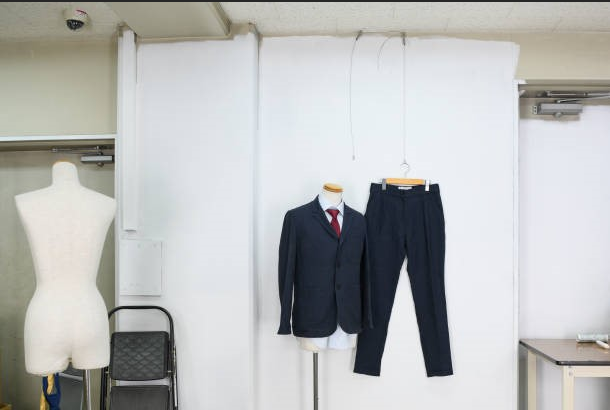
A suit can look polished first thing in the morning and feel far less impressive after hours of sitting, walking, commuting, and dealing with heat. Business suit fabric plays a major role in how well that suit holds its shape, manages warmth, and stays comfortable through a full day. Some fabrics resist wrinkles but trap more heat, while others breathe better but crease more easily. That tradeoff is easy to miss when choosing a suit based only on color or appearance.
The comparison below looks at the fabric characteristics that matter once the suit leaves the fitting room and enters a real workday.
Key Takeaways
-
Fabric weight alone does not determine cooling.
-
Thickness influences thermal performance.
-
Wool provides useful natural crease recovery.
-
Cotton generally develops visible wrinkles more readily.
-
Comfort requires breathability and flexibility together.
Heat Performance of Business Suit Fabric
Warm-weather performance depends on how readily heat and moisture vapor move through the cloth. Lightweight construction can reduce insulation, but choosing the lowest fabric weight does not automatically make a suit the coolest.
Fabric thickness, weave openness, lining, and air permeability also influence thermal performance. This is especially relevant in men's spring fashion, when suits may need to accommodate cool mornings, warmer afternoons, and climate-controlled offices.
Consider:
-
Fabric mass and thickness
-
Air permeability
-
Water-vapor resistance
-
Weave openness
-
Lining coverage
Study: Commercial Suiting Fabric Thermal Comfort
Stoffberg, Hunter, and Botha evaluated commercial suiting fabrics containing natural and manufactured fibers. Their research found that fabric mass and thickness had a greater influence on thermal resistance and water-vapor resistance than fiber type, blend, or fabric structure.
This finding shows why selecting Business Suit Fabric based solely on wool, cotton, or synthetic content may provide an incomplete picture of warm-weather performance.
Wrinkling Performance During Extended Wear
Wrinkles develop where suit fabric is repeatedly bent or remains compressed, particularly at the elbows, knees, waist, lap, and the back of the jacket.
Wool has natural resilience that helps fibers recover after deformation. Polyester can also support crease recovery when blended into suiting, while cotton generally holds visible creases more readily.
Areas worth checking include:
-
Jacket elbows
-
Trouser knees
-
Hip and lap areas
-
Lower jacket back
-
Waist folds
For pleated pants, recovery is particularly important because deliberate pleats should remain visually distinct from uncontrolled creasing created during sitting.
Study: Crease Recovery in Wool, Wool-Polyester, And Cotton
Ma Cai-xia, Zhao Zhi-guo, and Gao Xiao-ping compared crease recovery in wool, wool/polyester, and cotton woven fabrics. Wool demonstrated the strongest crease-recovery performance among the tested materials. The research also considered blending ratio, pressure, pressure duration, and recovery time.
For businesswear, the findings support wool-rich materials where maintaining a smoother appearance through prolonged sitting is important.
All-Day Comfort of Business Suit Fabric
All-day comfort requires thermal performance and mechanical behavior to work together.
An extremely lightweight cloth may reduce insulation but lack enough structure for tailored clothing. A dense, highly wrinkle-resistant fabric may maintain its appearance but become uncomfortable if heat and moisture cannot escape effectively.
For extended wear, business suit fabric should balance:
-
Manageable weight: Maintains structure without unnecessary bulk.
-
Moisture-vapor movement: Helps reduce humidity inside the garment.
-
Mechanical Flexibility: Allows comfortable sitting, walking, and reaching.
-
Crease Recovery: Helps compressed areas regain a smoother surface.
-
Surface Comfort: Prevents the fabric from feeling excessively stiff or coarse.
Additional layers also change the comfort equation. Fine-gauge men's sweaters add insulation beneath a jacket, so lighter suit fabrics may be preferable when knitwear forms part of the outfit. Meanwhile, designer accessories should support the finished look without distracting from practical fabric considerations such as breathability, flexibility, and weight.
The strongest all-day option is therefore not automatically the lightest or most wrinkle-resistant fabric. Performance depends on achieving enough breathability, resilience, and flexibility for the conditions in which the suit will actually be worn.
Study: Moisture Buffering and Thermal Comfort in Wool and Polyester
Synthetic fibers such as polyester do not manage moisture in the same way as wool. Wool can absorb moisture vapor within its hydrophilic fiber core and release it gradually into the surrounding air, helping stabilize the microclimate between the body and clothing. Research summarized by the International Wool Textile Organization also reports that wool buffered temperature changes more effectively than cotton and polyester during the resting period after activity, when other tested fibers experienced an “after-chill” effect.
For business wear, this supports wool-rich fabrics when more stable thermal comfort is needed across periods of movement, rest, and changing indoor temperatures.
Conclusion
Choosing business suit fabric for professional wear requires balancing heat management, wrinkle recovery, and sustained comfort. Fabric mass and thickness influence thermal resistance, while fiber resilience affects how effectively creases recover after sitting and movement. Wool-rich materials can provide strong wrinkle recovery, whereas cotton typically develops a more relaxed appearance during extended wear.
However, fiber type alone does not determine performance. Weave, lining, moisture transfer, flexibility, and overall construction also influence how a suit behaves throughout the day. Evaluating these characteristics together helps identify suits that remain comfortable, controlled, and presentable across commuting, meetings, movement, and changing temperatures.
FAQs
Can men's sweaters be worn comfortably under a business suit?
Yes, provided the sweater is fine-gauge, and the jacket has enough room through the chest and sleeves. Lightweight knitwear also helps avoid excessive insulation.
Do designer accessories affect how comfortable a suit feels?
Most accessories have little effect on fabric performance, although heavy belts, tightly worn ties, or bulky items can influence comfort during extended wear.
Does suit color affect heat in direct sunlight?
Darker fabrics generally absorb more solar radiation than lighter colors, which can make the outer surface warmer during prolonged sun exposure.
Does dry cleaning influence fabric performance?
Repeated cleaning can gradually affect finishes and fabric hand, so suits should generally be cleaned according to the manufacturer's care guidance rather than unnecessarily frequently.
Can an unlined jacket feel cooler than a fully lined one?
Often, yes. Removing some lining reduces the number of layers of material and can improve airflow, although actual comfort still depends on the outer fabric and jacket construction.










Comments (0)