

FMCG Supply Chain Management: Improving Inventory and Distribution Efficiency
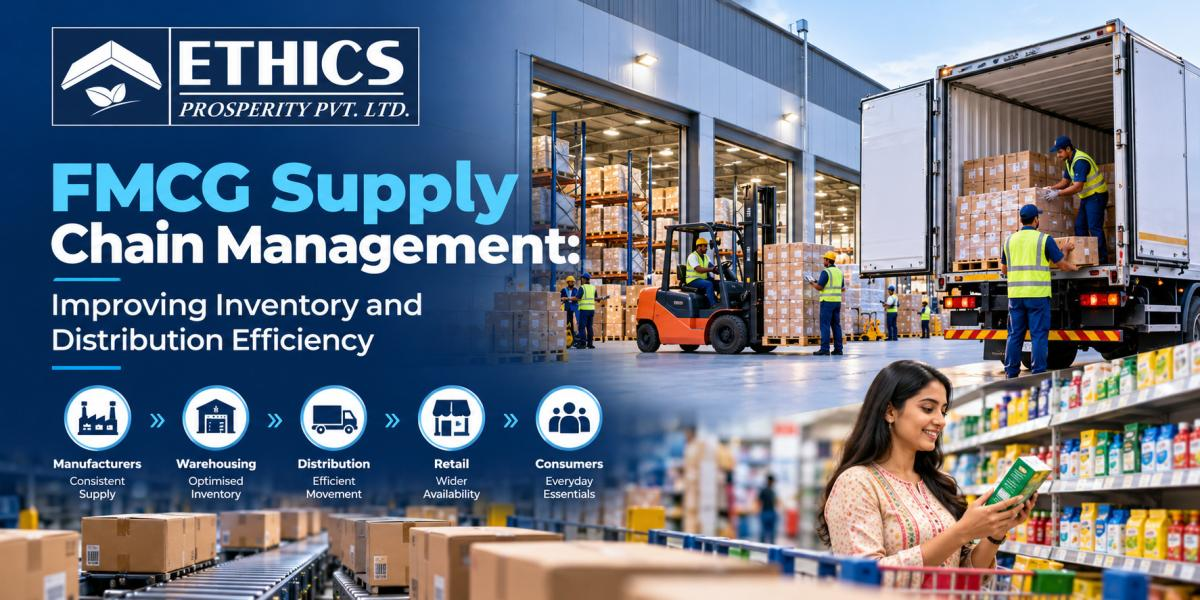
Fast-moving consumer goods businesses operate in a demanding environment where product availability, replenishment speed, and cost control influence commercial performance.
Products such as packaged foods, personal care items, household essentials, and beverages may move through manufacturers, distribution centres, wholesalers, retailers, and online channels before reaching consumers.
Managing this movement requires coordination between demand planning, procurement, warehousing, inventory, and transportation.
An effective FMCG supply chain helps businesses maintain product availability while controlling inventory holding costs, preventing avoidable stockouts, and responding to changing demand patterns.
Why FMCG Supply Chains Are Complex
FMCG businesses often manage large product portfolios, frequent orders, multiple distribution points, and changing promotional requirements.
Demand may vary by location, season, pricing, marketing activity, and retail-channel performance.
Some products also have limited shelf lives, specific handling requirements, or packaging variations that complicate inventory management.
When planning and distribution systems are disconnected, businesses may experience excess stock in one location while fast-moving products become unavailable elsewhere.
Five Strategies for Improving FMCG Supply Chain Performance
1. Improve Demand Forecasting
Demand forecasts help businesses plan purchasing, production, inventory, and distribution.
Forecasting should consider historical sales, seasonal patterns, promotional calendars, product launches, and regional demand differences.
Businesses should compare forecast results with actual sales and investigate significant deviations. This allows planning teams to refine assumptions and avoid treating historical demand as a guarantee of future sales.
Promotional forecasts should also account for the possibility that demand may shift between products rather than increase equally across the portfolio.
2. Strengthen Inventory and Shelf-Life Management
Inventory policies should reflect product demand, lead times, storage requirements, and shelf life.
Products with limited shelf lives may require expiry monitoring and suitable stock rotation procedures, such as first-expiry-first-out where appropriate.
Accurate batch records and clear handling instructions help employees identify which stock should be allocated first and which products require further review.
Businesses should also monitor slow-moving inventory and products approaching expiry to support timely operational decisions.
3. Improve Warehouse Productivity
FMCG warehouses often handle high volumes of cartons, cases, pallets, and individual units.
Warehouse layouts should support efficient receiving, storage, picking, and dispatch while maintaining safe handling practices.
Barcode scanning, appropriate product slotting, clear location records, and standardised picking procedures can improve accuracy and reduce unnecessary movement.
Performance should be evaluated through order accuracy, warehouse productivity, inventory accuracy, and dispatch reliability.
4. Coordinate Distribution and Replenishment
Distribution planning should connect stock availability with customer demand and delivery schedules.
Businesses can evaluate shipment consolidation, delivery frequency, route planning, and stock positioning across distribution centres.
Replenishment decisions should account for the service requirements of different retail formats and customer locations. The most economical distribution plan is not always the one with the lowest freight charge if it results in stockouts or missed delivery commitments.
5. Manage Promotions and Seasonal Peaks
Promotional campaigns and festive periods can create temporary increases in demand.
Planning teams should coordinate expected sales, inventory availability, warehouse labour, packaging materials, transport capacity, and customer delivery requirements.
Regular reviews during the campaign help identify deviations early and adjust replenishment or distribution plans.
The Role of Technology in FMCG Logistics
ERP platforms, Warehouse Management Systems, and Transportation Management Systems can help coordinate purchasing, inventory, warehouse activity, and distribution.
Analytics tools can support forecasting and identify slow-moving inventory or regional stock imbalances. Barcode technology helps record product movements, while suitable tracking systems provide visibility into shipments.
The effectiveness of these tools depends on accurate data, standardised processes, and timely communication between commercial and operational teams.
Important FMCG Supply Chain KPIs
Businesses can monitor forecast accuracy, stockout rates, inventory turnover, expiry-related losses, order fulfilment accuracy, on-time and in-full delivery, and logistics cost per case or shipment.
These indicators should be reviewed together. Reducing inventory may improve working capital but can also increase stockouts if replenishment policies are not adjusted appropriately.
Conclusion
FMCG supply chain management requires coordination between demand planning, inventory control, warehousing, and distribution. Accurate stock records, suitable replenishment policies, and reliable delivery processes help businesses balance product availability with operating costs.
Continuous measurement and improvement allow FMCG companies to respond more effectively to changing demand and distribution requirements.
Businesses exploring coordinated warehousing, inventory, fulfilment, and distribution can learn more through Ethics Prosperity's supply chain services and assess how its capabilities align with their business needs.

Ethics Prosperity is a leading provider of reverse logistics, warehousing, and distribution services in India. We offer emperature-controlled storage and transportation services and also provide customized value-added services to various industries such as pharmaceuticals, food processing, and manufacturing, chemicals, etc. Our team comprisesexperts in the fields of supply chain management, logistics management, cold chain management, and consulting. By offering advanced solutions that are customized to clients' needs, Ethics Prosperity helps them execute their business with greater efficiency while ensuring adherence to regulatory standards. It also offers temperature-controlled transportation & storage solutions for pharmaceuticals and food safety standards; these services are rendered through state-of-the-art facilities having sophisticated technology to ensure optimum quality and longer shelf life of products. We are confident that our usiness model has the potential to bring in a significant amount of value to our clients as well as to the people working with us. https://ethicsprosperity.com/














Comments (0)