

What Causes Unexpected Price Impact During Token Swaps on a DEX?
Discover what causes unexpected price impact on a DEX, how liquidity affects token swaps, and how a Uniswap clone script can improve swap transparency.

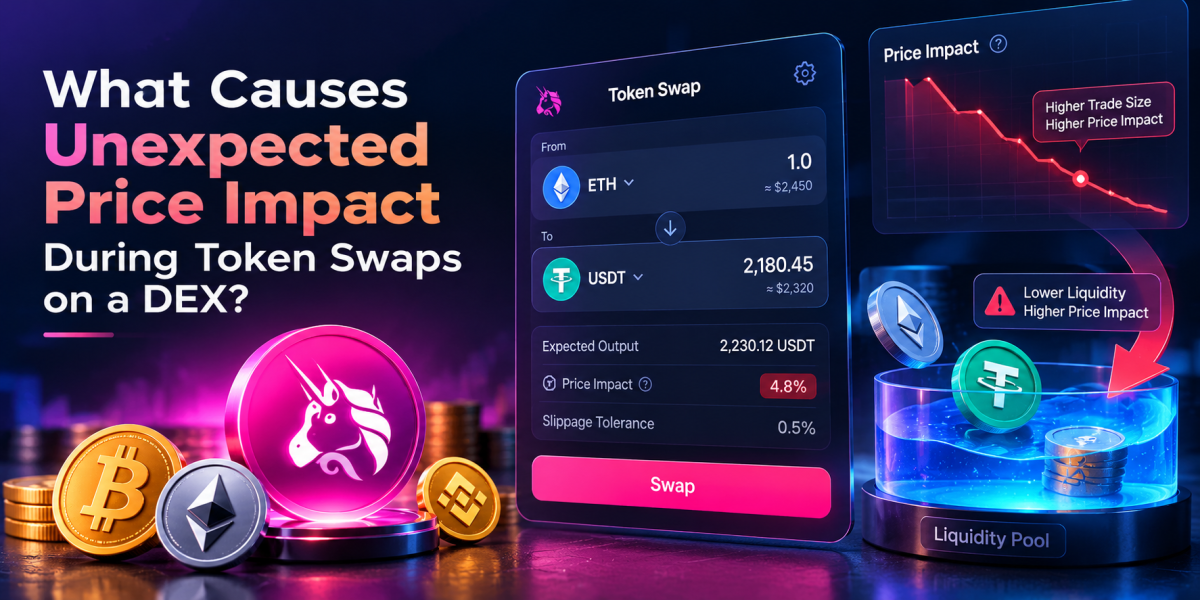
Have you ever tried swapping tokens on a decentralized exchange and noticed that the final value was less favorable than expected? Price impact is one reason this happens, and it can affect both traders and businesses building decentralized trading platforms.
Understanding how liquidity pools determine token prices helps explain why some swaps cost more than expected. If you're planning a DEX or evaluating a Uniswap clone script, knowing these mechanics is essential.
What Causes Unexpected Price Impact During Token Swaps?
Unexpected price impact occurs when a trade changes the token price inside a liquidity pool. It is usually higher when a swap is large compared with the pool's available liquidity. Pool imbalances, trading direction, and automated market maker formulas also influence the execution price.
1. Low Liquidity in Token Pools
Liquidity determines how easily users can trade without significantly changing a token's price. When a pool contains limited liquidity, even a relatively small trade can shift the token ratio considerably.
For example, swapping a large amount of one token from a small pool can reduce the amount received compared with the displayed market price.
2. Large Swap Orders
The size of a trade matters. In automated market maker (AMM) systems, trades change the balance between two tokens, which affects the price used for subsequent trades.
Splitting a trade may reduce its impact in some situations, but additional transaction fees and changing market conditions can offset the benefit.
3. Price Impact vs. Slippage
These terms are related but different.
-
Price impact: The effect your trade has on the pool's price.
-
Slippage: The difference between the expected execution and the actual execution price, often due to market changes or transactions occurring before yours.
A DEX should communicate both clearly so users understand the potential cost before confirming a swap.
4. How Can DEX Developers Reduce the Problem?
Developers cannot eliminate price impact in every trade, but they can make it easier to understand and manage.
Useful features include:
-
Displaying estimated output and price impact before confirmation.
-
Showing available pool liquidity.
-
Providing configurable slippage tolerance.
-
Supporting efficient trade routing where appropriate.
-
Testing smart contracts and swap calculations thoroughly.
A well-designed Uniswap clone script should present these details clearly rather than promising price stability.
Conclusion
Unexpected price impact usually comes from limited liquidity, large trades, and the pricing mechanics of automated market makers. Clear estimates, accurate swap calculations, and useful transaction warnings help users make better decisions.
Planning to build a decentralized exchange? Explore a Uniswap Clone Script to discuss the trading features and liquidity-management requirements your platform needs.















Comments (0)