

Different Types of ISO Certifications and Their Business Applications


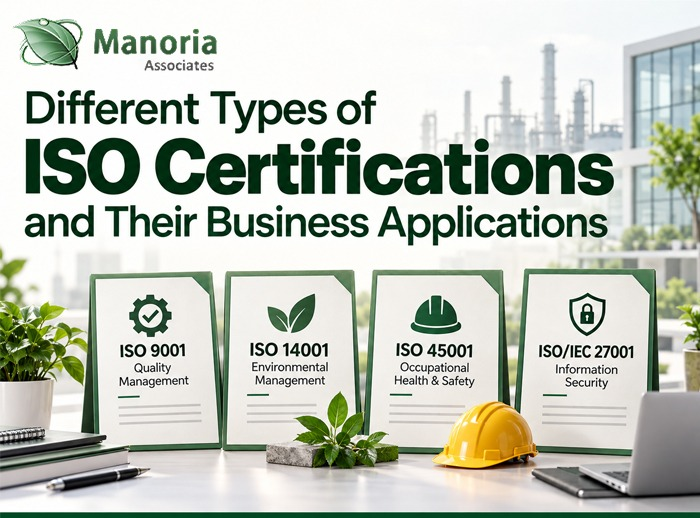
Manufacturers, IT providers, healthcare organizations, food processors, engineers, and other businesses require methods to sustain quality, mitigate risks, and satisfy clients. Within the context of international standards, organizations can optimize their functions and create uniform procedures. But there is no one-size-fits-all solution: The optimal certification for an organization is contingent upon what it does, the market it operates in, who its clients are, and its compliance obligations.
By learning about the various types of ISO standards and how they apply to business, organizations can determine which are most useful. Everyone knows that ISO standards have a wide range of uses for different types of organizations.
ISO 9001: Quality Management System
ISO 9001 is one of the most popular quality standards. You can use it to implement processes that keep your quality and service standards consistent, know what your customers want, and focus on improving your overall performance.
ISO 9001 enables manufacturers to track defect rates, monitor supplier quality, control production processes and address customer complaints. Service companies can follow the same approach to enhance the quality of their services.
Such as, an engineering company might implement a quality management system to make certain each project is conducted to established procedures and that specific specifications are satisfied. ISO 9001 is relevant to manufacturing companies, trading organizations, engineering organisations and providing agencies, no matter what size they are.
ISO 14001: Environmental Management System
ISO 14001 is a standard for environmental management. It is an effective tool to help organizations identify and control the environmental impact of their activities, and continually improve their environmental performance.
Industrial companies could apply this standard to track waste production, manage resource use, regulate emissions, and create procedures for sensitive activities. Construction and manufacturing organizations could adopt this to evaluate the environmental impact of their processes.
ISO 45001: Occupational health & safety management
Looking to improve your business compliance? Discover the key certification requirements and benefits. Read more on manoriaassociates.com












Comments (0)