

How to Fix Squeaky Hardwood Floors
Upgrade your space with expert hardwood floors Portland solutions. We combine skilled craftsmanship with quality materials to create timeless, elegant flooring for any home.
You know the board. It's the one outside the bedroom door that announces every 2am trip to the kitchen. You've started stepping over it without thinking.
Good news: a squeak is rarely a sign that the floor is failing. It's friction, and friction can be stopped. Most squeaks respond to simple fixes, and the handful that don't usually need a short visit for hardwood floor repairs and nothing more dramatic. Here's how to work through it, starting with the easy stuff.
Why hardwood floors squeak
A squeak is a sound made by two surfaces rubbing. Your job is to find which two surfaces, then stop them from moving against each other.
1. Wood rubbing on wood
Tongue-and-groove boards sit tight against their neighbors. When one dips under your weight, its edge slides against the board next to it. That scrape is the squeak. It's most common where boards have shrunk a little and the joint is no longer snug.
2. Boards that came loose from the subfloor
The other cause is movement against what's underneath. A nail works its way out, or the glue lets go, and the board flexes down and back up when you step. Sometimes the subfloor itself has pulled away from the joists below. Most hardwood floor repairs for squeaks come down to which of these two you're dealing with, because the fix for each is different.
Why the noise changes with the seasons
Wood takes on moisture and gives it up all year long. In Portland that means swelling through the wet months and drying out when the heat comes on. Each swing loosens something a little. That's why a floor can be silent in July and noisy in January, and why a squeak you fixed once can come back.
Find the squeak before you fix it
Skip this step and you'll end up driving screws into random spots. Take ten minutes.
1. Walk the floor and mark every spot
Walk slowly across the room, heel to toe. Every time you hear a squeak, stop and press the spot with your foot to confirm. Stick a piece of painter's tape on it. Some squeaks hide between two boards, so rock your weight back and forth to find the exact edge.
Do this when the house is quiet. A second person helps a lot, because one can walk while the other listens or watches from below.
2. Work out what sits underneath
The fix depends on what you can reach. If there's a basement or crawl space under the squeak, you have options from below. If the room sits over a finished ceiling, you're limited to the top side. Find the joists with a stud finder or by looking at the nail lines in the boards, since the nails usually follow the joist. Not sure where yours run? That's one reason people look up hardwood floor repairs near me instead of guessing, because a wrong screw in the wrong place doesn't fix anything.
Fixes you can do from above
These work when you can't get under the floor, and they're the least invasive.
1. Powder in the seams
If two boards are rubbing, powder reduces the friction. Sprinkle talcum powder or powdered graphite into the seam, then work it in with a soft brush or a gentle walk back and forth. Wipe off the excess. It's quick, it costs almost nothing, and it works best on minor squeaks. Don't expect it to last for years, but it can buy a quiet season.
2. Trim screws into the joist
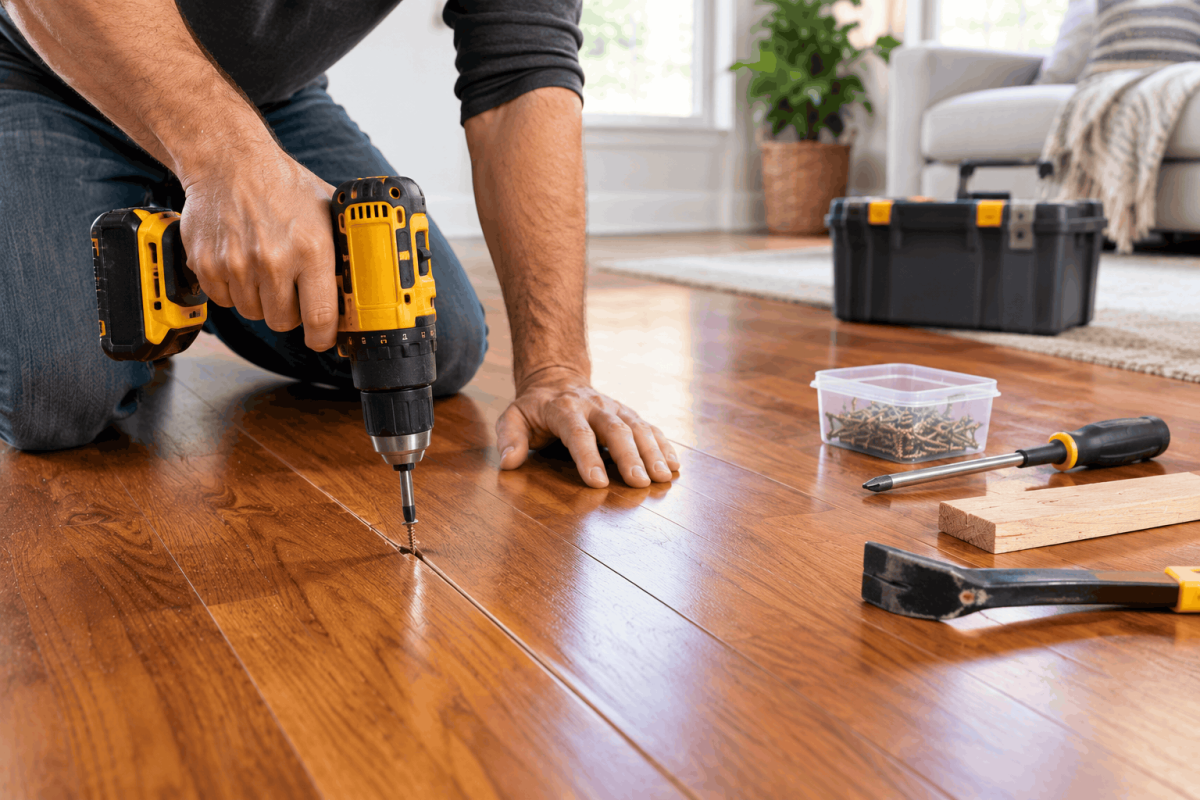
For a board that has lifted away from the subfloor, drive a thin trim-head screw through it into the joist. Pre-drill a small hole so the board doesn't split. Countersink the head slightly, then fill the hole with wood filler that matches your floor. The key is hitting the joist and using a screw length that doesn't punch through the other side. Look at your floor thickness before you pick one.
3. Squeak-repair kits
Kits made for this job use a special screw that snaps off below the surface, so the hole is tiny and easy to hide. They're worth it if you have several squeaks to fix, since the hole is much smaller than a standard screw and the tool guides the depth. Follow the instructions closely.
Fixes you can do from below
If you can get under the floor, go there first. It leaves the surface untouched.
1. Shims and glue
Have someone walk over the squeak while you watch from underneath. If you see a gap between the subfloor and the top of a joist, slide in a thin wood shim coated with wood glue. Tap it in gently. You want it snug, not forced. Forcing it can raise the floor and create a bump.
2. Screws up through the subfloor
If the subfloor itself is loose, drive screws up through it into the underside of the hardwood. This is where length matters most. The screw must be shorter than the subfloor and flooring combined, or it pokes through the surface. Measure first. A little caution here saves you from a much bigger repair.
What not to do to a squeaky floor
Some popular advice causes more trouble than the squeak ever did.
1. Oils and spray lubricants
Oil seeps into the seams, can stain the wood, and may interfere with the finish when you refinish later. Powder is safer. Anything that leaves residue on or near the surface is a risk. Bad advice online leads to extra hardwood floor repairs more often than you'd think, and a fresh stain is harder to fix than the original squeak.
2. Long screws and guesswork
Random screws can hit pipes, wires, or nothing at all. Use a stud finder, check what's below, and pick a screw length on purpose. If a spot keeps squeaking after two tries, stop adding holes and ask someone to look at it.
When to call a professional
Some squeaks come from problems that no screw will fix.
1. Signs it is more than a squeak
Call someone if the squeak comes with sagging, bouncing, or a soft feeling underfoot. Same if you see cupping, gaps that keep widening, or any sign of moisture. Squeaks across an entire room, or in a floor that's glued down or floating, also need a different approach. Typing hardwood floor repairs near me into a search bar and booking someone to look at it is a sensible move at that point, because a spring in the floor can point to a structural problem, and fixing a symptom wastes money. Squeaks that come back after repairs can mean the same thing.
2. What a visit looks like
A good contractor will walk the floor, locate the joists, check the subfloor, and tell you which squeaks are cosmetic and which aren't. All Seasons Floors offers a free walk-through, where the team measures, inspects the subfloor, and goes over options with you. They're a family-owned Portland company with more than 20 years of hands-on experience, and their service list includes repairs and maintenance. If you want a clear answer on your own boards, hardwood floor repairs near me is worth a call to 503-860-3364.
Squeak work is often a short job when it's caught early. The same crew handles larger hardwood floor repairs near me customers ask about, from damaged boards to refinishing, so one visit can cover more than the noise.
Conclusion
Squeaks come from friction, and friction has a source you can find. Mark the spot, work out what's below it, and start with the gentlest fix: powder in the seam, then screws into the joist, then shims from below. Keep oils and long screws out of it. If the floor also sags, cups, or smells damp, the noise isn't the problem, so bring in a pro for hardwood floor repairs and let them check the structure. And if you'd rather not hunt for joists yourself, searching hardwood floor repairs near me and booking a walk-through is a faster way to end up with a quiet floor.
Frequently Asked Questions

Upgrade your space with expert hardwood floors Portland solutions. We combine skilled craftsmanship with quality materials to create timeless, elegant flooring for any home.















Comments (0)