

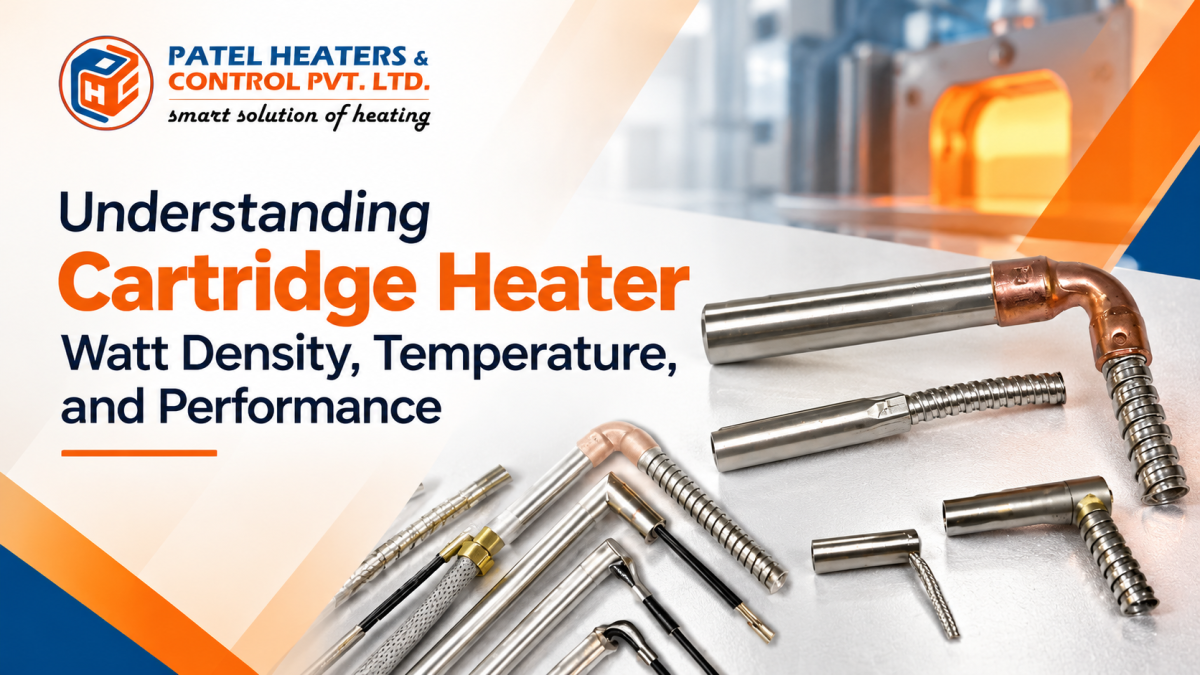
Understanding Cartridge Heater Watt Density, Temperature, and Performance
Understand how cartridge heater watt density, bore fit, sheath temperature, and lead construction affect heating performance and service life. Learn how to calculate watt density, prevent common failures, and select the right heater for your industrial application.
Overview of Main Points
This guide explains how watt density, bore fit and temperature decide how a cartridge heater performs and how long it lasts. It covers how to calculate watt density, sheath temperature limits, leads and thermocouples, moisture problems and what to tell your supplier.
Contents at a Glance
-
What Watt Density Means
-
Calculating Watt Density for Your Heater
-
Why Fit Decides How Hot a Cartridge Heater Runs
-
Sheath Temperature and Material Limits
-
Leads, Terminations and Thermocouples
-
Moisture, Swelling and Common Failures
-
Choosing the Right Heater and Ordering Details
-
Specification Questions for Your Supplier
-
Ask for a Heater Recommendation
-
Answers to Common Heater Questions
Why Small Heaters Fail Early
A cartridge heater is a rod-shaped heater inserted into a drilled hole in a metal block, die, platen or mould. It is small and simple, yet it is one of the most common heaters to fail early. Most failures trace back to the same few causes: too much power for the surface area, a loose fit, moisture or poor lead protection.
Understanding watt density and temperature helps you choose a heater that heats quickly, lasts and keeps your process stable. The sections below explain the basics. Use them as a checklist when you specify or compare heaters. Always follow the maker's data for the final rating.
What Watt Density Means
Watt density is the power of the heater divided by the surface area of its heated section. It is usually expressed in watts per square centimetre or per square inch. A higher number means more power is pushed through each unit of surface.
High watt density heats faster and suits tight spaces, but it makes the sheath run hotter. Low watt density runs cooler and lasts longer, which suits lower temperatures or poor heat transfer. Choose watt density to match the material being heated and the temperature you need.
Patel Heaters states that its heaters come in low and high-watt density options, with a maximum of up to 50 watts per centimetre on its page. Confirm the unit and the conditions with any maker, because the safe limit depends on fit, temperature and material.
Calculating Watt Density for Your Heater
Heated surface area equals the sheath circumference multiplied by the heated length. The heated length is the total length minus the unheated section at the lead end. Use consistent units, and always use heated length, not total length.
Take a 12.7 mm (half-inch) diameter heater with a 100 mm heated length rated at 500 watts. The surface area is about 3.14 × 1.27 cm × 10 cm, or roughly 40 square centimetres. Dividing 500 by 40 gives about 12.5 watts per square centimetre.
Check this figure against the maker's limit for your temperature and fit. A cartridge heater pushed beyond its limit may heat quickly but fail early. Patel's page also lists minimum unheated lengths by diameter, which you must subtract, and its website lists a calculator.
Why Fit Decides How Hot a Cartridge Heater Runs
Heat leaves the heater through the sheath into the surrounding metal. A tight fit gives good contact, so heat flows out easily and the sheath stays closer to the block temperature. Hot runner and mould applications depend on good contact for fast, even heating.
A loose fit leaves an air gap that acts like insulation. The sheath then runs far hotter than the block, the resistance wire overheats and life drops sharply. Patel's page notes that a tight bore allows higher watt density, and a loose fit makes the sheath run hot.
Drill and finish the hole as the maker advises, keep it clean and free of oil, and avoid sloppy clearances. Share the bore diameter, material and target temperature when you ask for a rating.
Sheath Temperature and Material Limits
The block temperature you want is not the same as the sheath temperature. The sheath is hotter, and the resistance wire inside is hotter still. The difference grows with watt density and with any air gap. Overheating the sheath is the main reason for swelling and early failure.
Patel describes helically coiled 80/20 nickel chrome or Kanthal resistance wire inside a sheath filled with high-purity magnesium oxide, which conducts heat and insulates electrically. The sheath material sets the maximum sheath temperature, so ask for the grade and its limit.
Ask for the maximum sheath temperature at your watt density, not just a general maximum. If your process runs hot, request a lower watt density or a better fit.
Leads, Terminations and Thermocouples
Lead construction decides how well the heater survives vibration, movement and abrasion. Patel lists crimped-on leads for high temperature, swaged-in leads for slight bending, stainless steel braid and armoured hose for rougher service, and right-angle exits where space is tight. Choose leads by what the installation involves, such as bending, abrasion, oil or space limits.
Other options include screw terminals, double-ended terminals, terminal boxes and a Teflon end seal that resists oil and water up to 250°C. Mounting flanges and fittings helps where vibration could shake the heater out of its hole.
Internal thermocouples, type J or K, can be built in to monitor the sheath or the heated part and can be grounded or ungrounded. They can be wired to a controller to cut power on overheating.
Moisture, Swelling and Common Failures
Magnesium oxide absorbs moisture, which can cause a short circuit when power is applied. Keep heaters dry, protect the lead end, and dry a damp heater at low temperature before use. Patel suggests Teflon end seals where oil or water is present. Check insulation resistance before fitting a stored heater.
A swollen heater that gets stuck in its hole has usually been run above its rated watt density. Scale on the sheath makes things worse. Clean it gently when cool, and correct the rating rather than only replacing the heater.
A good cartridge heater lasts longer when voltage matches the rating, leads are protected, the fit is tight and a controller prevents overheating.
Choosing the Right Heater and Ordering Details
Patel lists the details it needs to quote: diameter, length, voltage and wattage, type of termination, and a drawing or photo if necessary. Giving complete details avoids a wrong rating and rework. Send a drawing for unusual shapes or tight spaces.
Common uses include packaging equipment, plastic processing devices, labelling machines, gas and liquid heating, hot stamping, food processing and shoe manufacturing. Tell the maker what the heater will heat and in what conditions.
Compare quotations on rating, fit, construction and testing, not only price. The cheapest heater often costs more in downtime. Ask about delivery, spares and warranty before you order.
https://patelheaters.com/cartridge-heaters-features-applications-and-selection/
Specification Questions for Your Supplier
Keep this list ready when you speak to suppliers:
-
What watt density is this heater rated for, and at what temperature?
-
What fit tolerance should I drill the hole to?
-
Which sheath material and maximum sheath temperature apply?
-
Which lead construction suits my installation?
-
Can an internal thermocouple be fitted?
-
How is moisture protection provided?
Clear answers to these tell you most of what you need to know.
Ask for a Heater Recommendation
Before ordering, note the bore diameter, heated length, target temperature, voltage and what is being heated. Then compare quotations on rating and construction, not only price.
Patel Heaters & Control Pvt. Ltd., based in Vadodara, Gujarat, and operating since 1982, makes heaters, including low and high-density cartridge types, as well as custom designs. You can see its range at Patel Heaters and Control. Share your application details with the team and ask for a rating recommendation. A short conversation now can save you a lot of trouble later when choosing your next cartridge heater.
Answers to Common Heater Questions
Q. How long does delivery take?
Lead time depends on the diameter, length, rating and any custom features. Standard sizes usually dispatch sooner, while custom heaters need extra time for building and testing. A good manufacturer gives a written delivery date with the quotation and tells you early if it changes.
Q. Can a heater be made to my watt density and size?
In most cases, yes. Makers can build heaters in various diameters, lengths, voltages and wattages, with a watt density chosen for your application. Share the bore diameter, material, target temperature and termination type so the team can suggest the right rating.
Q. What does the warranty cover?
Warranty normally covers manufacturing defects for a fixed period. Damage from overheating, wrong voltage, moisture or a loose fit is usually left out. Ask for the terms in writing.
Q. Why did my heater swell or stick in its hole?
It usually means the heater ran above its rated watt density or in a loose hole, so the sheath overheated and expanded. Choose the right watt density and a tight fit from the start, and consider an internal thermocouple to cut power on overheating.

Patel Heaters & Control Pvt. Ltd., established in 1982, is a leading manufacturer of industrial heaters, sensors, and control panels based in Vadodara, India. They provide customized, ISO-certified heating solutions for industries like plastics, chemicals, and engineering. Known for quality, innovation, and reliability, the company serves both domestic and international markets. Learn More: https://patelheaters.com/













Comments (0)