

How Jewelers Match Diamonds With Ring Settings
Discover how jewelers match diamonds with ring settings — shape, cut, clarity, and lifestyle all play a role in a thoughtful pairing process.

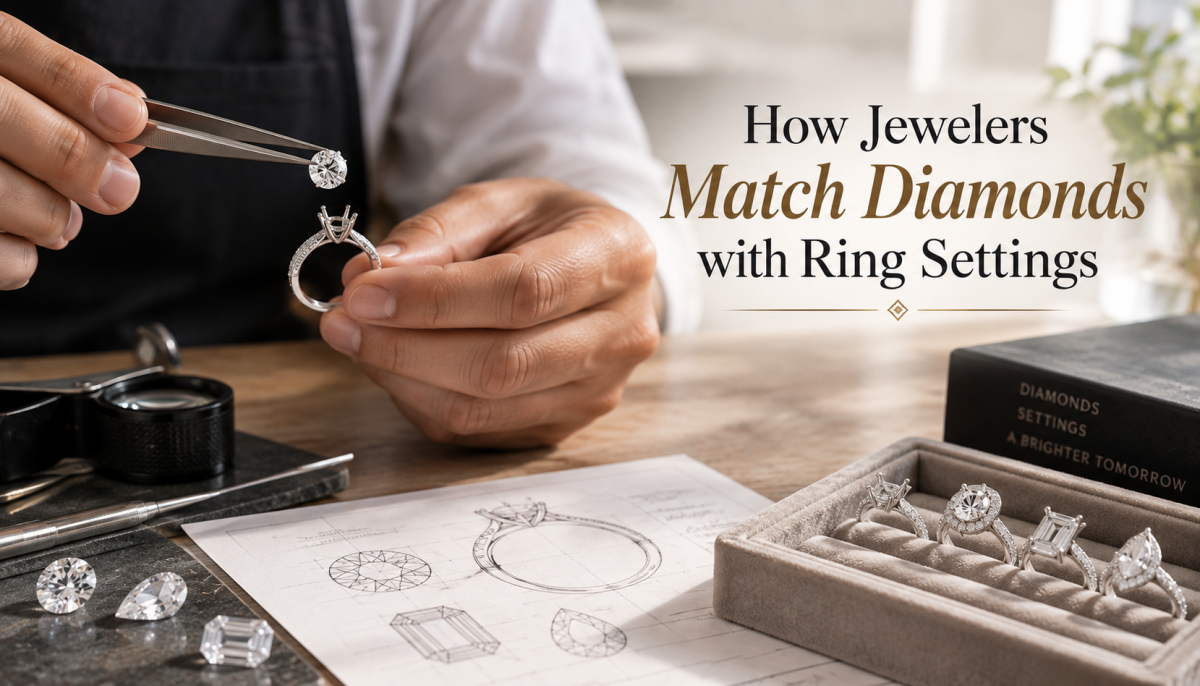
When a diamond and a setting come together well, it looks effortless, like the two were simply always meant to be paired. That effortlessness is actually the result of a fairly deliberate process, one most buyers never see directly, weighing a stone's specific characteristics against a setting's construction before the two are ever combined. Understanding what actually goes into that process helps explain why some pairings feel instantly right and gives you a clearer sense of what a knowledgeable jeweler is actually evaluating on your behalf.
It Starts with the Diamond's Shape, Not the Setting Style
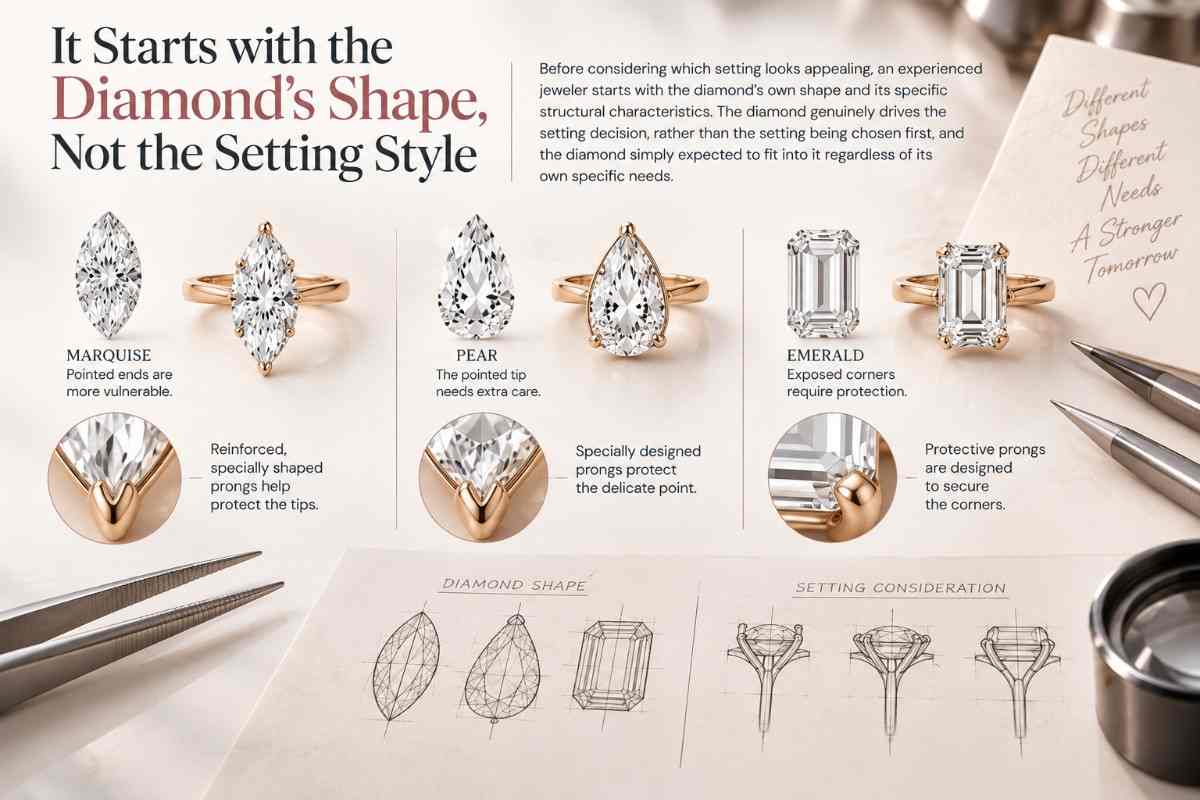
Before considering which setting looks appealing, an experienced jeweler starts with the diamond's own shape and its specific structural characteristics. Pointed shapes, like marquise and pear cuts, carry genuine vulnerability at their tips, which immediately narrows the field toward settings with reinforced, specially shaped prongs designed to protect those exact points. Step-cut shapes, like emerald cuts, have exposed corners rather than points, calling for a different kind of protective consideration entirely.
This shape-first approach means the diamond genuinely drives the setting decision, rather than the setting being chosen first, and the diamond simply expected to fit into it regardless of its own specific needs.
Assessing Cut Quality Before Choosing How Much to Expose
A diamond cut quality directly informs how much of the stone in a setting should be exposed to light. An excellently cut stone, already performing at its optical best, generally calls for an open, minimal setting that lets that quality shine through without unnecessary interference.
A diamond with a more moderate cut grade sometimes benefits from a setting style that adds supplemental brilliance around it. This is exactly why a halo rings for women design often gets recommended specifically for center stones where the surrounding accent diamonds can meaningfully enhance overall brilliance, compensating somewhat for a center stone that isn't independently maximizing light return on its own. A knowledgeable jeweler considers this relationship directly rather than treating setting choice as purely a matter of style preference.
Considering Clarity and Where Any Characteristics Actually Sit
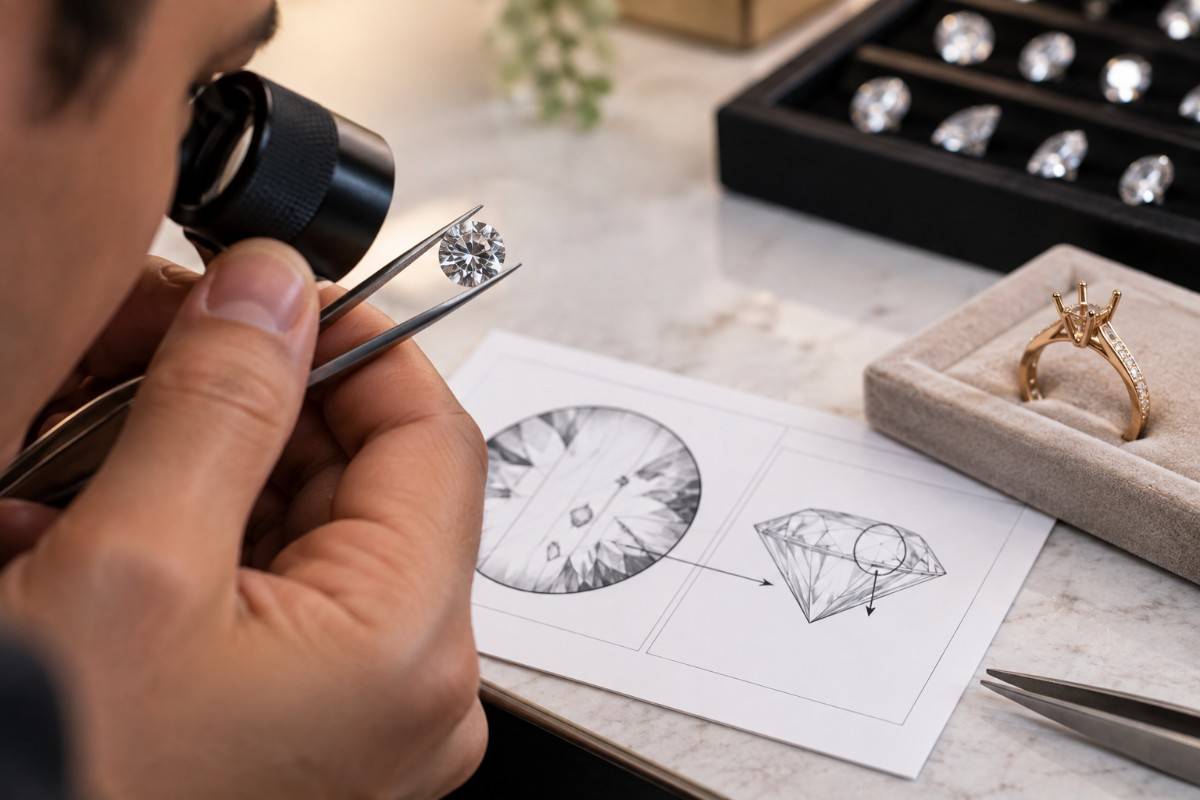
Clarity grade matters, but so does the specific location of any inclusions or characteristics within the stone, a detail that genuinely informs setting choice and stone orientation during the matching process.
An experienced jeweler examines exactly where any visible characteristics sit within a specific stone, and considers whether setting orientation, positioning that area beneath a prong rather than in a fully exposed position, can minimize its visibility without misrepresenting the stone's actual grade in any way. This kind of careful, individual attention is part of what separates a thoughtfully matched piece from one assembled without this level of consideration.
Evaluating the Stone's Physical Proportions
Beyond shape and quality grades, diamond's actual physical measurements, including girdle thickness, the thin edge separating the stone crown from its base, genuinely informing prong design and placement.
A stone with a thinner girdle benefit from more substantial prong coverage at that specific point, since thinner girdles carry more risk of chipping under impact than thicker ones. This is precisely the kind of physical detail a careful matching process accounts for directly, rather than applying identical prong construction universally regardless of an individual stone's specific proportions.
Matching Setting Construction to Intended Wear
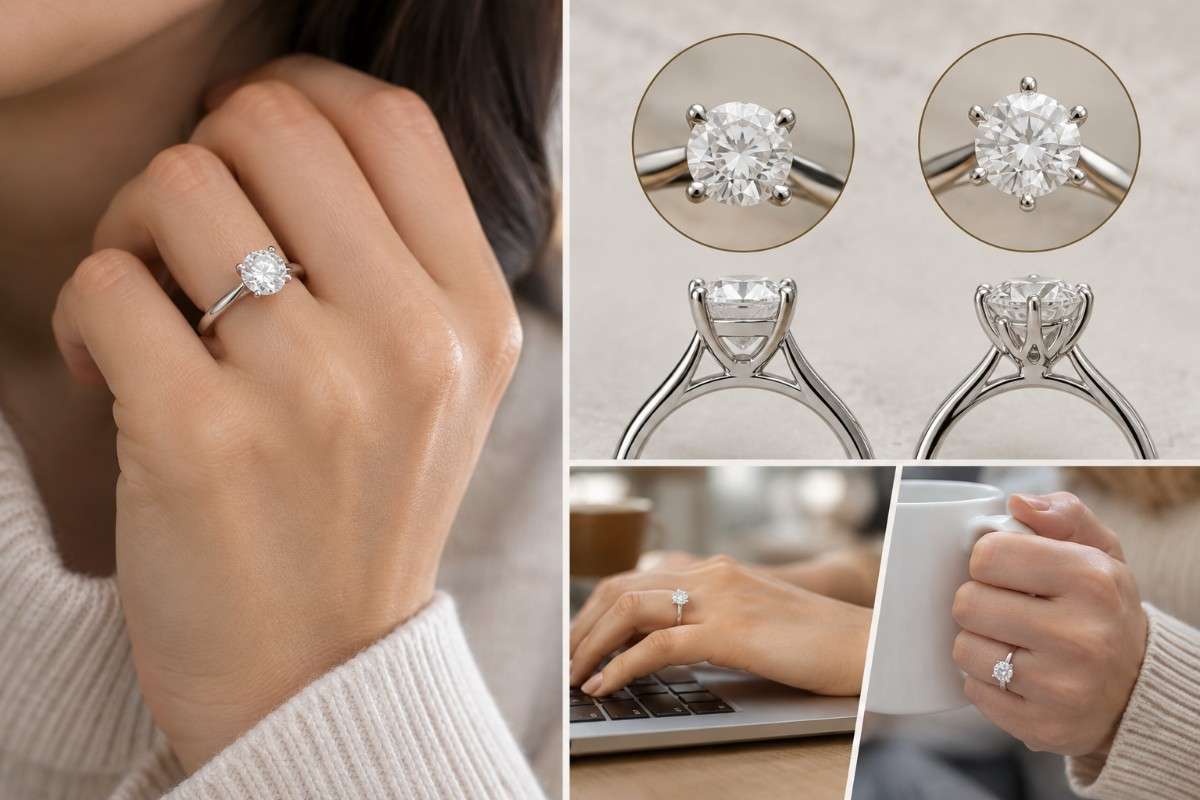
Beyond the stone's own characteristics, a thoughtful matching process also considers how a piece will actually be worn day to day, since a ring intended for constant daily wear has different practical needs than an occasional-wear piece.
This influences decisions like prong count, whether four or six prongs suit the specific stone and anticipated activity level, and setting height, whether a raised setting maximizing brilliance or a lower-profile design reducing snagging risk better serves the wearer's actual daily life. A genuinely thorough matching process asks these lifestyle questions directly, rather than assuming every buyer's daily routine is identical.
Why This Process Matters for Buyers
Understanding this process gives you a genuinely useful framework for evaluating a retailer's expertise, and for asking better questions during your own buying experience. A jeweler who discusses these specific factors, shape vulnerability, cut-to-setting relationship, clarity positioning, physical proportions, and intended wear, demonstrates a level of genuine consideration that purely aesthetic-focused advice doesn't provide.
If you're planning to Buy engagement ring online , look for retailers willing to discuss these specific factors directly when you ask, rather than offering only general style recommendations, since this level of detail is a genuine signal of how carefully your specific piece is actually being considered, not just sold.
Questions Worth Asking During Your Own Matching Process
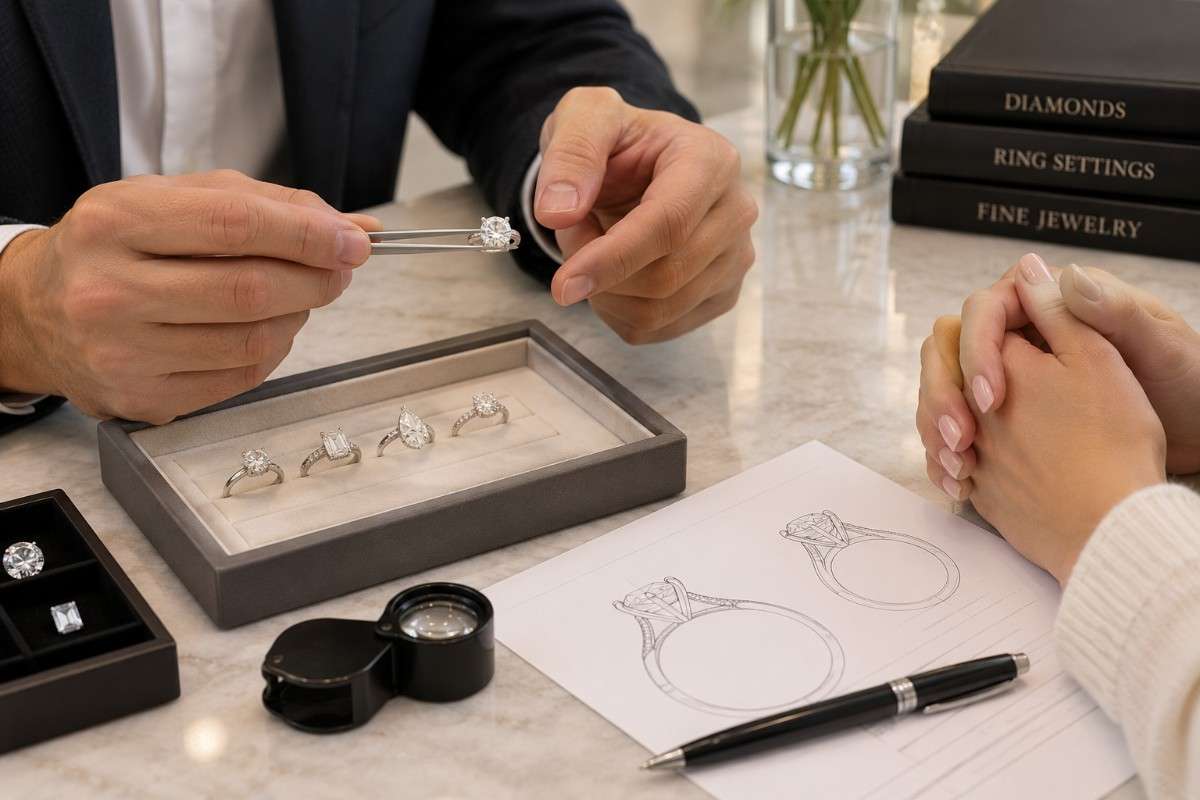
A few direct questions can help you evaluate how thoughtfully a specific diamond and setting have been matched for your piece.
Ask why a specific prong style was recommended for your diamond shape, and whether any additional reinforcement was considered for pointed or step-cut stones specifically. Ask how the setting's openness relates to your stone's cut grade, understanding whether an open or more supplemented setting genuinely suits your specific diamond performance. Ask about your stone's girdle thickness and whether prong construction reflects that specific measurement. Discuss your actual daily routine honestly, since this information should genuinely influence prong count and setting height recommendations, not just aesthetic preference alone.
What a Well-Matched Piece Actually Delivers
When this process is done thoughtfully, the result is a piece that doesn't just look good in a single photograph, it performs well across years of actual daily wear, protects the stone's specific vulnerabilities appropriately, and showcases its genuine qualities honestly rather than through generic, one-size-fits-all construction.
This is ultimately why the matching process matters as much as it does. A diamond and setting chosen thoughtfully together, rather than combined without this level of consideration, produces a genuinely better result than either element could deliver on its own.
Frequently Asked Questions
1. Why does diamond shape matter more than setting style when choosing a ring?
Ans. Because different shapes carry different structural vulnerabilities, pointed shapes need reinforced prongs at their tips, for example, starting with the diamond's shape ensures the setting genuinely protects and complements that specific stone rather than being chosen on appearance alone.
2.How does cut quality influence setting choice?
Ans. An excellently cut diamond generally performs best in an open setting that showcases its brilliance directly, while a more moderately cut stone can sometimes benefit from a setting style, like a halo. That adds supplemental brilliance around it.
3.Does the position of inclusion within a diamond actually matter?
Ans. Yes. An inclusion specific location can influence setting orientation, since positioning it beneath a prong rather than in a fully exposed area can minimize its visibility without misrepresenting the stone's actual clarity grade.
4. Why does girdle thickness affect prong design?
Ans. A thinner girdle is more vulnerable to chipping under impact, so diamonds with a notably thin girdle benefit from more substantial prong coverage at that specific point compared to a stone with a thicker girdle.
What questions should I ask a jeweler about how my diamond was matched to its setting? Ask why a specific prong style was chosen for your stone shape, how the setting relates to your diamond cut grade, whether girdle thickness informed the construction, and how your actual daily lifestyle influenced the recommendation.
The Bottom Line
Matching a diamond to a ring setting well involves considerably more consideration than pairing a popular stone shape with a popular setting style. Shape-specific vulnerabilities, cut quality, clarity positioning, physical proportions, and intended daily wear all genuinely inform a thoughtful matching process. Understanding what this process involves helps you recognize genuine expertise when you encounter it and ask sharper questions to ensure your own piece has been considered this carefully too.








Comments (0)