

A Practical Blueprint for Eliminating Certificate Outages Across Your Web Assets
Learn how to eliminate certificate downtime across your web ecosystem with this practical blueprint covering discovery, tiered alerts, and SSL expiry monitoring.

Every seasoned web professional has witnessed the sudden panic of an expired digital certificate. Without warning, a primary website, a customer checkout portal, or a mission critical application programming interface stops responding normally. In its place, visitors encounter a full screen browser warning declaring the connection unsafe. For businesses that depend on uninterrupted digital interactions, this single point of failure introduces severe reputational friction, immediate loss of transaction revenue, and avoidable strain on engineering teams.
Preventing these incidents should theoretically be straightforward. Certificates have fixed expiration timestamps recorded openly within their cryptographic data. Yet organizations with mature development pipelines and dedicated infrastructure teams still experience unexpected outages. The breakdown rarely stems from technical complexity. Instead, it happens because modern organizations manage dynamic web ecosystems that outpace human memory, static records, and fragmented renewal procedures.
Securing every endpoint demands an intentional, proactive system rather than reliance on passive calendar reminders. This blueprint provides a structured operational framework to map web assets, configure automated verification, and establish sustainable safeguards against certificate related downtime.
The Hidden Costs of Lapsed Web Certificates
When an organization lets a certificate lapse, the damage spreads well beyond temporary embarrassment. The most immediate casualty is visitor trust. Modern web browsers like Google Chrome, Mozilla Firefox, and Apple Safari intentionally make security warning screens alarming to protect regular users from potential data interception. Research consistently shows that most consumers will not bypass these interstitial screens. They immediately close the browser tab and take their business to a competitor.
The consequences for organic search performance are equally disruptive. Search engine crawlers prioritize secure, reliable websites. When search engine bots encounter Transport Layer Security handshake failures or invalid security parameters, their ability to crawl and evaluate the affected pages halts. Prolonged certificate downtime can prompt search algorithms to temporarily drop affected URLs from search result pages to protect users from clicking on what appears to be a compromised destination. Reclaiming lost organic visibility and rebuild historical crawl momentum often takes considerably longer than fixing the certificate itself.
Beyond public-facing websites, unmonitored certificates represent a major threat to back-end infrastructure. Modern web architectures rely heavily on decoupled microservices, third-party software as a service integrations, and dedicated webhook endpoints. When an auxiliary certificate on an authentication endpoint or internal service expires, dependent mobile applications crash, payment gateways fail silently, and automated enterprise data transfers freeze. Resolving these background outages often demands complex troubleshooting because the root cause stays hidden behind vague application timeout errors.
Why Manual Tracking and Basic Automation Fail
Many organizations continue to track public certificates using spreadsheets or manual calendar entries. This method works well enough when managing three static domains, but it quickly collapses as an organization expands. A growing company routinely provisions ephemeral staging environments, regional landing pages, brand acquisition microsites, and isolated development containers. As these assets multiply across different hosting providers and cloud platforms, human oversight invariably develops blind spots.
Even teams that implement automated renewal systems frequently encounter unexpected disruptions. Protocols like ACME have simplified certificate generation, allowing web servers to refresh certificates without manual human intervention. However, automation is only as reliable as the underlying systems that support it. A silent domain name system configuration drift, a modified firewall rule blocking security validation challenges, an expired server permission, or a broken automated script can prevent an automated renewal from completing.
When automated renewal mechanisms fail, they often do so quietly without triggering an alarm. The server administrator assumes the certificate was refreshed in the background, while the server continues serving the aging certificate until it reaches its final second of validity. Relying entirely on automated renewal scripts without an independent, external layer of oversight leaves your perimeter unprotected.
Step 1: Discover and Catalog Every Digital Endpoint
The foundation of certificate reliability is complete asset visibility. You cannot protect an asset if your engineering team does not know it exists. A thorough audit must reach beyond the primary marketing domain to capture the full scope of your public infrastructure.
Begin by compiling an authoritative inventory using your central domain name system records. Review all active records, paying close attention to secondary subdomains, legacy staging URLs, and regional redirection targets. Infrastructure teams should identify every active wildcard certificate, standard single domain certificate, and multi-domain Subject Alternative Name certificate deployed across external endpoints.
Next, identify the ownership chain for each registered asset. Document which cloud provider hosts the service, where the private key material resides, which team maintains administrative responsibility, and which certificate authority issued the original file. Centralizing this operational context eliminates confusion during urgent renewal windows, ensuring that technical personnel know exactly how each endpoint is managed.
Finally, integrate this discovery process into standard operational procedures. Whenever developers deploy a new public service or spin up an isolated customer environment, the new domain should automatically enter the global inventory before the project moves into production.
Step 2: Implement Continuous and Independent Verification
Once every endpoint is identified, organizations must deploy independent verification mechanisms. Automated renewal tools work from the inside of your server infrastructure, which creates a dangerous single point of failure if local logging fails. Resilient operations require outside-in testing that simulates the exact connection path experienced by real visitors and external systems.
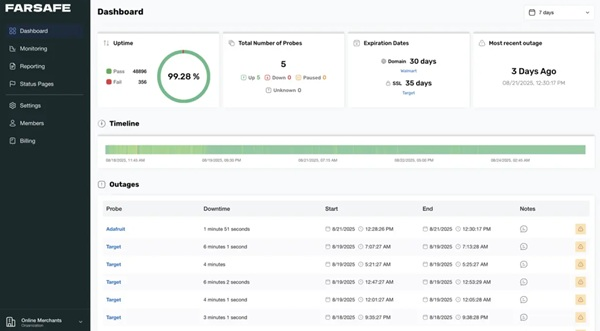
This external perspective is why teams rely on continuous ssl expiry monitoring across their entire external perimeter. Dedicated monitoring platforms perform regular, lightweight cryptographic handshakes over the open internet. By inspecting the public certificate returned by your web server or load balancer, an external monitor confirms that the endpoint is not merely capable of renewing, but is actively delivering a valid, unexpired certificate to the public.
Comprehensive monitoring goes beyond reading the primary expiration date. A robust system verifies the integrity of the intermediate certificate authority chain, detects cryptographic configuration issues, and ensures that the server name matches the requested hostname. Integrating these checks alongside a reputable free website monitoring tool gives network administrators combined visibility into certificate validity, overall server response times, and general uptime status. This holistic approach ensures configuration mistakes or unexpected network routing changes are identified days before they impact customers.
Step 3: Establish Tiered Warning Thresholds
Alert fatigue is one of the greatest obstacles to effective operations. If technical teams receive non-critical warnings every day, they begin ignoring notifications, which allows genuine emergencies to slip past unnoticed. A disciplined alert hierarchy prevents this problem by delivering appropriate warnings to the right individuals at the right time.
A reliable alerting structure should utilize escalating operational thresholds based on remaining certificate lifespan.
The initial check occurs at thirty days before expiration. This early notification serves as an automated validation milestone. Because modern automated renewal scripts are typically scheduled to execute sixty to thirty days prior to expiry, a valid certificate with thirty days remaining indicates that an expected background renewal did not occur. At this stage, a standard low-priority notification to a shared team queue gives developers plenty of time to investigate failed cron jobs or domain authorization errors during regular working hours.
The secondary threshold activates at fourteen days before expiration. If a certificate reaches this point without a successful renewal, the issue escalates to an operational warning. This notification prompts an engineer to actively troubleshoot the renewal path, test DNS challenge responses, or manually acquire a new certificate if the automated pipeline is broken.
The final escalation activates at seventy-two hours. This critical alert is routed directly through urgent incident response systems to on-call technical leads. Reaching this stage signals that standard procedures have failed and immediate operational intervention is mandatory to prevent an active customer-facing outage.
To maximize responsiveness, route all alerts into centralized operational spaces such as shared engineering channels, centralized ticketing dashboards, or dedicated monitoring rooms. Never send renewal alerts exclusively to the individual inbox of an employee who might be on vacation, working in a different department, or no longer with the organization.
Step 4: Validate Deployments Across the Entire Delivery Fleet
Renewing a certificate with a certificate authority is only half the battle. In modern cloud architectures, a newly generated certificate must be distributed correctly across every physical and virtual system serving your application traffic.
Content delivery networks, global load balancers, and reverse proxy servers cache and terminate security connections independently. A common operational failure occurs when an administrator successfully updates a certificate on a central origin server, but forgets to sync the new cryptographic material with edge nodes or secondary load balancers. In this scenario, visitors in one geographic region receive a valid connection, while visitors routed to a different edge point encounter immediate browser security errors.
After completing any manual or automated renewal, verify the deployed certificate across all geographic nodes and edge caches. Automated external monitoring systems simplify this validation by polling your endpoints from multiple locations worldwide. This confirms that edge configurations have fully propagated and that every client connection receives the updated certificate chain.
Frequently Asked Questions
What is the difference between automated renewal and external SSL monitoring?
Automated renewal tools run directly on your server or cloud platform to generate and install replacement certificates before old ones lapse. External monitoring operates from outside your private network, regularly initiating connections to your public domain to verify that the active, live certificate is valid and functioning properly. Automated renewal handles implementation, while external monitoring provides essential verification.
Why are digital certificate validity lifespans becoming shorter?
The internet security community and major web browser vendors have steadily reduced certificate validity windows to improve cryptographic safety. Shorter lifespans ensure that compromised encryption keys remain dangerous for a much shorter period. Shorter lifespans also accelerate the adoption of stronger encryption standards, while encouraging organizations to adopt resilient, automated management systems.
Can an expired certificate on a private API disrupt a customer website?
Yes. Modern front-end websites rely on dozens of back-end APIs, microservices, and database connectors to render dynamic content, process payments, and authenticate users. If an intermediate API endpoint serves an expired certificate, the browser or underlying server will reject the connection, causing key website features to fail even if the primary domain certificate is valid.
What commonly causes automated renewal scripts to fail?
Automated tools often fail due to environmental changes that disrupt domain validation challenges. Common causes include altered DNS records, strict web application firewall rules blocking validation queries, modified file permissions in challenge directories, and server configuration changes that prevent background services from restarting cleanly.
How often should an organization audit its public digital assets?
Organizations should conduct a comprehensive infrastructure audit whenever significant network or hosting changes occur, or at least once every quarter. However, day to day asset tracking should be automated using continuous monitoring solutions that inspect endpoints automatically without relying on periodic manual audits.
Building Operational Peace of Mind
Eliminating certificate outages is not a matter of luck or periodic heroic intervention. It is the natural outcome of building transparent operational processes, minimizing reliance on manual tracking, and verifying every endpoint through independent observation.
By taking an accurate inventory of your complete digital footprint, configuring layered warning thresholds, and maintaining reliable external observation, you transform certificate management from an unpredictable liability into a stable operational discipline. Your infrastructure remains consistently available, user trust remains intact, and your engineering team stays focused on building meaningful software rather than reacting to preventable security emergencies.










Comments (0)