

Essential Logistics App Features Every Business Needs
Hire a trusted logistics app development company in the USA. Discover must-have features, costs, and tips to build a custom logistics app that scales.
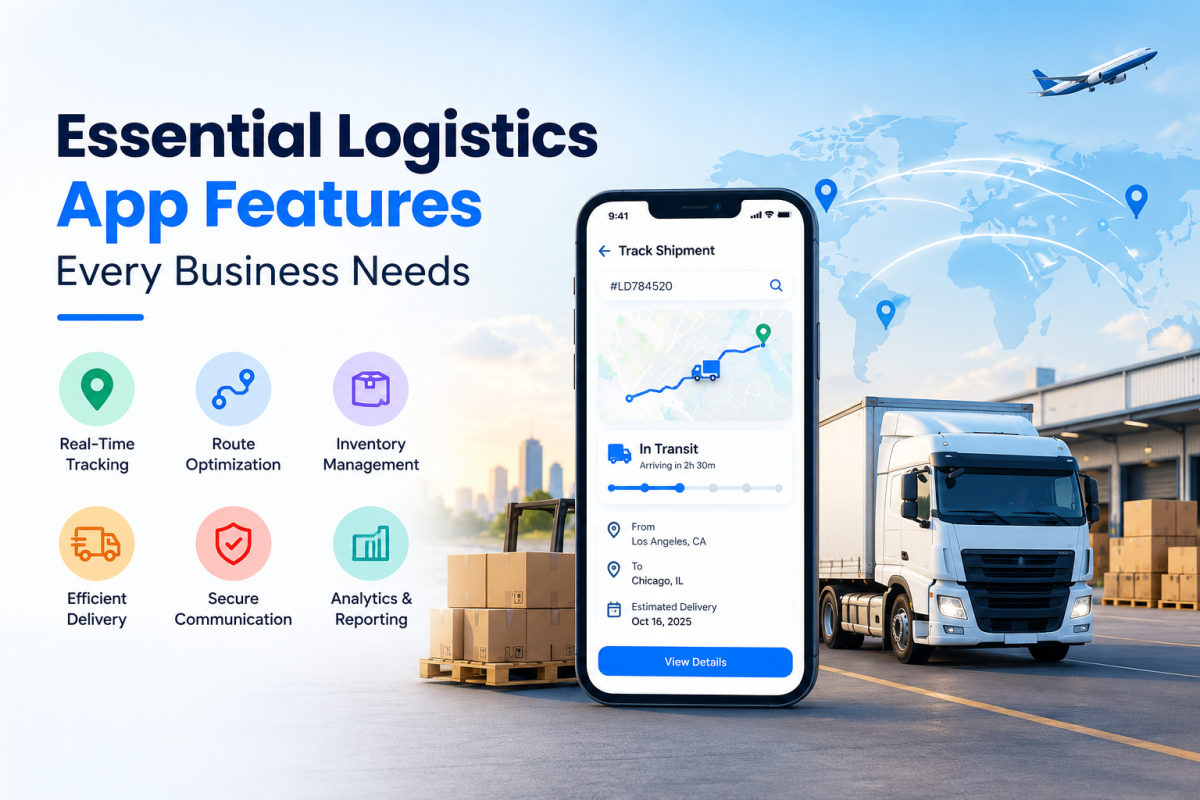
Freight moves faster than ever, but customer patience runs shorter. If your drivers still call dispatch for updates or your team chases paper proof of delivery, you are losing money every single day. The fix is software built around how your operation really runs. A dependable logistics app development company can turn scattered spreadsheets, phone calls, and outdated tools into one mobile-first system your whole team trusts.
This guide covers the features that matter most, what they typically cost, and how to choose the right partner. Whether you run a regional fleet in Texas or a nationwide 3PL, you will leave with a clear checklist.
Why Logistics Apps Are a Priority for US Businesses in 2026
Shippers now expect the same visibility they get from big retailers, while carriers face pressure to cut empty miles and fuel costs. Software is how companies close that gap.
According to Fortune Business Insights, the global logistics software market was valued at USD 16.24 billion in 2025 and is projected to reach USD 31.74 billion by 2034, growing at a CAGR of 7.75%. The same report shows the U.S. market alone generated USD 4.45 billion in 2025, and that transportation management systems are expected to hold the largest share of the market in 2026.
What does that mean for you? Your competitors are investing, and your customers are noticing. Mobile apps put that investment directly into the hands of drivers, dispatchers, warehouse staff, and clients. That is why logistics app development has moved from a nice-to-have to a core operating decision.
Core Features Every Logistics App Needs
Whether you are building a driver app, a shipper portal, or a full platform, these features form the foundation.
Real-Time GPS Tracking
Live location tracking is the single most requested feature in logistics. It lets dispatchers see every vehicle on one map, gives customers accurate arrival times, and reduces the "where is my shipment?" calls that clog support lines. Look for geofencing alerts, location history, and battery-friendly background tracking.
Route Optimization
Smart routing saves fuel, time, and driver hours. A good engine accounts for traffic, delivery windows, vehicle capacity, and driver schedules. Even a small cut in miles driven adds up quickly across a fleet.
Driver Mobile App With Electronic Proof of Delivery
Your drivers are your business on the road, so their app must be simple. Essential tools include:
-
Job acceptance and task lists
-
Turn-by-turn navigation
-
Photo capture and digital signatures for proof of delivery
-
Offline mode for areas with weak coverage
-
In-app messaging with dispatch
Order and Shipment Management
This is the command center. It should let you create, assign, edit, and track orders from pickup to drop-off, with status updates that flow automatically to everyone involved. Bulk uploads and recurring orders save hours for busy dispatch teams.
Smart Notifications
Push notifications, SMS, and email alerts keep everyone informed without manual effort. Examples include driver assigned, out for delivery, delayed, and delivered. Customers feel in control, and your team spends less time answering status questions.
Analytics and Reporting Dashboard
You cannot improve what you cannot measure. Dashboards should surface on-time delivery rates, cost per mile, driver performance, fuel usage, and idle time. Exportable reports help with audits, client reviews, and planning.
Secure Payments and Invoicing
Automated invoicing, multiple payment methods, and clear audit trails shorten your cash cycle. Role-based access and data encryption protect sensitive financial and customer information.
Advanced Features That Set Industry Leaders Apart
Once the basics are solid, these upgrades create a real competitive edge.
-
AI-powered demand forecasting: Predict peak periods and plan capacity before problems appear.
-
IoT sensor integration: Monitor temperature, humidity, and shock for cold chain and fragile freight.
-
Third-party integrations: Connect with ELD devices, accounting tools, ERP systems, load boards, and carrier APIs.
-
Predictive maintenance: Flag vehicle issues early to avoid breakdowns and costly delays.
-
Customer self-service portal: Let clients book, track, and download documents without calling anyone.
-
Compliance tools: Manage hours of service, inspection reports, and documentation in one place.
Custom Logistics Mobile App Development vs Off-the-Shelf Software
Many businesses start with ready-made tools, then hit a wall. Off-the-shelf platforms are quick to launch, but they force your workflows to fit their limits. You may pay for features you never use while missing the ones you truly need.
Custom logistics mobile app development flips that equation. You get an app shaped around your routes, your customers, and your growth plans. Key advantages include:
-
Full control over features, design, and data
-
Smooth integration with your existing systems
-
Scalability as your fleet and order volume grow
-
A unique brand experience for drivers and customers
-
No recurring per-user license surprises
If your processes are fairly standard and your budget is tight, a packaged tool may work for a while. If logistics is your core business, custom is usually the smarter long-term investment.
Logistics Application Development in USA: What It Costs
Pricing depends on features, platforms, integrations, and team location. The ranges below reflect typical US market estimates for planning purposes, not fixed quotes.
|
App Tier |
Typical Features |
Estimated Cost (USD) |
Estimated Timeline |
|
Basic MVP |
GPS tracking, driver app, order management, notifications |
$30,000 to $60,000 |
3 to 5 months |
|
Mid Tier |
Everything in MVP plus route optimization, analytics, payments, integrations |
$60,000 to $120,000 |
5 to 8 months |
|
Enterprise |
Everything in mid tier plus AI forecasting, IoT, multi-tenant setup, advanced security |
$120,000 to $250,000 and above |
8 to 14 months |
A few factors can move these numbers up or down:
-
Number of platforms (iOS, Android, web admin panel)
-
Complexity of third-party integrations
-
Level of customization in design and workflows
-
Security and compliance requirements
-
Ongoing support and maintenance
A smart move is to launch an MVP with your must-have features, collect real driver and customer feedback, then expand in phases. This keeps risk low and budgets under control.
How to Choose a Transportation App Development Company
The right partner matters as much as the right feature list. When you evaluate a transportation app development company, look closely at these areas:
-
Logistics experience: Ask for case studies in fleet management, freight, last-mile delivery, or warehousing. Industry knowledge shortens the learning curve.
-
Technical depth: Your partner should be comfortable with real-time data, maps APIs, cloud infrastructure, and secure integrations.
-
Transparent process: Look for clear milestones, regular demos, and honest communication about timelines and costs.
-
Post-launch support: Apps need updates, monitoring, and improvements. Confirm what happens after go-live.
-
US-based availability: A team in your time zone makes meetings, feedback, and support much smoother. Companies offering logistics application development in the USA can also align better with local regulations and business practices.
-
Proven references: Speak to past clients about delivery quality and communication.
Strong logistics app development services should feel like a partnership, not a handoff. The best teams challenge your assumptions, suggest smarter workflows, and protect your budget.
Ready to Build a Logistics App That Actually Moves Your Business Forward?
Every week without proper digital tools means missed deliveries, wasted fuel, and frustrated customers. Our Dallas-based team designs and builds logistics and transport mobile application development solutions that drivers love and managers rely on. Tell us about your fleet, your challenges, and your goals, and we will map out a realistic plan with timelines and costs.
Final Thoughts
The best logistics apps are not the ones with the most features. They are the ones that solve your biggest daily frustrations first, then grow with your business. Start with tracking, routing, driver tools, and clear reporting. Add intelligence and automation as your data and confidence build.
Choose a partner who understands freight, respects your budget, and builds for the long haul. With the right foundation, your app becomes more than software. It becomes a real competitive advantage.
People Also Ask

iQlance is a USA-based mobile app and software development company specializing in custom web development, iOS & Android app development, enterprise software solutions, and dedicated developer hiring services for startups, SMBs, and enterprises worldwide. https://www.iqlance.com/

Comments (0)