

Progressive Cavity Pump Price: From Design to Investment in Quality and Performance for Industries
Synopumps manufactures progressive cavity pumps with over 20 series and 1400 specifications. We have designed progressive cavity pumps in wide range includes, waste water, pulp & paper, food, suger & distillary, pharmaceuticals, oil, power fertilizer and chemical industries.
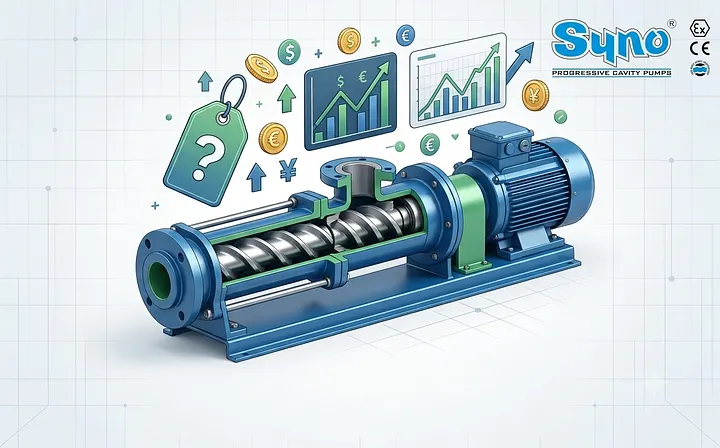
Proper selection of pumping equipment is vital in today’s industries in order to ensure an effective production process, successful transfer of fluids, and the same high quality of products. Progressive cavity pumps are widely applied in cases where there is a need to transfer viscous liquid, slurry, paste, and fluid with suspended solids. This feature makes progressive cavity pumps a perfect choice for industries like sewage treatment, food industry, chemicals and pharmaceuticals, as well as oil and gas industry.
It is worth noting that whenever business owners try to find Progressive Cavity Pump Price, they find out that prices of this equipment depend on many factors. The understanding of these aspects enables one to purchase appropriate equipment, rather than base the purchase only on the initial price of a pump. Business owners searching for industrial pumping equipment may take into account Syno Pumps.
Introduction to Progressive Cavity Pumps and Uses
A progressive cavity pump is a kind of positive displacement pump that pumps fluids via a series of cavities that seal off during rotation of a helical screw rotor and an elastomeric or similar fixed stator.
The operation of the pump provides a controlled flow of the material from the point of suction to the point of delivery along the sealed cavities.
This method of pumping provides a fairly constant and stable pumping action which makes progressive cavity pumps effective when moving hard-to-pump materials. Based on the design of the pump, they can pump viscous fluids, sludge, industrial wastes, and some shear-sensitive materials.
Each industry uses these pumps based on its needs. For instance, a wastewater treatment plant will use pumps capable of moving the sludge, while a food processing plant will use pumps designed to meet hygiene standards.
In chemical plants, material compatibility and corrosion resistance become paramount.
Considering that there are various operating conditions in each application, the progressive cavity pump price becomes an important consideration.
Factors That Determine Progressive Cavity Pump Cost?
Several factors play a role in determining the cost of a progressive cavity pump. Knowledge about them enables purchasers to make a fair comparison between different quotes and pick equipment with good value for money.
Capacity and Flow Rate Requirement of Pump
Flow rate is among the important parameters when picking a pump. Higher flow rates may require pumps with larger elements or greater drive capacity. Discharge pressure may also impact the design of the pump.
Before making a quote request, companies must know their flow requirements, pressure, nature of fluid, and duty cycle. This will help in recommending the right type of pump instead of a much bigger one than needed.
Materials of Construction
Material selections for the rotor, stator, housing, shaft, and seals could affect total cost. While standard materials are sufficient for typical industrial fluids, corrosive, abrasive, heated, or aggressive fluids may require special material selections.
Stator elastomer selection needs to take into account compatibility with the fluid being pumped, temperature, and chemicals used for cleaning the system. Similar considerations apply for rotor materials and surface coatings, depending on the operational conditions.
While the use of special materials increases the initial cost of the progressive cavity pump, they could provide more reliable performance under certain conditions. Buyers should verify material compatibility with the pump manufacturer prior to installation.
Motor, Gearbox, and Drive System
The drive system is another key cost component in a quotation. The type of motor power used, specification of the gearbox, speed controlling capabilities, and electrical requirements may impact the total quotation.
Variable frequency drives will be recommended in certain applications where changes in pump speed need to be made based on process demands. This will depend on the specific conditions at which the unit will be run.
The quotation should include information about the inclusion of the motor, gearbox, base frame, coupling, control panel, among others. This way, it is easier to compare quotes.
Designs and Features
A general pumping system design may not be sufficient for all industrial applications. Special considerations may have to be made regarding connections, mounting, instrumentation, and other aspects of the design.
There will be extra expenses in designing, manufacturing, and testing custom-made systems, but these pumps will be easier to incorporate into the process. It is up to businesses to describe their working conditions and needs when consulting with manufacturers such as Syno Pumps.
Importance of Pump Design for Proper Functionality
The design of a progressive cavity pump affects its efficiency, reliability, need for servicing, and ability to manage the required fluid. Selection of the appropriate rotor-stator design, speed of operation, and sealing mechanism is necessary for effective operation of the pump.
For instance, a fluid with solid particles might require a different pump design than one with a clear viscous fluid. Changes in temperature and chemical composition might also affect the choice of stators and life span of the components.
Improper sizing leads to inefficiency and operational challenges. A pump that was chosen without regard to the viscosity of the fluid, presence of any solids, suction and discharge pressures, will not provide the desired results.
An experienced manufacturer can evaluate the information on operation and recommend a design. This technical assessment is an important element in the evaluation of the true value of the progressive cavity pump price for industrial consumers.
Comparison between Initial Cost and Total Cost of Ownership
Apart from initial cost, total cost of ownership must be considered during pump purchase. Businesses should take into account installation, power consumption, spare parts, maintenance labor, downtime and frequency of replacement of wear parts.
A cheaper pump will look good at the beginning but frequent maintenance or unsuitability to the application will lead to higher costs later. On the other hand, the correctly specified pump can give more value with reliable operation and low maintenance requirements.
Power consumption deserves special consideration if there is a need for continuous operation of the pump. Efficiency of motor, size of pump, its speed and conditions of operation may have an impact on energy use. The selection of equipment according to actual duty point will eliminate additional costs of operation.
Accessibility of the pump for maintenance is no less important. Proper design that will allow us to inspect and replace wear parts easily can make maintenance shorter.
Thus, in the case of choosing progressive cavity pump, the buyer should compare lifetime costs of the pump, not only minimum quotations.
Industries That Are Benefited by Progressive Cavity Pumps
Progressive cavity pumps have multiple applications in different industries due to their ability to accommodate various pumping scenarios.
In wastewater treatment, they are used in suitable sludge/slurry pumping systems. In the food processing sector, suitably manufactured pumps can accommodate selected viscous foods, such as paste and some semi-solids. In the chemical and manufacturing sectors, they can be used to move process fluids, additives, and other materials that match the nature of the pump.
In the oil and gas industry, there can be some uses of progressive cavity pumps for moving specific fluids. On the other hand, in the paper, pulp, and other process industries, thick or solid-containing mixtures need special designs of pumps.
The correct choice will depend on the fluid properties, temperature, pressure, required flow rate, hygienic standards, and installation conditions. The firm should give such information beforehand for price comparisons because a pump for one sector may not be suitable for another.
How to Select a Good Progressive Cavity Pump Manufacturer
As selecting a good manufacturer is just as critical as selecting a good pump, potential buyers have to consider the following aspects: product specifications, manufacturing quality, technical advice, availability of spare parts, warranty terms, and after-sales services.
Proper communication while receiving quotations will help to avoid any misunderstandings related to capacity, choice of materials, attachments, and shipment. Buyers also have to make inquiries regarding recommendations on installing and running the pump, operational limitations, maintenance schedule, and replacement rotor and stator.
The company known as Syno Pumps can be among the companies taken into consideration when looking for progressive cavity pumps. Customers should communicate with the company directly before making their purchases to take care of all the above considerations.
Being properly informed about the buying process enables companies to buy equipment meeting present needs and leaving room for future needs.
Progressive Cavity Pump Price depends not only on the price of different types of equipment that a customer may choose to purchase. It depends on such factors as pump capacity, construction materials, drive system, conditions of use, and maintenance cost.
By concentrating on the technical advantages, efficiency, reliability, and costs, industries can make a better purchasing decision. The investigation of such manufacturers as Syno Pumps and obtaining the application-specific quotation is very helpful for a company looking for a good progressive cavity pump.
Synopumps manufactures progressive cavity pumps with over 20 series and 1400 specifications. We have designed progressive cavity pumps in wide range includes, waste water, pulp & paper, food, suger & distillary, pharmaceuticals, oil, power fertilizer and chemical industries.














Comments (0)