

Dubai Property Handover in 2026: A Complete Checklist for Off-Plan Buyers Before Taking Possession
Dubai property handover 2026: checklist for off-plan buyers covering snagging, title deed, payments, service charges, utilities and defects.

The message every off-plan buyer waits for is simple: your property is ready for handover. But receiving the keys should never be treated as the final box to tick. In Dubai, the handover stage is where payment records, construction quality, unit measurements, title registration, service charges, utilities and defect reporting all come together. With a major pipeline of new homes moving toward completion in 2026, international and UAE-based buyers need to know exactly what to inspect before accepting possession. A careful handover can protect both your home and your investment, while a rushed one can turn small overlooked issues into expensive problems later.
Why Property Handover Matters More in Dubai in 2026
Dubai entered 2026 with an unusually large residential development pipeline.
Knight Frank reported that more than 160,000 residential units were registered for potential delivery during 2026, although the consultancy expects actual completions to be substantially lower because historically not every scheduled project is delivered on time. Apartments account for around 85% of the forecast supply pipeline.
CBRE reported that approximately 18,000 residential units had already been completed in Dubai during the first half of 2026.
For buyers, this means more off-plan property handovers, but it also means more reason to inspect carefully.
The handover is the point where the promise made in the sales brochure becomes a physical apartment, villa or townhouse.
Your job is to check whether what has been delivered reasonably matches what you purchased.
What Happens Before an Off-Plan Property Is Handed Over?
An off-plan property normally begins with a Sale and Purchase Agreement, commonly called an SPA.
Dubai Land Department requires the developer to register an initial off-plan sale in the provisional register. DLD states that the SPA must be registered within 90 days of signing, and the buyer receives a provisional registration e-certificate through the Oqood process.
Dubai also requires developers registering an off-plan project to follow project-registration and escrow requirements. DLD's current project-registration process includes opening an escrow account and meeting prescribed project-security conditions.
By the time handover approaches, buyers should already have records of:
-
SPA
-
Oqood or provisional registration
-
Payment receipts
-
Developer correspondence
-
Approved payment schedule
-
Passport or Emirates ID documents
-
Mortgage documentation, where applicable
Keep these records together.
They may be required when reconciling your account or completing registration.
The Complete Dubai Property Handover Checklist
A practical checklist can be divided into five stages.
| Stage | What to Check |
|---|---|
| Documents | SPA, Oqood, payment statement, completion notice |
| Property | Walls, flooring, doors, windows, plumbing, electricity |
| Financials | Final payment, service charges, outstanding amounts |
| Registration | Completion status and title deed |
| Move-in | Utilities, access cards, keys, parking and management |
Step 1: Review the Developer's Handover Notice
Do not respond to a handover email by immediately paying everything requested.
First compare the notice with your SPA.
Check:
-
Official project and unit number
-
Handover or inspection date
-
Amount outstanding
-
Any administration charges
-
Service-charge request
-
Required documents
-
Payment deadline
-
Snagging arrangements
-
Key collection procedure
Also compare the announced completion date against the contractual terms in the SPA.
Construction schedules can change, and 2026 has a particularly large delivery pipeline. ValuStrat has reported more than 220,000 residential units under construction through 2029, while historical delivery data shows that delays remain a normal feature of large development cycles.
Step 2: Check Your Financial Statement
Ask the developer for a clear account statement.
Confirm:
Purchase price
Amount already paid
Final instalment
Any registration balance
Service-charge amount
Any other contractual charges
Do not assume every requested payment is part of the purchase price.
Separate:
property cost from ownership and administrative costs.
This is especially important for overseas investors managing the transaction remotely.
When reviewing Real estate properties, understanding the full ownership cost before buying can make the later handover stage considerably easier.
Step 3: Conduct a Proper Snagging Inspection
Snagging is the detailed inspection of a newly completed home for defects, incomplete work or workmanship problems.
Walk through the property slowly.
Walls, Ceilings and Floors
Look for:
-
Cracks
-
Uneven paint
-
Water stains
-
Damaged tiles
-
Poor grout
-
Scratched flooring
-
Uneven finishes
Doors and Windows
Test every:
-
Door
-
Lock
-
Handle
-
Window
-
Balcony door
-
Sliding mechanism
Check that doors close properly and windows seal correctly.
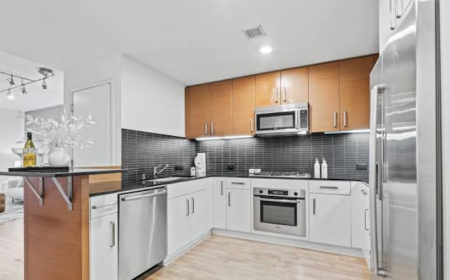
Kitchen
Inspect:
-
Cabinets
-
Hinges
-
Countertops
-
Sink
-
Drainage
-
Appliances included in the contract
-
Electrical sockets
Bathrooms
Check:
-
Water pressure
-
Hot and cold water
-
Drainage
-
Toilets
-
Showers
-
Sealant
-
Tiles
-
Exhaust ventilation
Look carefully for leaks.
Electrical and Cooling Systems
Test:
-
Light switches
-
Sockets
-
Air conditioning
-
Thermostats
-
Intercom
-
Smoke detectors
-
Installed smart-home features
Take photographs and videos of defects.
A written snagging list is much more useful than simply telling the developer that “some things need fixing.”
Step 4: Compare the Unit With the Contract
Check whether the final unit broadly corresponds to:
-
Contracted layout
-
Number of bedrooms
-
Balcony
-
Parking
-
Fixtures
-
Included appliances
-
Promised specifications
-
Unit area
Dubai Land Department states that if the final net area is smaller than the area stated in the sales contract by more than 5%, the developer is required to compensate the purchaser for the relevant area reduction. DLD also notes that increases in net area generally cannot be charged unless the contract expressly provides otherwise.
That makes area verification more than a cosmetic detail.
Step 5: Understand the Defect-Liability Period
Handover does not mean every developer responsibility ends the moment you take the keys.
Under Dubai's jointly owned property law, a developer remains liable for 10 years from the project's completion certificate for defects in structural parts of jointly owned real property.
The developer is also responsible for one year for repairing or replacing defective mechanical, electrical, sanitary, sewerage and similar installations, subject to the specific legal provisions.
This distinction is important:
| Issue | General Legal Period |
|---|---|
| Structural defects | 10 years |
| Certain installations | 1 year |
| Cosmetic snagging | Review SPA/developer process |
| Additional warranty | Depends on contract |
Important: report defects as soon as they become visible.
Do not wait until the end of a warranty period.
Title Deed: When Does Oqood Become Full Registration?
Many first-time off-plan investors assume Oqood is the final title document.
It is not the same thing as the completed-property title deed.
Dubai Land Department explains that once the project receives its completion certificate and the property has been fully paid, eligible completed units are transferred from the initial register into the Real Estate Registry and a title deed or usufruct certificate is issued.
DLD also provides a process to complete provisional procedures and issue the electronic Certificate of Title/Title Deed for parties that have met their contractual obligations.
Before considering the transaction fully complete, confirm that your ownership registration has progressed correctly.
Check Service Charges Before Taking Possession
Service charges can have a major impact on the long-term cost of owning a Dubai property.
They may cover:
-
Security
-
Cleaning
-
Lifts
-
Landscaping
-
Swimming pools
-
Gym facilities
-
Building management
-
Common-area electricity
-
Maintenance
Dubai Land Department provides a Service Charge Index where customers can check RERA-approved charges for jointly owned properties through DLD, Mollak or Dubai REST.
Do not rely only on an early sales brochure's service-charge estimate.
Once the project becomes operational, verify the approved figure.
For rental investors working with Fitson Real Estate or another licensed UAE brokerage, this is particularly important because service charges directly affect net rental yield.
Set Up DEWA and Move-In Services
Once ownership and handover are sufficiently progressed, owners may need to activate electricity and water.
DEWA's current move-in process allows property owners to apply digitally, using applicable property and identity documentation. DEWA states that electricity and water are normally activated within 15 working hours after the required security deposit and connection charges are paid.
Before moving in or letting the property, also confirm:
-
DEWA premises number
-
Access cards
-
Parking allocation
-
Building-management registration
-
Community access
-
Internet availability
-
Cooling provider, where applicable
-
Mailbox
-
Emergency contacts
If you plan to rent the unit immediately, these details can reduce vacant days after handover.
Investor Handover vs Owner-Occupier Handover
The checklist changes slightly depending on your objective.
| Owner-Occupier | Investor |
|---|---|
| Comfort and finish | Rent readiness |
| Personal layout | Tenant-friendly layout |
| Immediate utilities | Fast leasing setup |
| Furniture planning | Rental furnishing budget |
| Community lifestyle | Net rental yield |
| Long-term home quality | Resale and tenant demand |
An investor should also research nearby rents before the keys arrive.
The faster a completed property can move from handover to tenancy, the sooner it begins producing income.
What About Property Handover in Sharjah?
Sharjah has also expanded its real-estate market and foreign-ownership framework, but buyers should not assume that Dubai procedures automatically apply there.
Each emirate has its own real-estate authorities, registration processes and project requirements.
International investors considering Dubai and Sharjah should therefore verify the handover and registration process with the relevant emirate's authority and review the specific contract.
The principle remains the same:
inspect first, document everything and confirm registration.
Mistakes Off-Plan Buyers Should Avoid
Do not:
-
Skip the physical inspection
-
Accept verbal promises instead of written confirmation
-
Ignore service charges
-
Lose payment records
-
Assume Oqood is the final title deed
-
Sign documents without understanding them
-
Forget to photograph defects
-
Ignore the final unit area
-
Delay reporting defects
-
Rent the property without understanding the building's move-in procedures
A professional inspection can be worthwhile for expensive or complex properties, particularly for an overseas buyer who may not be familiar with construction defects.
Final Handover Checklist
Before you consider the process complete, confirm:
✅ SPA reviewed
✅ Oqood/provisional registration verified
✅ Payments reconciled
✅ Completion/handover notice checked
✅ Unit inspected
✅ Snagging list submitted
✅ Area and layout checked
✅ Parking confirmed
✅ Service charges verified
✅ Title-deed process confirmed
✅ Keys and access cards received
✅ DEWA arranged
✅ Defect-reporting contacts saved
✅ Rental or move-in plan prepared
Conclusion
A Dubai property handover in 2026 should be treated as an inspection and verification process—not simply a key-collection appointment.
Dubai's large construction pipeline means thousands of off-plan purchasers will move into this stage during 2026. Some properties will be delivered smoothly; others may require snagging, financial reconciliation or follow-up work before the owner is fully comfortable.
The best approach is simple:
verify the paperwork, inspect the property, understand the costs, document defects and confirm legal ownership.
Check your SPA against the completed unit. Understand the difference between Oqood and a title deed. Verify RERA-approved service charges. Test utilities and finishes. Know the relevant defect-liability periods.
A careful handover protects more than the condition of your new property.
It protects the value of the investment you spent months—or years—waiting to receive.
Frequently Asked Questions
What should I check before taking possession of an off-plan property in Dubai?
Review your SPA and payment statement, inspect the property thoroughly, create a snagging list, verify the final area and specifications, check service charges, and confirm the title-deed process.
Is Oqood the same as a Dubai title deed?
No. Oqood records an off-plan transaction in the provisional register. After project completion and fulfilment of contractual obligations, qualifying completed units can be transferred into the Real Estate Registry and issued a title deed.
What happens if the completed unit is smaller than promised?
Dubai Land Department states that a developer must compensate the purchaser where the decrease exceeds 5% of the unit's agreed net area, subject to the applicable rules and contract.
How long is the developer responsible for defects?
Dubai's jointly owned property law provides a 10-year liability period for structural defects and a one-year period for certain defective installations, subject to the law's detailed provisions.
Should I pay service charges before handover?
Payment timing can depend on the project and contractual arrangements. Before paying, verify what is being charged and check RERA-approved service-charge information through Dubai Land Department's Service Charge Index where available.

Fitson Real Estate Broker LLC is a Dubai-based real estate brokerage helping local and international clients buy, sell, rent, and invest across the UAE. We specialize in off-plan projects, ready properties, residential rentals, commercial real estate, and property investment opportunities, with a focus on clear guidance, transparency, and personalized service.















Comments (0)