

Sobha Hennur: A Future-Ready Home for Changing Family Needs
A home should do more than meet the needs of the present. As families grow, careers change, lifestyles evolve, and priorities shift, the ideal home is one that can adapt along the way.


A home should do more than meet the needs of the present. As families grow, careers change, lifestyles evolve, and priorities shift, the ideal home is one that can adapt along the way.
This is becoming increasingly important in Bangalore, where homebuyers are looking beyond basic accommodation and seeking thoughtfully planned communities that combine space, connectivity, convenience, and long-term livability.
For buyers exploring Sobha Hennur, the project offers an opportunity to consider these qualities within a large-scale residential development in North Bangalore.
Located on Hennur Road Bangalore, the planned development features multiple residential configurations and is designed to create a contemporary community environment. But for a prospective buyer, the more important question is not simply what the project offers today—it is how well a home can support changing requirements over time.
The Meaning of a Future-Ready Home
A future-ready home is not necessarily defined by technology or luxury features alone. It is a home that remains practical as the resident's lifestyle changes.
For one family, that could mean having a dedicated study. For another, it may mean an additional bedroom for parents or guests. For a working professional, flexible space for a home office may be essential.
This is why apartment configuration and floor-plan efficiency are increasingly important considerations.
When evaluating Sobha Hennur apartments, buyers should think about both current requirements and possible future scenarios.
Choosing Space With Purpose
The planned residences at Sobha Hennur Bangalore include 2 BHK, 3 BHK, 3.5 BHK, and 4 BHK configurations.
Each configuration can serve a different type of household.
A 2 BHK may suit a smaller family or couple looking for a practical urban residence. A 3 BHK can offer additional flexibility for children, guests, or work-from-home requirements.
The larger 3.5 BHK and 4 BHK options may appeal to families seeking more privacy and additional usable space.
However, the largest apartment is not automatically the best choice. The right home is one where the available space matches the household's lifestyle without creating unnecessary financial pressure.
Flexible Spaces for Modern Lifestyles
The way people use their homes has changed.
A spare bedroom may become a home office. A study area may become a child's learning space. A guest room may eventually accommodate an elderly parent.
This flexibility can increase the long-term usefulness of an apartment.
When reviewing Sobha Hennur floor plans, prospective buyers should consider whether rooms can serve multiple purposes without making the home feel crowded.
The ability to adapt a space can become particularly valuable as family circumstances evolve.
Why Community Planning Matters
A future-ready home is not only about the apartment's interiors. The surrounding community also plays an important role.
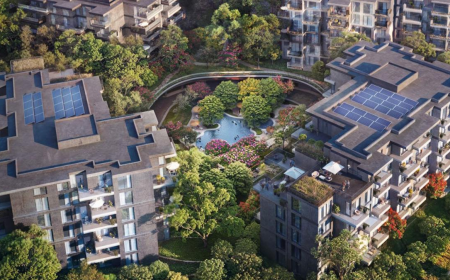
The Sobha Hennur project is planned across approximately 45 acres, with the first phase covering around 17 acres. More than 4,400 residential units are expected across the overall development.
A development of this scale requires careful planning of residential buildings, internal movement, open spaces, community areas, and supporting infrastructure.
For buyers, the master plan can provide important insight into how the community may function once developed.
A Location With Long-Term Relevance
Location is another element of future readiness.
Hennur Road Bangalore has emerged as a notable residential corridor in North Bangalore, supported by ongoing urban expansion and increasing housing demand.
When considering a property for long-term ownership, buyers should evaluate whether the location fits their lifestyle not only today but also several years from now.
Employment patterns, family requirements, transportation preferences, and surrounding development can all influence the practical value of a location.
Designing a Home Around Family Life
For families, a home becomes the setting for many important everyday moments.
Children need space to study and play. Parents may need quiet areas for work. Families may want comfortable spaces for meals, conversations, celebrations, and guests.
This is where thoughtfully planned apartment layouts can make a difference.
A well-organized residence can create a balance between shared family spaces and private areas, helping different members of the household maintain their routines without compromising comfort.
For buyers considering premium apartments in Hennur Bangalore, this balance can be an important part of the decision-making process.
The Role of Outdoor and Shared Spaces
Urban homes increasingly benefit from access to shared outdoor environments.
While an apartment provides private living space, community areas can provide opportunities for recreation, social interaction, and relaxation.
When reviewing a large residential development, buyers should understand how open areas and shared spaces are incorporated into the overall plan.
Rather than judging a project by a list of amenities alone, it is better to consider how those spaces may actually fit into everyday life.
Planning for Financial Sustainability
Future readiness also has a financial dimension.
The Sobha Hennur price should be considered alongside the complete cost of ownership. Buyers should account for applicable taxes, registration costs, maintenance-related expenses, interiors, and other associated charges.
A property should ideally remain financially comfortable over the long term.
Buyers should also consider how their income, savings, family responsibilities, and future financial goals may change.
A premium home is a stronger purchase when it provides lifestyle value without putting unnecessary pressure on household finances.
The Investment Perspective
For some buyers, a home is both a residence and a long-term asset.
The Sobha Hennur investment potential should be assessed through objective factors such as location, project scale, apartment demand, surrounding development, developer reputation, and overall acquisition cost.
Future returns cannot be guaranteed, and buyers should avoid making decisions solely on projected appreciation.
Instead, the property should first make sense as a sound residential purchase. Investment considerations can then form part of the broader evaluation.
Do Your Due Diligence
Before purchasing an upcoming or pre-launch property, buyers should carefully verify all available documentation.
This includes the latest information regarding approvals, RERA registration or status, project specifications, floor plans, construction progress, payment schedules, possession timelines, and applicable terms and conditions.
Information can change as a project progresses, so buyers should always confirm the latest details through official documentation.
This is particularly important when researching Sobha Hennur RERA status, pricing, availability, and delivery-related information.
Why Future Flexibility Matters
A property purchase often lasts much longer than expected.
The apartment that seems perfect for a couple today may need to accommodate children, parents, guests, or a changing professional lifestyle later.
That is why flexibility can be one of the most valuable qualities in a home.
For prospective buyers, the ability of Sobha Hennur apartments to accommodate different household stages should be evaluated through configuration, layout, usable space, and community planning.
Final Thoughts
A future-ready home is ultimately about adaptability.
Sobha Hennur provides prospective buyers with an opportunity to explore spacious residential configurations within a large planned development in North Bangalore. Its location, scale, range of apartment options, and community-oriented approach make it a project worth evaluating for buyers with long-term residential goals.
The smartest decision, however, comes from looking beyond today's requirements.
Consider how the home could support your family five or ten years from now. Study the floor plan carefully. Evaluate the location realistically. Understand the complete cost. Verify the latest project documentation.
A home becomes truly valuable when it continues to feel right—not only when you move in, but as your life grows and changes around it.















Comments (0)