

Capped vs Uncapped Composite Decking: What Is the Difference?
Composite wood decking has become the go-to alternative to hardwood across Singapore, and for good reason — it combines natural aesthetics with engineered performance. But not all composite boards are built the same.

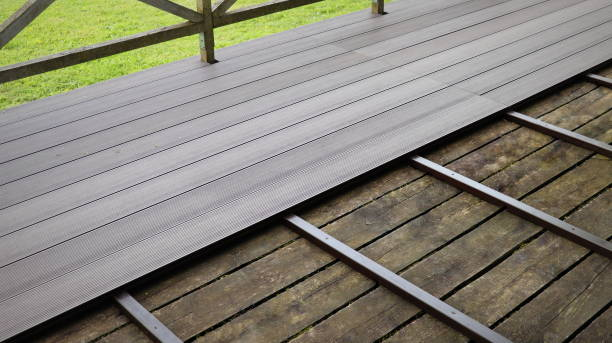
Capped composite decking has a protective polymer shell bonded around the wood-plastic core, shielding it from moisture, stains, and UV damage. Uncapped composite decking lacks this outer layer, leaving the core material directly exposed to the elements. The cap significantly extends durability, reduces maintenance, and improves fade resistance — making it the preferred choice for outdoor use in humid or high-rainfall climates.
Composite wood decking has become the go-to alternative to hardwood across Singapore, and for good reason — it combines natural aesthetics with engineered performance. But not all composite boards are built the same. If you are comparing options for your outdoor space, understanding the structural difference between capped and uncapped boards is one of the most important decisions you will make.
What Is Composite Decking Made Of?
Composite decking is manufactured by combining wood fibres and thermoplastic polymers — typically polyethylene or polypropylene — under heat and pressure. The result is a dense, rigid board that resists rot and insect damage far better than natural timber.
What separates capped from uncapped boards is not the core formula — it is what surrounds it.
What Is Uncapped Composite Decking?
Uncapped composite decking is the original form of the product. The wood-plastic composite (WPC) material is extruded into board form without any additional protective layer applied to the surface or sides.
The core mixture itself provides basic resistance to rot and insects. However, because the surface is porous — wood fibres are still present in the blend — it remains vulnerable to moisture absorption, mould growth, and staining over time.
Key Characteristics of Uncapped Boards
-
No outer protective shell — the WPC core is the finished surface
-
More porous surface that can absorb water and organic material
-
More prone to fading, staining, and mould in wet environments
-
Lower upfront cost compared to capped alternatives
-
Requires more regular cleaning and maintenance to stay presentable
What Is Capped Composite Decking?
Capped composite decking wraps the WPC core in a co-extruded polymer shell — typically made from polyethylene or ASA (acrylonitrile styrene acrylate). This cap is applied during manufacturing and bonds tightly to the core on all four sides or just the top and edges, depending on the product.
The cap acts as a barrier. It prevents moisture from penetrating the board, blocks UV rays from breaking down the surface colour, and makes the board far more resistant to everyday staining from food, oil, and organic debris.
Key Characteristics of Capped Boards
-
Polymer shell sealed around the core, reducing moisture ingress significantly
-
Highly stain-resistant — spills sit on the surface rather than absorbing in
-
Better UV and fade resistance over years of direct sun exposure
-
Easier to clean — typically requires only soap and water
-
Higher upfront cost, but lower lifetime maintenance spend
Capped vs Uncapped Composite Decking: Side-by-Side Comparison
|
Feature |
Capped Composite Decking |
Uncapped Composite Decking
|
|---|---|---|
|
Protective outer layer |
Yes — polymer shell |
No |
|
Moisture resistance |
High |
Moderate |
|
Stain resistance |
High |
Low to moderate |
|
UV / fade resistance |
High |
Moderate |
|
Mould and mildew risk |
Low |
Moderate to high |
|
Maintenance requirement |
Low |
Moderate to high |
|
Upfront cost |
Higher |
Lower |
|
Lifespan (typical) |
25–30 years |
10–15 years |
|
Best suited for |
High-exposure outdoor areas |
Covered or low-traffic areas |
Why This Matters for Outdoor Decking in Singapore
Singapore's climate is unforgiving for outdoor materials. With average annual rainfall exceeding 2,160mm and humidity levels consistently above 80%, any outdoor decking material faces relentless moisture exposure throughout the year.
Uncapped boards in this environment tend to absorb water during the wet season, then dry and contract in direct sun. Over time, this cycle can cause the surface to become rough, discoloured, and prone to mould — especially in shaded spots where airflow is limited.
Capped composite decking boards are engineered specifically to handle these conditions. The sealed surface prevents the moisture cycle from affecting the core, and the UV-stabilised cap maintains colour integrity even under consistent equatorial sun. For outdoor decking in Singapore — whether for a landed property, condo balcony, or commercial poolside — capped boards are almost always the smarter long-term investment.
How Does the Cap Affect Maintenance?
Maintenance is one of the most practical differences between the two board types.
Uncapped composite boards require periodic scrubbing to remove mould and embedded staining. Because the surface is porous, oil from bare feet, barbecue grease, and tannins from wet leaves can work their way into the material — and they are difficult to remove once set.
Capped boards, by contrast, have a smooth, sealed surface. Most spills can be wiped off. For general cleaning, a hose-down and mild detergent once or twice a year is usually sufficient. That low-maintenance profile is a significant benefit for homeowners who want an attractive outdoor space without the upkeep burden.
Which Type Should You Choose?
Choose Capped Composite Decking If:
-
Your deck is fully or partially exposed to sun and rain
-
You want minimal ongoing maintenance
-
The area experiences heavy foot traffic, poolside splashing, or regular cooking
-
Long-term colour consistency matters to you
-
You are investing in a premium outdoor space and want maximum lifespan
Consider Uncapped Composite Decking If:
-
The area is covered or sheltered from direct rainfall
-
Budget is the primary constraint and long-term maintenance costs are acceptable
-
The deck is for light residential use in a low-humidity setting
For most outdoor applications in Singapore — especially exposed patios, pool decks, rooftop terraces, and balconies — capped composite decking boards offer a noticeably better performance-to-maintenance ratio over their lifespan.
A Note on Four-Sided Capping
Not all capped boards are equal. Some products only cap the top face and long edges, leaving the cut ends exposed. Four-sided capping — where the polymer shell completely encloses the board — offers the most complete moisture protection, particularly at board ends where cuts are made during installation.
When evaluating composite decking boards, always confirm whether the capping is two-sided, three-sided, or fully four-sided. For tropical climates, four-sided capping is the gold standard.
Frequently Asked Questions
Is capped composite decking worth the extra cost?
Yes, in most cases. The higher upfront cost is offset by lower maintenance expenses and a longer lifespan — typically 25 to 30 years versus 10 to 15 for uncapped boards. In Singapore's humid climate, the moisture and stain resistance of capped boards makes them a more cost-effective choice over time.
Can uncapped composite decking be used outdoors in Singapore?
It can, but it is better suited to covered or sheltered outdoor areas. In fully exposed settings, the porous surface of uncapped boards is vulnerable to Singapore's heavy rainfall and humidity, which accelerates mould growth, surface staining, and long-term discolouration.
What is the difference between two-sided and four-sided capped composite decking?
Two-sided capping covers only the top and bottom faces, while four-sided capping seals all faces including the edges. Four-sided capping provides better protection against moisture ingress, especially at cut ends during installation, and is recommended for high-exposure outdoor environments.
How do I clean capped composite decking boards?
Capped boards are low maintenance. A regular rinse with water and occasional scrub using mild soapy water is sufficient. The sealed polymer surface prevents stains from penetrating, so most spills can be wiped off without specialist cleaning products or treatments.
Does composite wood decking fade over time?
All composite decking experiences some initial colour settling in the first few months of exposure. Capped boards contain UV-stabilised pigments within the polymer shell, which significantly slows long-term fading. Uncapped boards typically show more noticeable colour change over time due to their exposed, porous surface.















Comments (0)