

What Is the Difference Between an Electric Pallet Truck and an Electric Stacker?
A powered pallet truck, also called an electric pallet mover or ride-on pallet jack, is designed for one primary function: moving heavy pallets from point A to point B on the same level.
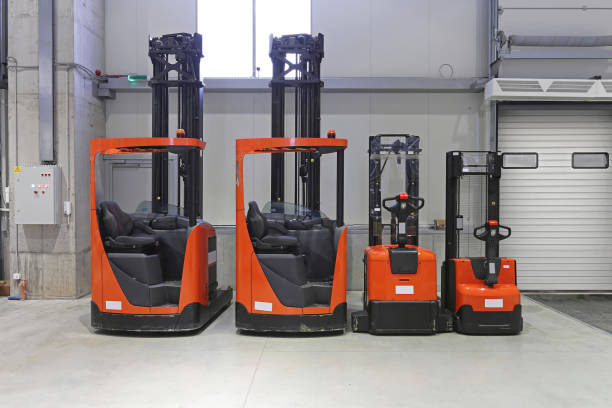
An electric pallet truck moves loaded pallets horizontally across flat surfaces, while an electric stacker lifts pallets vertically to store them at height. The pallet truck handles ground-level transport; the stacker handles elevation and racking. Choosing between them depends on whether your operation needs movement, height, or both.
If you're buying warehouse lifting equipment for the first time — or upgrading an existing fleet — this distinction matters more than most buyers initially realise. The wrong machine for the job creates bottlenecks, safety risks, and unnecessary cost. Here's a clear breakdown of what each machine does and when to use which.
What Does an Electric Pallet Truck Actually Do?
A powered pallet truck, also called an electric pallet mover or ride-on pallet jack, is designed for one primary function: moving heavy pallets from point A to point B on the same level. The forks slide under a pallet, lift it just enough to clear the floor (typically 85–200mm), and the machine drives it to its destination.
These machines are built for speed and efficiency in flat environments — loading docks, production floors, cold storage facilities, and large warehouses with wide aisles. They are not designed to place goods onto shelving or racking.
Key characteristics of a powered pallet truck:
-
Lift height: 85mm to 200mm (floor clearance only)
-
Load capacity: typically 1,500kg to 3,000kg
-
Operator position: walkie (walk-behind) or ride-on
-
Best use: horizontal transport across loading bays and warehouse floors
-
Aisle requirement: relatively compact turning radius
What Does an Electric Stacker Do Differently?
An electric stacker is designed to lift pallets vertically — sometimes up to 5,500mm or higher, depending on the model. It uses a mast structure to elevate the forks, which means it can place goods onto racking systems, stack pallets on top of each other, or retrieve items from elevated storage.
There are several stacker types worth knowing:
-
Straddle stackers — legs extend around the pallet for stability at height
-
Counterbalance stackers — no outrigger legs, more manoeuvrable in tight spaces
-
Reach stackers — the forks extend forward independently of the mast
A Reach Truck is a type of stacker specifically engineered for narrow-aisle warehouses. Its telescoping mast and extending forks allow it to reach deep into racking while keeping the machine's footprint compact. These are common in high-density storage operations across Singapore's logistics and manufacturing sectors.
Electric Pallet Truck vs Electric Stacker: Side-by-Side Comparison
|
Feature |
Electric Pallet Truck |
Electric Stacker
|
|---|---|---|
|
Primary Function |
Horizontal transport |
Vertical lifting and stacking |
|
Lift Height |
85–200mm (floor clearance) |
Up to 5,500mm+ |
|
Load Capacity |
1,500kg – 3,000kg |
1,000kg – 2,500kg (varies) |
|
Mast Structure |
None |
Yes (single, duplex, or triplex) |
|
Aisle Width Needed |
Wide to medium |
Medium to narrow (Reach Truck) |
|
Racking Compatibility |
No |
Yes |
|
Operator Skill Level |
Lower — easier to operate |
Higher — requires trained operator |
|
Typical Environment |
Loading docks, production lines |
Warehouses, cold stores, distribution hubs |
Which One Does Your Operation Actually Need?
Choose an Electric Pallet Truck When:
Your workflow involves moving pallets frequently between locations on the same floor level — from a truck to a staging area, across a production floor, or through a chilled facility. These machines are fast, easy to operate with minimal training, and highly cost-effective for ground-level logistics.
They're also ideal when you have wide aisles and don't need to utilise vertical storage space.
Choose an Electric Stacker When:
You need to maximise vertical space — placing pallets onto shelving, filling racking bays, or operating in a warehouse where floor space is limited but ceiling height is available. Singapore's industrial and logistics facilities often operate in multi-tier racking environments, where stackers are essential rather than optional.
If your aisles are narrow and your racking goes high, a Reach Truck variant of the electric stacker will give you the best combination of reach and manoeuvrability.
Can One Machine Replace the Other?
Not effectively. A powered pallet truck cannot place goods at height — it simply lacks the mast and elevation capacity. An electric stacker can move goods horizontally, but it's slower, less agile, and more expensive to run in that role compared to a dedicated pallet truck.
Many warehouse operations in Singapore run both: pallet trucks for receiving and dispatch areas, stackers or reach trucks for the racking zones. This two-machine approach reflects how most medium-to-large distribution centres are actually set up.
Operating Considerations and Safety Requirements in Singapore
In Singapore, the Workplace Safety and Health (WSH) Act governs the safe use of powered industrial trucks, including both powered pallet trucks and electric stackers. The Ministry of Manpower (MOM) requires that operators of powered forklifts and elevated stacking equipment hold the relevant WSH forklift operator certificate.
For pallet trucks that remain at ground level and fall below certain specifications, the certification requirements may differ — but it's always advisable to check current MOM guidelines or consult your equipment supplier before deployment.
Practical safety considerations include:
-
Ensuring floor load ratings support the combined weight of machine and load
-
Defining pedestrian exclusion zones, especially for ride-on pallet trucks
-
Conducting pre-shift checks on battery, forks, and braking systems
-
Verifying that stacker mast height clears doorways, overhead pipes, and sprinkler systems
Battery and Maintenance: What Buyers Often Overlook
Both machine types are electrically powered, but their energy demands differ. Electric stackers — particularly those lifting heavy loads to height repeatedly — draw more power per cycle. This means battery sizing, charging cycles, and shift planning all need closer attention for stacker operations.
Lithium-ion battery options are increasingly common in both categories, offering faster charging, longer cycle life, and reduced maintenance compared to traditional lead-acid batteries. For high-throughput Singapore warehouses operating across multiple shifts, lithium-ion is worth the upfront investment.
Making the Right Call for Your Facility
The decision comes down to two questions: Do you need to move goods, or store them at height? In many operations, the honest answer is both — which means both machine types have a role.
Map your facility's actual workflow before purchasing. Identify where bottlenecks occur, what your racking configuration looks like, how wide your aisles are, and what your peak throughput demands are. These factors will tell you exactly which machine — or combination of machines — fits your operation.
For businesses in Singapore sourcing reliable warehouse lifting equipment, ANG Equipment offers a range of electric pallet trucks, stackers, and reach trucks suited to local warehousing and logistics requirements. Their team can advise on the right fit based on your facility layout and load profile.
Frequently Asked Questions
Can an electric pallet truck be used instead of an electric stacker?
No. An electric pallet truck only lifts loads to floor-clearance height and cannot place pallets onto racking. If your operation requires vertical storage, an electric stacker or reach truck is necessary. Using a pallet truck as a substitute for stacking tasks creates safety risks and operational inefficiency.
What is the maximum lift height of an electric stacker?
Most standard electric stackers offer lift heights between 1,600mm and 5,500mm, depending on the mast configuration. Triplex masts can reach higher in facilities with sufficient ceiling clearance. Always confirm the stacker's maximum lift height against your racking height before purchasing.
Do I need a licence to operate an electric pallet truck in Singapore?
Ground-level powered pallet trucks typically have different regulatory requirements compared to elevated lifting equipment. However, operators of electric stackers that lift loads to height are subject to WSH Act requirements in Singapore. Always verify current MOM guidelines or consult your supplier for compliance advice.
What is the difference between a stacker and a reach truck?
A reach truck is a specialised type of electric stacker designed for narrow-aisle warehouses. Its forks extend forward independently to reach into racking without the machine needing to enter the aisle fully. Standard stackers require more space to manoeuvre and are suited to wider aisles.
How do I choose between a walkie and ride-on electric pallet truck?
Walkie (walk-behind) pallet trucks suit shorter distances and lower-volume tasks. Ride-on models are more efficient for longer runs and higher throughput environments. If operators are covering significant distances repeatedly during a shift, a ride-on model reduces fatigue and improves productivity.
Are lithium-ion electric pallet trucks worth the extra cost?
For multi-shift operations or high-throughput warehouses, yes. Lithium-ion batteries charge faster, last longer, and require less maintenance than lead-acid alternatives. The higher upfront cost is typically offset by lower running costs and reduced downtime over the machine's operational lifespan.














Comments (0)