

When Do Multiple Dental Crowns and Bridges Become Necessary?
Explore how full mouth reconstruction may restore damaged teeth with crowns, bridges, implants, and bite correction based on your dental condition and needs.
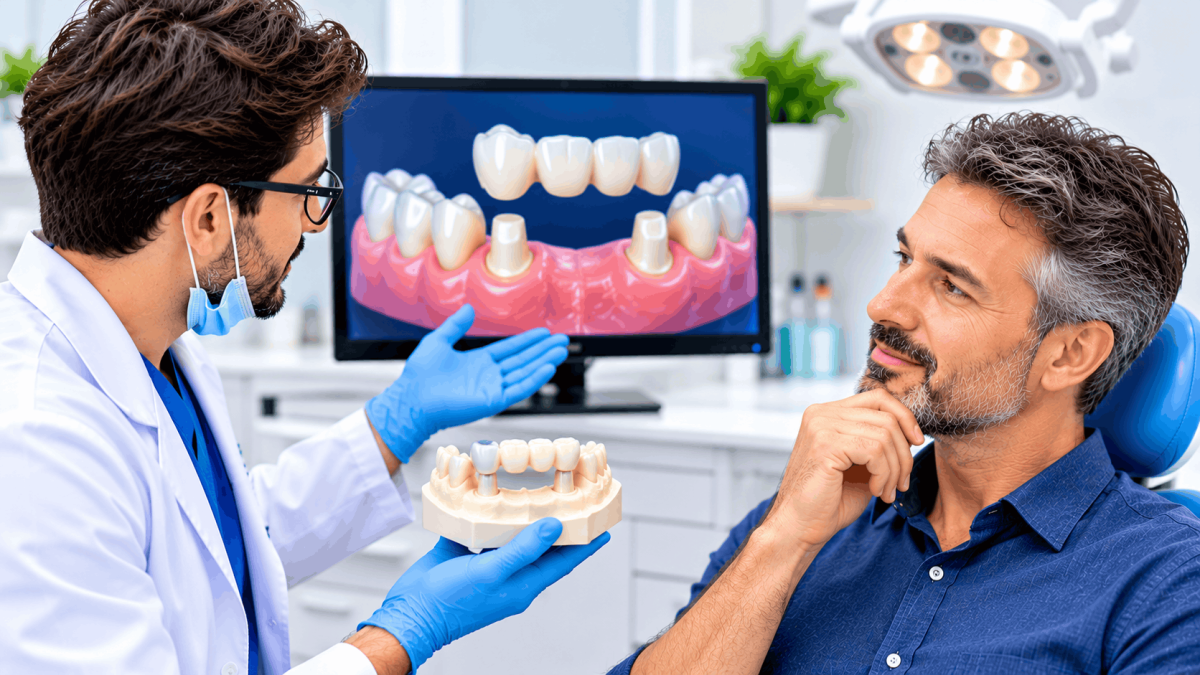
Nobody wakes up hoping for a crown. Let alone six. But teeth wear down, crack and decay, and sometimes the repairs pile up until a dentist says "multiple crowns" or "a bridge." Is that a real need or an upsell? Sometimes it's two crowns and a quick fix. Sometimes it's the start of full mouth reconstruction. Here's how to tell which one you're facing, and what to ask before you agree to anything.
Before You Decide Anything
1. Count the Problem Teeth
Grab a mirror and a pen. Mark every tooth that hurts, chips, feels loose or carries a huge old filling. Two or three marks and you're in general repair territory. Ten marks, a bite that feels off and jaw aches in the morning, and a dentist may start talking about a bigger plan. That rough count tells you more than "my teeth are bad" ever will.
2. Prepare a Simple Questions List
Consultations go fast, and it's easy to leave with half your questions unasked. Write them down first, and leave room for the answers. Bring a friend if you can, because a second set of ears catches what you miss.
What to Bring to Your Consultation
-
A list of medications and supplements
-
Old dental X-rays or records, if you have them
-
Your insurance card and a rough budget
-
Your tooth map with marks for trouble spots
-
A friend or family member who can listen and take notes
Why Teeth Need Crowns in the First Place
1. Big Fillings and Cracks
A tooth with a huge filling is like a brick wall with a hole punched through it. It still stands, but it's weak. Bite down the wrong way and it can split. A crown wraps the whole tooth like a helmet and holds it together. When several teeth are in that state, you may need several crowns.
2. Root Canals and Worn Teeth
Teeth treated with a root canal can become more brittle over time, and many dentists recommend a crown afterward, especially on back teeth. Heavy grinding wears teeth flat, and flattened teeth often need crowns to rebuild their shape and height. The pattern is the same either way: once the tooth can't carry a bite by itself, it needs cover.
Why Back Teeth Get Crowns More Often
Molars do the heavy chewing, so they take the most force. A cracked molar is common, and it can get worse fast if left alone. Front teeth rarely need crowns unless they're broken or badly worn.
3. Acid Erosion and Deep Decay
Acid reflux, frequent soda and sports drinks can thin enamel. Decay that has eaten deep into a tooth leaves too little to hold a filling. In both cases a crown may be the only way to save the tooth. Waiting usually means a root canal or an extraction.
When Bridges Enter the Picture
1. What a Bridge Does
A bridge replaces one or more missing teeth by using the teeth beside the gap as anchors. Each anchor gets a crown, and a false tooth hangs between them. Think of a footbridge. It needs solid ground on both ends. If the neighbours are weak, it won't hold.
2. Bridge or Implant
A bridge is faster and needs no surgery. The trade is that the anchor teeth are reshaped permanently, even if they were healthy. A bridge also does nothing for the bone under the gap, which shrinks over time when no root is there. An implant replaces the root, protects the bone and leaves neighbours alone, but it costs more and takes months, since the bone needs roughly three to six months to bond with the post.
When a Bridge Makes Sense
If the neighbouring teeth already have big fillings or crowns, reshaping them costs little. If you can't have surgery, if you need teeth quickly or if your budget is tight, a bridge is a sound choice. A well-made bridge beats a badly placed implant every time.
When It Becomes a Bigger Plan
1. The Tipping Point
One crown fixes one tooth. When many teeth need crowns, when bridges are needed in several spots and when your bite has shifted or worn down, a dentist may stop treating teeth one by one and plan the whole mouth together. That's usually where full mouth reconstruction begins. You'll also hear the phrase full mouth rehabilitation, and the two terms overlap so much that the label matters less than the scope. What matters is whether the plan keeps your bite working as one system.
2. How the Phases Work
Think of renovating a house with a cracked foundation. You don't pick paint first. A sound plan treats infections and gum disease first, stabilizes the bite, then rebuilds with crowns, bridges or implants. Temporary teeth cover the gap between phases so you aren't hiding your mouth for months. A full mouth rehabilitation plan also needs a bite analysis, because crowns built on a bad bite tend to chip.
3. Smaller Steps Worth Trying First
Not every worn tooth needs a crown. A filling, an onlay or a veneer might do the job with less tooth removed. A night guard can protect teeth from grinding. A good dentist tries the least aggressive option that will last, and doesn't crown a tooth that a filling can save. If the first answer you hear is "crown them all," ask why smaller steps won't work.
Signs Your Bite Is the Real Problem
Teeth that look short or flat, frequent chipping, a clicking or aching jaw, morning headaches and teeth that shift over time all point to the bite. Fixing one tooth won't solve it, because the same force will break the next one.
Cost, Insurance and Financing
1. What a Quote Should Show
A real quote for full mouth reconstruction lists each tooth, each procedure, the materials, lab fees, temporary teeth, sedation and follow-up visits. Zirconia and porcelain generally cost more than other materials and may hold up longer, though none is bulletproof. Two quotes that look far apart often price different things, so ask each office to break out every stage. Then think about ten years, not just the first invoice, because replacements and repairs count.
2. Coverage and Payment Plans
Dental insurance often pays part of the cost of crowns and bridges, and annual maximums can be small next to a big case. Original Medicare generally doesn't cover most of this work, though some Medicare Advantage plans cover part. Ask for a pre-treatment estimate so you know what your plan pays. Financing can spread the cost of full mouth rehabilitation or any large plan over time.
Malibu Specifics Worth Checking
1. About Sturgeon Dental
Dr. David Sturgeon has more than 25 years of experience and offers crowns, bridges, implants, dentures, gum treatment and full mouth reconstruction at Sturgeon Dental, 24955 Pacific Coast Hwy, Suite C100. The practice accepts some dental insurance plans, offers financing and keeps a patient results page where you can see finished cases. If your plan is growing from a few crowns into something larger, ask how the office approaches full mouth rehabilitation and what the first visit would cover.
2. Appointments and Scheduling
The office is open Monday to Thursday from 9 AM to 5 PM and Friday from 9 AM to 4 PM, closed on weekends. Multiple crowns and bridges need several visits, so check that those hours fit your work and your drive along Pacific Coast Highway. The practice lists Calabasas, Thousand Oaks, Pacific Palisades, Santa Monica, Agoura Hills and Westlake Village among the areas it serves.
After the Consultation
1. Get the Plan in Writing
A solid plan names each tooth, each phase, the price and the timeline. Take a few days to read it at home before you say yes. This guide gives general information only, so rely on your own exam and your dentist's advice for decisions about your mouth.
2. Caring for Crowns and Bridges
Crowns don't get cavities, but the tooth underneath can, especially where the crown meets the gum. Brush twice a day and floss daily. A bridge needs a floss threader, a water flosser or interdental brushes to clean underneath. Keep your cleanings and checkups. If you grind your teeth, ask about a night guard, because grinding chips crowns and strains bridges.
3. Red Flags
Walk away from any office that quotes without an exam, pushes you to sign today or won't put the plan on paper. Be wary of a dentist who calls every worn mouth a case for full mouth reconstruction when a few repairs would do. A second opinion is normal for a large plan. And call the office the same day if a crown feels loose, a bridge shifts, your bite feels high, a gum swells or pain keeps growing.
Questions for the Dentist
-
Does each of these teeth truly need a crown, or would a smaller repair work?
-
Are my bite and gums healthy enough to support the new work?
-
What materials are you using, and why?
-
What can go wrong, and what's covered if it does?
-
What will I pay over ten years, including repairs and cleanings?
Conclusion
Multiple crowns become necessary when teeth are too weak to carry a bite on their own, through big fillings, cracks, root canals, wear or deep decay. Bridges come in when a gap needs filling and the neighbours can serve as anchors. When the list gets long and the bite is part of the problem, the plan may widen into full mouth reconstruction, and you'll want phases, scans and a written quote. Ask whether smaller steps would work, compare at least two offices and ask what the dentist would choose in your place. If full mouth rehabilitation comes up, ask for the reasoning, then take your time.
Frequently Asked Questions

Visit Sturgeon Dental Malibu for preventive, restorative, and cosmetic dental care. Dr. David Sturgeon provides personalized treatment in Malibu, California.
















Comments (0)