

How Modern Road Construction Techniques Improve UAE Infrastructure


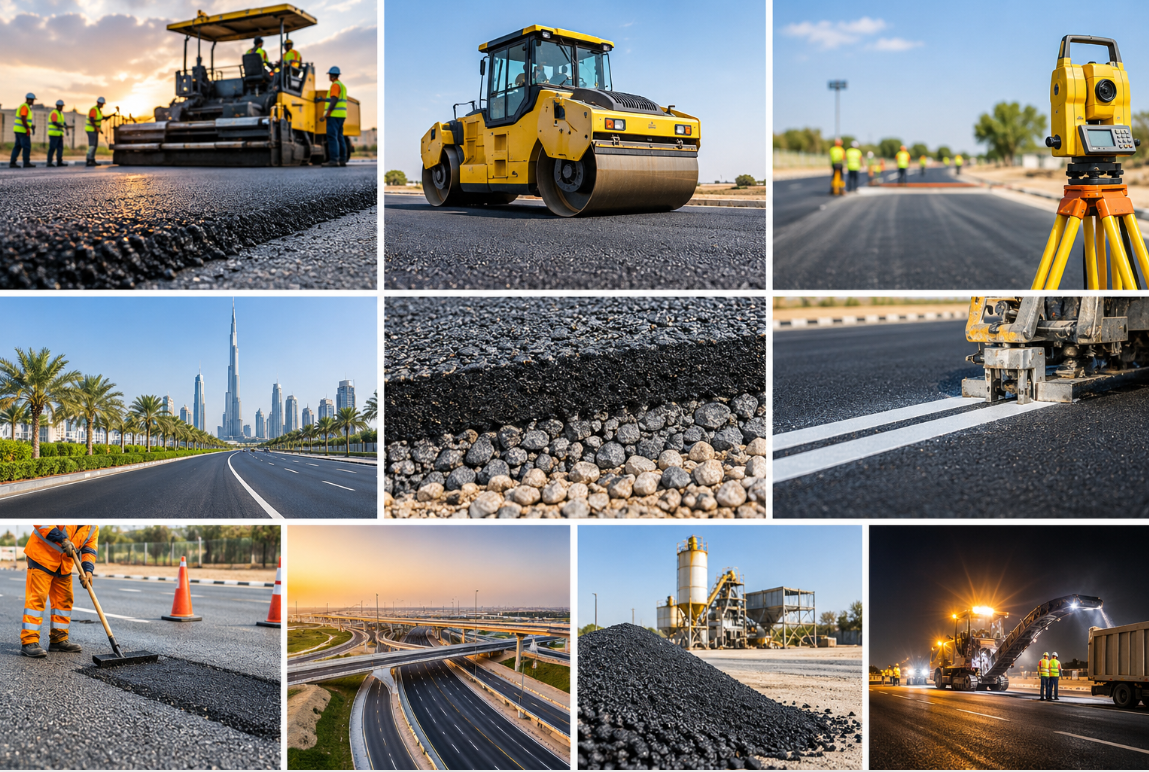
Infrastructure development is not simply about creating new routes between destinations. It involves designing transportation networks that can accommodate population growth, commercial activity, changing mobility requirements and future development.
Across the UAE, roads connect residential communities, industrial areas, business districts, logistics facilities and major transportation hubs. As these environments expand, construction methods must deliver more than immediate functionality. They should support durability, efficient resource utilisation and reliable long-term performance.
Modern construction techniques are helping achieve these objectives through improved planning, material selection, engineering assessments and construction management.
Engineering Begins Before Construction
A successful road project starts long before machinery reaches the site. Preliminary investigations help determine whether the proposed design is suitable for the location and expected traffic conditions.
Assessing Soil and Ground Conditions
The ground beneath a road has a major influence on its performance. Engineers examine soil characteristics, existing ground levels, drainage conditions and other relevant site information before finalising the pavement design.
Geotechnical investigations help identify weak or unsuitable materials that may require treatment or replacement.
Ignoring these conditions can lead to settlement, cracking and uneven surfaces after construction.
Using Surveying and Digital Planning
Modern surveying equipment allows project teams to obtain detailed information about existing site conditions.
Digital terrain models, computer-aided design and coordinated engineering drawings help establish accurate levels, alignments and dimensions.
These methods also improve coordination between different project activities, reducing the possibility of conflicts during execution.
Better Pavement Design for Different Traffic Conditions
Roads are exposed to different types of traffic depending on their location and purpose.
A residential access route does not experience the same loading conditions as an industrial corridor used by heavy vehicles.
Selecting Suitable Pavement Layers
Road pavement generally consists of multiple layers designed to distribute vehicle loads and provide a stable travelling surface.
The subgrade, sub-base, base course and wearing course each perform specific functions.
Material selection and layer thickness should reflect expected traffic volume, ground conditions and engineering requirements.
The pavement must also be designed with appropriate drainage provisions to limit moisture-related deterioration.
Modern Asphalt Production and Application
The quality of the finished surface depends significantly on how asphalt materials are produced, transported and placed.
Temperature and Compaction Control
Asphalt mixtures must be delivered and placed within suitable temperature ranges.
Compaction is particularly important because it influences density, surface stability and resistance to water penetration.
Insufficient compaction may result in premature deterioration, while inappropriate handling can affect the quality of the finished pavement.
Quality control procedures should monitor material properties, placement conditions and completed surface characteristics.
Technology Is Improving Construction Accuracy
Digital equipment has changed the way road construction activities are planned and monitored.
GPS-supported machinery, automated surveying systems and digital project records can improve accuracy during important construction stages.
Equipment Guidance and Level Control
Machine guidance systems can assist operators in maintaining specified elevations and alignments.
This can be particularly useful for large projects involving extensive earthworks, complex junctions and multiple pavement sections.
Accurate level control also supports effective drainage by helping maintain the required surface gradients.
Digital Project Monitoring
Project management platforms can help teams coordinate schedules, materials, workforce requirements and inspection records.
Better information flow allows potential delays or technical concerns to be identified earlier.
Safety and Traffic Management During Construction
Construction sites must remain organised, particularly when work takes place near active roads or developed communities.
Temporary barriers, directional signs, lighting and designated pedestrian routes help manage movement around work areas.
Reducing Disruption to Road Users
Work sequencing can help minimise the amount of road space occupied at any one time.
Where practical, construction activities may be divided into manageable sections so that access can be maintained around the project.
Experienced Road Repair Contractors can also help determine appropriate repair sequences when existing road sections must remain operational during improvement work.
Sustainable Approaches to Infrastructure Development
Sustainability is becoming an increasingly important consideration in infrastructure planning.
Material efficiency, responsible construction practices and appropriate waste management can reduce the environmental impact of road projects.
Reusing Suitable Pavement Materials
Reclaimed asphalt pavement may be processed and incorporated into new mixtures where engineering specifications permit.
This can reduce demand for virgin materials and support more efficient use of existing resources.
Material reuse must be supported by appropriate testing and quality controls to ensure that the finished pavement meets the required performance standards.
Improving Existing Roads
New construction is not always the most effective solution.
In some locations, improving an existing pavement can provide the required capacity while avoiding unnecessary reconstruction.
Asphalt Maintenance Companies In Dubai play an important role in preserving road conditions through suitable inspections, surface treatments and rehabilitation activities.
Why Quality Assurance Matters
Every construction stage should be checked against the approved project requirements.
Inspections may cover earthworks, material quality, pavement thickness, compaction, surface levels and drainage arrangements.
Testing provides evidence that completed work meets the required specifications.
Documentation is equally important because it creates a record of materials, inspection results and construction activities.
Preparing Infrastructure for Future Growth
Road networks should be planned with future requirements in mind.
Traffic patterns may change as new residential developments, industrial facilities and commercial districts become operational.
Well-designed junctions, suitable road widths, efficient drainage and coordinated utility corridors can help reduce the need for repeated modifications.
Conclusion
Modern road construction techniques are improving the way infrastructure is planned, delivered and maintained across the UAE. Digital surveying, engineered pavement designs, controlled asphalt application and better construction management contribute to more reliable transportation networks.
The greatest benefits emerge when technology is combined with experienced engineering, appropriate materials and consistent quality assurance. By considering long-term performance alongside immediate project requirements, infrastructure development can better support the country's evolving transportation needs.















Comments (0)