

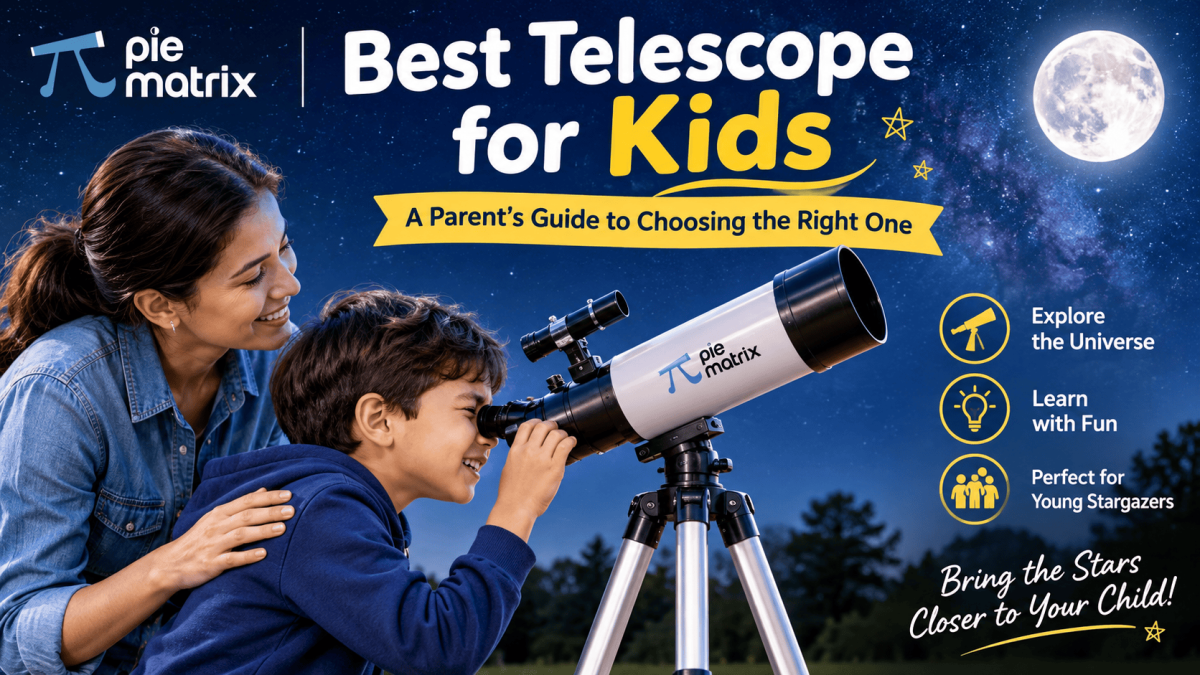
Best Telescope for Kids: A Parent’s Guide to Choosing the Right One
Summary: A complete parent's guide to choosing the Best Telescope for Kids. Learn about different telescope types, important features, beginner-friendly options, and helpful buying tips to introduce children to astronomy and space exploration.

Introducing children to astronomy is a wonderful way to encourage curiosity, creativity, and scientific learning. The Best Telescope for Kids can help young explorers discover the Moon, planets, stars, and fascinating objects in the night sky. For parents, choosing the right telescope involves more than selecting an attractive model. It requires understanding optical quality, ease of use, portability, durability, and budget. A suitable beginner telescope can transform ordinary evenings into exciting learning experiences and help children develop a lasting interest in science and space exploration.
Why Should Parents Introduce Children to Astronomy?
Astronomy is an exciting subject that allows children to explore the universe beyond textbooks and classrooms. Observing the Moon, identifying bright planets, and learning about constellations can make scientific concepts easier to understand.
A telescope encourages children to ask questions and discover answers through observation. It also develops patience, concentration, and problem-solving skills. Stargazing with family members can become an enjoyable activity that combines entertainment with education.
Introducing astronomy early can inspire children to learn more about physics, mathematics, technology, and space science.
What Makes the Best Telescope for Kids?
The ideal Telescope for Kids should offer simple operation, reliable performance, and comfortable handling. Children who are new to astronomy generally benefit from equipment that does not require complicated adjustments.
Parents should consider the following features:
-
Easy operation: Simple controls make observing less frustrating.
-
Stable mount: A sturdy mount helps maintain a steady image.
-
Lightweight construction: Portable telescopes are easier to move and store.
-
Good optical quality: Clear images make observations more enjoyable.
-
Useful accessories: Suitable eyepieces and finder systems improve usability.
A telescope should match the child's experience level and provide opportunities to develop new observational skills.
Different Types of Telescopes for Children
Understanding telescope designs can help parents make better purchasing decisions.
1. Refractor Telescopes
Refractor telescopes use lenses to collect and focus light. Their enclosed optical tubes make them relatively straightforward to maintain. They are often suitable for observing the Moon, planets, and other bright celestial objects.
2. Reflector Telescopes
Reflector telescopes use mirrors instead of lenses. They can offer impressive light-gathering capability at different price points. These instruments are useful for observing lunar details, planets, star clusters, and selected deep-sky objects.
3. Dobsonian Telescopes
Dobsonian telescopes combine reflector optics with a simple mounting arrangement. Their straightforward movement makes them popular among visual astronomy enthusiasts. Older children with growing astronomy interests may enjoy learning to use these instruments.
How to Choose a Telescope According to Age
Age is an important consideration when selecting a telescope, but a child's interest and ability also matter.
Younger children generally benefit from compact instruments with simple controls and adult assistance during setup. Older children may appreciate telescopes offering additional adjustment options and improved optical performance.
Parents should also consider what their children want to observe. A child interested mainly in lunar viewing may need different equipment from someone fascinated by star clusters and distant celestial objects.
Choosing an appropriate model helps prevent frustration and encourages regular use.
Important Telescope Specifications to Understand
Before purchasing, parents should understand a few basic specifications.
Aperture: Aperture refers to the diameter of the telescope's main lens or mirror. A larger aperture generally collects more light, helping observers see fainter objects.
Focal Length: Focal length influences the telescope's magnification when used with a particular eyepiece.
Magnification: Magnification depends on the telescope's focal length and the eyepiece being used. Higher magnification does not automatically produce clearer images.
Mount: A stable mount is essential because vibrations can make celestial objects difficult to observe.
Understanding these features helps parents compare different models more confidently.
Common Mistakes to Avoid When Buying a Telescope
Many beginners choose telescopes based only on advertised magnification. This can be misleading because actual viewing quality depends on optical performance, aperture, atmospheric conditions, and mount stability.
Another common mistake is purchasing complicated equipment for a child who has never used a telescope. Too many controls can make the first observing experience difficult.
Parents should also avoid expecting professional astronomical images from basic beginner instruments. Visual observing and astrophotography require different equipment and skills.
The best choice is a telescope that matches the child's interests, experience, and available budget.
Where to Buy Telescope for Kids Online
When families decide to Buy Telescope for Kids, they should compare available models carefully. Check product specifications, optical design, included accessories, portability, and suitability for beginners.
The Pie Matrix provides telescope options for astronomy enthusiasts, including beginners exploring the night sky. Parents can explore its telescope collections to compare different designs and identify equipment that suits their children's interests.
Before placing an order, review the product details and choose a model that offers a practical balance between performance, usability, and price.
Best Beginner Telescope for Kids: What Should You Expect?
The Best Beginner Telescope for Kids should make the first observing experience enjoyable rather than complicated. A simple setup, stable mount, and useful eyepieces can help children become comfortable with basic astronomical observations.
Start with easy celestial targets such as the Moon. Its visible craters and changing appearance provide an excellent introduction to observing. As children gain confidence, they can explore bright planets and other suitable objects.
Parents should remember that learning astronomy takes time. Helping children understand how to focus, locate objects, and adjust their telescope gradually builds confidence.
Creating an Exciting First Stargazing Experience
A successful first observation does not require expensive equipment or advanced knowledge.
Choose a clear evening and find a location with minimal surrounding light. Allow the telescope to adjust to outdoor temperatures when appropriate, and make sure the mount is stable before beginning.
Start by showing children how to use the finder and eyepiece. Select the Moon as the first target because it is relatively easy to locate.
Parents can make the experience more educational by discussing lunar craters, planetary movements, and constellations. An astronomy journal can also help children record their observations and track what they discover.
Telescope Safety and Maintenance
Safety should always be a priority when children use optical equipment. Never look directly at the Sun through a telescope without a properly designed and certified solar filter fitted according to the manufacturer's instructions. Ordinary sunglasses are not sufficient protection.
Children should handle the telescope carefully and avoid touching optical surfaces. Store the equipment in a clean, dry place and follow the manufacturer's maintenance recommendations.
Adult supervision is particularly important during setup and outdoor observations.
Why Choose The Pie Matrix for Astronomy Exploration?
The Pie Matrix aims to make astronomy more accessible by offering telescope options for people interested in discovering the night sky. Its focus on astronomical learning supports beginners who want to understand different telescope designs and explore observational astronomy.
Parents can explore suitable products, compare specifications, and select equipment according to their children's experience and interests.
Conclusion
Choosing the right Telescope for Children is an investment in curiosity, education, and memorable family experiences. Parents should prioritize simple operation, reliable optics, a stable mount, and suitable portability rather than focusing only on magnification.
A thoughtfully selected telescope can introduce children to the Moon, planets, stars, and the fascinating science of the universe. Start with simple observations, encourage questions, and allow young astronomers to explore at their own pace.
With the right equipment and guidance, every clear night can become an opportunity to discover something new.

Pie Matrix is a trusted destination for astronomy enthusiasts, beginners, and professionals seeking clear, reliable guidance on telescopes, binoculars, and stargazing equipment. We simplify complex concepts, compare products honestly, and share practical insights to help readers make confident buying decisions. From exploring planets and deep-sky objects to understanding prices, features, and performance, Pie Matrix focuses on accuracy and usability. Our content is designed to inspire curiosity, support informed choices, and make the wonders of the night sky accessible to everyone. Whether you’re starting your astronomy journey or upgrading your gear, Pie Matrix is your go-to resource.













Comments (0)