

What Should You Prepare Before a Home Physiotherapy Appointment?
Preparing for a home physiotherapy appointment? Learn what to wear, what information to prepare and how to get the most from your home visit.
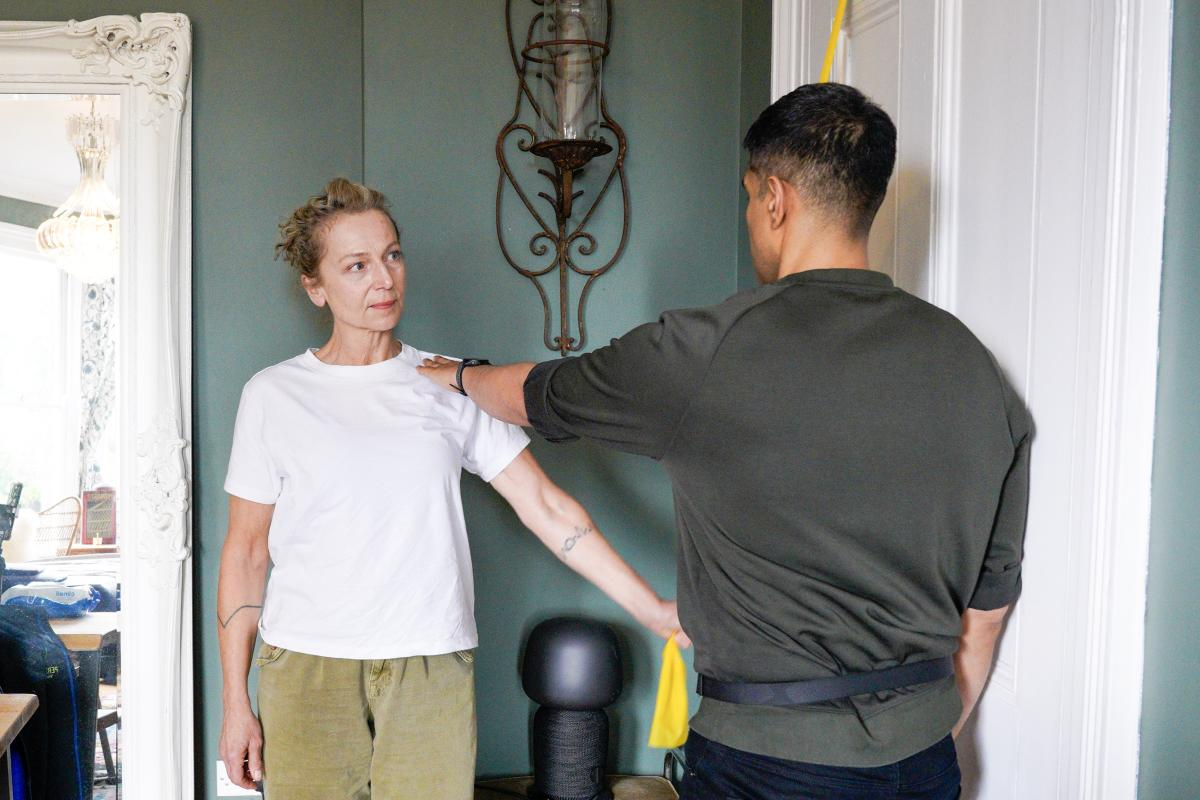
A home physiotherapy appointment can make it easier to receive professional care without travelling to a clinic. It can also give the physiotherapist an opportunity to understand how your symptoms affect you in your own environment.
Whether you are recovering from an injury, managing ongoing pain or working towards returning to normal activity, a little preparation can help you get more from your appointment.
You do not need to create a detailed medical history or prepare your home perfectly. The most useful preparation is simply having a clear idea of your symptoms, your usual activities and what you would like help with.
Why choose a home physiotherapy appointment?
A home appointment can be particularly useful when travelling to a clinic is difficult or when your home environment is relevant to your rehabilitation.
For example, a person recovering from an injury may find travelling uncomfortable, while someone with mobility difficulties may prefer to receive treatment at home.
Home visits can also allow the physiotherapist to consider practical factors that may influence your recovery, such as how you move around your home or how your normal daily activities affect your symptoms.
For people considering home visit physiotherapy London services, the first step is to understand what you would like to achieve from the appointment.
Think about your main concern
Before the appointment, consider what is currently bothering you most.
You may want help with:
- Pain that has not settled
- Returning to exercise after an injury
- Improving movement or strength
- Managing symptoms during everyday activities
- Getting back to work or sport
- Understanding how to progress your rehabilitation
Try to describe what you are experiencing in your own words. You do not need to know the medical terminology.
It can also help to think about when your symptoms started and whether anything makes them better or worse.
Keep track of your symptoms
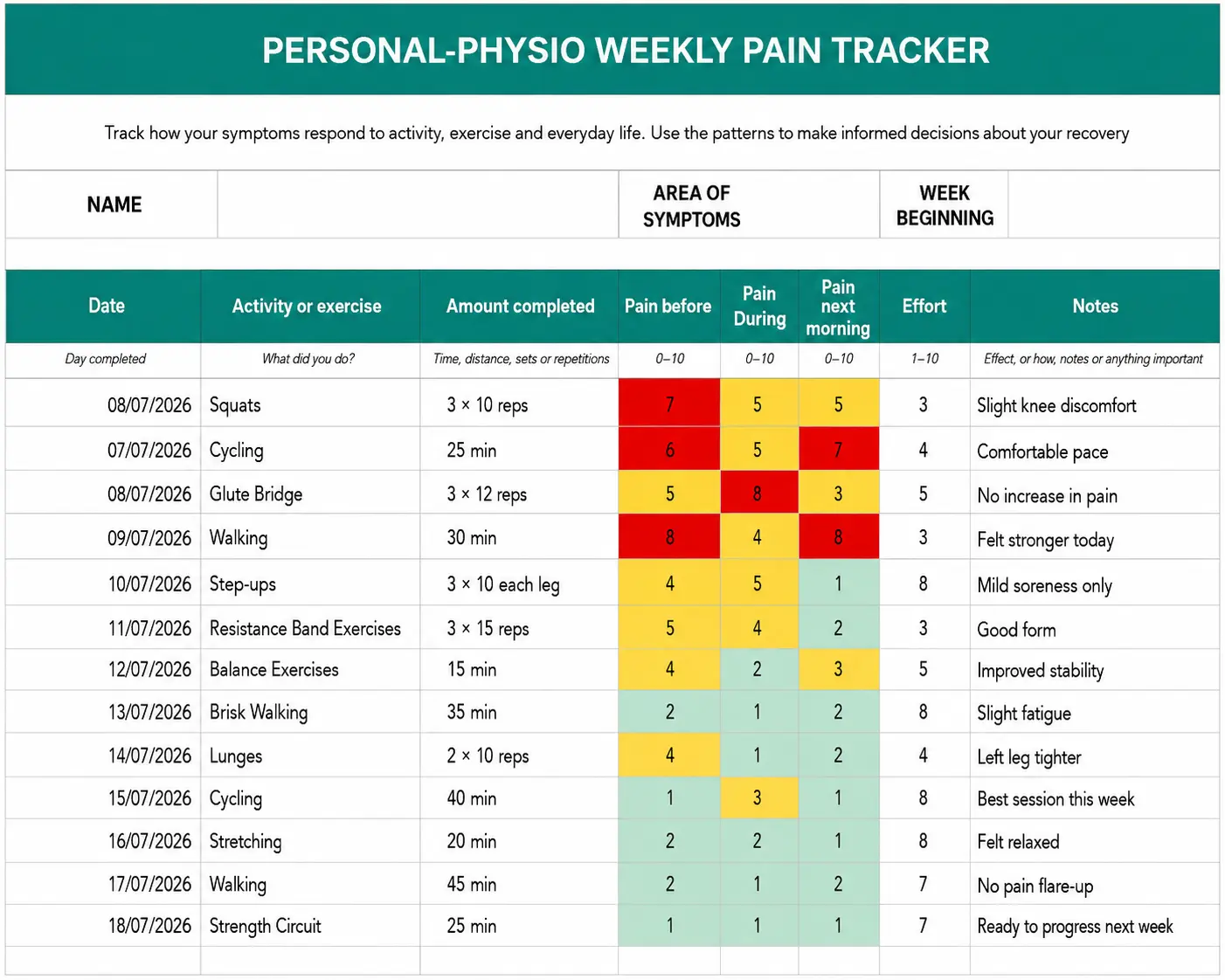
If your symptoms change from day to day, keeping a simple record can be useful.
You could note:
- When symptoms appear
- What activity you were doing
- How severe the symptoms felt
- Whether symptoms changed afterwards
- How you felt the following morning
- Any exercises you completed
This can help you and your physiotherapist identify patterns rather than relying entirely on memory during the appointment.
The Personal-Physio pain and rehabilitation tracker can be used to record symptoms, exercises and progress between appointments.
Wear comfortable clothing
Try to wear clothing that allows the area being assessed to be seen and moved comfortably.
For example, if you are attending a home physiotherapy appointment for a knee or leg problem, shorts or loose-fitting trousers may make assessment easier. For a shoulder or upper-body problem, a loose T-shirt can be useful.
There is no need to purchase specialist clothing. The main consideration is whether you can move comfortably and whether the physiotherapist can assess the relevant area.
Make some space
You do not need a large treatment room.
However, it is useful to have a clear area where you can comfortably stand, walk or perform exercises.
Depending on your symptoms and treatment plan, the physiotherapist may need space to observe movements or demonstrate exercises.
A clear section of the living room, bedroom or another suitable area is often enough.
If you have stairs, a home visit may also provide an opportunity to discuss how you manage them as part of your normal routine.
Have your medication and medical information available
If you take medication related to your symptoms or have previously received treatment for the problem, it can be helpful to have the relevant information available.
You may also want to mention:
- Previous injuries
- Relevant operations
- Previous physiotherapy
- Investigations or scans
- Current medication
- Other conditions that may affect your rehabilitation
You do not need to prepare a lengthy document. Providing accurate information during the assessment is usually enough.
If you have reports or letters from another healthcare professional that are relevant, having them available may also help provide useful background.
Think about your normal daily activities
One advantage of a home appointment is that the assessment can be considered alongside your normal environment.
Think about the activities that are currently difficult.
For example:
- Getting in and out of a chair
- Using stairs
- Walking around the house
- Working from home
- Getting dressed
- Sleeping comfortably
- Exercising
- Lifting or carrying objects
You may notice that your symptoms are not simply related to exercise. Everyday activities can also affect how you feel.
Explaining these challenges gives the physiotherapist more context when discussing your treatment and rehabilitation plan.
Prepare questions you want to ask
It is easy to forget questions during an appointment, particularly if you are focused on explaining your symptoms.
Before the appointment, write down anything you are unsure about.
You might ask:
- What could be contributing to my symptoms?
- What activities should I continue?
- Are there activities I should temporarily modify?
- Which exercises should I prioritise?
- How should I progress my exercises?
- What should I do if symptoms increase?
- When should I expect to review my progress?
There does not need to be a fixed list. The purpose is to make sure you leave the appointment with a clear understanding of the next steps.
Think about your rehabilitation goals
Try to identify what you would like to get back to.
Your goal could be relatively simple, such as walking comfortably, returning to work or managing stairs.
For an active person, the goal might be returning to running, the gym or another sport.
Knowing your goal helps make rehabilitation more relevant to your everyday life. A programme designed around your specific activities can be more useful than focusing only on reducing symptoms.
If your goal involves rebuilding strength and physical capacity, Personal-Physio's strength and rehabilitation services may also be relevant.
What happens during the appointment?
The exact structure of a home physiotherapy appointment will depend on your symptoms and individual circumstances.
The appointment may include a discussion of your symptoms and history, an assessment of relevant movements or activities, and advice about appropriate treatment and rehabilitation.
Your physiotherapist may also recommend exercises or changes to how you approach certain activities.
The aim is to understand your situation and agree on practical next steps rather than simply treating the area where you feel pain.
What should you do after the appointment?
Your work does not necessarily stop when the appointment ends.
If you are given exercises or advice, make sure you understand how and when to complete them.
It can also be useful to continue recording how your symptoms respond. This can provide useful information for your next appointment and help you understand how your activity levels are affecting your recovery.
If symptoms change significantly or you are unsure about your rehabilitation, discuss this with your physiotherapist rather than making major changes based on assumptions.
Who can benefit from home physiotherapy?
Home physiotherapy can be useful for people with different needs, including those who have difficulty travelling, people recovering from injury and people who want rehabilitation advice in their normal environment.
It may also be convenient for people with busy schedules who would find travelling to a clinic difficult.
For those looking for a home visit physiotherapist, the suitability of a home appointment will depend on the individual's symptoms, goals and clinical needs.
Frequently Asked Questions

Personal-Physio is a physiotherapy clinic in Soho, Central London, a short walk from Tottenham Court Road station. The clinic provides assessment, treatment and rehabilitation for musculoskeletal and sports injuries. Services include physiotherapy, sports injury rehabilitation, clinical strength and conditioning, sports massage and deep-tissue massage. Each appointment is shaped around the individual’s symptoms, activity demands and goals, with access to both treatment and gym facilities at UNTIL Soho. Physiotherapy home visits are also available across London for people who would benefit from being assessed and treated in their own environment.














Comments (0)