

Custom Factory Eco-Friendly Packaging for Modern Businesses
Factory Eco-Friendly Packaging provides businesses with sustainable packaging options made from materials such as recycled paper, kraft board, and other recyclable materials. These packaging solutions can be customized in different sizes, shapes, and designs to suit various products while supporting waste reduction. Choosing factory-made eco-friendly packaging can help brands create a professional product presentation and adopt more responsible packaging practices.

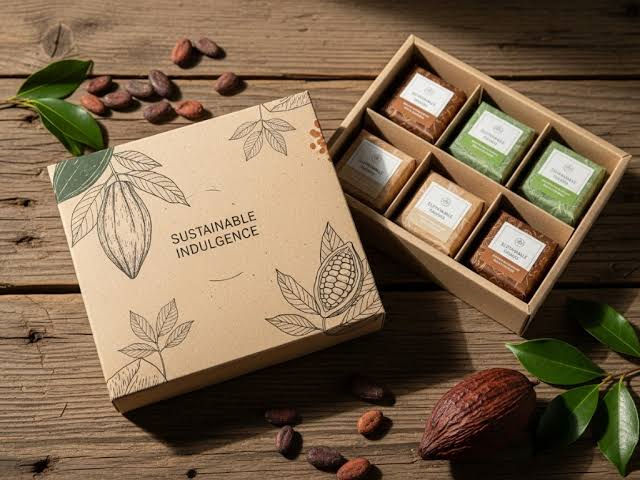
A manufacturer switching to sustainable packaging usually assumes the hard part is picking the right material. It isn't. The hard part is what happens six months later, when a supplier substitutes a slightly different board without mentioning it, or a "recyclable" claim turns out to only be true in facilities the business doesn't actually have access to. Sustainable packaging done right at the factory level is less about good intentions and more about verifiable specifics the kind that hold up when someone actually checks.
Where "Eco-Friendly" Claims Tend to Fall Apart
The term gets used loosely enough that it's stopped meaning much on its own. A box can be technically recyclable and still require a facility most municipalities don't have. It can use "soy-based ink" while the coating underneath is still a petroleum-derived laminate that blocks recycling entirely. None of this is necessarily dishonest it's often just imprecise, and imprecision at scale becomes expensive once customers or regulators start asking harder questions.
The more reliable approach starts with specifics that can actually be verified: FSC-certified board sourcing, a defined recycled content percentage, a coating that's confirmed compatible with standard curbside recycling rather than assumed to be.
What Actually Changes at the Factory Level
Sustainable packaging isn't just a material swap it changes several things about how production runs, and businesses moving in this direction should expect some of these shifts upfront rather than discovering them mid-order.
|
Factor |
Conventional Packaging |
Factory Eco-Friendly Packaging |
|
Board sourcing |
Virgin fiber, unspecified origin |
FSC-certified or recycled-content board |
|
Coating |
Plastic laminate |
Water-based or aqueous coating |
|
Ink |
Standard petroleum-based |
Soy or vegetable-based |
|
Minimum order quantity |
Often lower |
Sometimes higher, due to material sourcing runs |
|
Lead time |
Standard |
Can run 1-2 weeks longer for certified materials |
That lead time difference matters more than businesses tend to plan for. Certified sustainable board isn't always sitting in stock the way conventional board is, and a rushed order sometimes means falling back to a less sustainable substitute just to hit a deadline — which defeats the purpose of the switch in the first place.
Structural Efficiency Matters as Much as Material Choice
A genuinely sustainable box isn't just made from better material — it's sized correctly. A box with an extra inch of void space on every side wastes material regardless of how recyclable that material is, and it also increases shipping volume, which adds its own environmental cost through fuel use that rarely gets factored into the "eco-friendly" conversation.
Right-sizing a box to within roughly 0.15 to 0.25 inches of clearance around the actual product, rather than defaulting to a standard template size, tends to cut material use meaningfully across a large production run. On an order of 10,000 units, even a small reduction in board per box adds up to a noticeable difference in total material consumed.
Certifications Worth Actually Checking
Not every sustainability label carries the same weight, and it's worth knowing which ones are backed by an independent verification process versus which ones a manufacturer can apply to their own product without outside review.
FSC certification confirms the paper fiber came from responsibly managed forests and involves third-party auditing. A "recyclable" claim printed on a box, by contrast, often isn't independently verified at all it's a manufacturer's own assessment, which may or may not hold up depending on regional recycling infrastructure. Businesses serious about sustainability claims should ask suppliers directly which certifications are third-party audited and which are self-reported, since the difference matters if a claim ever gets challenged publicly.
The Cost Conversation Businesses Usually Get Wrong
Sustainable packaging typically costs somewhat more per unit than conventional packaging, particularly on smaller order volumes where certified material sourcing hasn't been able to achieve the same economies of scale as standard board. Businesses sometimes assume this gap is larger than it actually is, especially at higher volumes where the price difference between recycled and virgin board narrows considerably.
The more useful comparison isn't sustainable packaging against the cheapest available option it's sustainable packaging against the cost of oversized, wasteful conventional packaging, which is often not actually cheaper once shipping volume and material waste are factored in honestly.
A Mistake That Shows Up Often in Larger Orders
Businesses sometimes finalize a sustainable packaging design based on a small sample run, then discover the full production batch uses a slightly different coating or board source because the original certified material wasn't available at full volume. This isn't always disclosed clearly unless a business asks directly. Requesting written confirmation that the full production run will match the approved sample same board source, same coating, same certification before signing off on a large order avoids this exact problem, which is more common than most businesses expect.
Manufacturers who work through this kind of specification consistently, including suppliers like One Custom Boxes, are generally more prepared to document sourcing details clearly rather than leaving a business to assume the full order matches the sample without confirmation.
The Practical Takeaway
Genuine factory eco-friendly packaging comes down to verifiable specifics rather than a general impression of "green" certified board sourcing, coatings confirmed compatible with actual recycling infrastructure, and box dimensions sized to reduce material waste rather than default to a generic template. The businesses that get the most value from switching are the ones that ask suppliers for documentation upfront and confirm the full production run matches whatever sample was originally approved, rather than assuming sustainability claims made at a small scale automatically hold at a larger one.









Comments (0)