

SDS Authoring Services: A Complete Guide to SDS Authoring and Certification Requirements
Explore professional SDS authoring services for accurate, compliant Safety Data Sheets. Get expert support for chemical classification, documentation, reviews and updates.
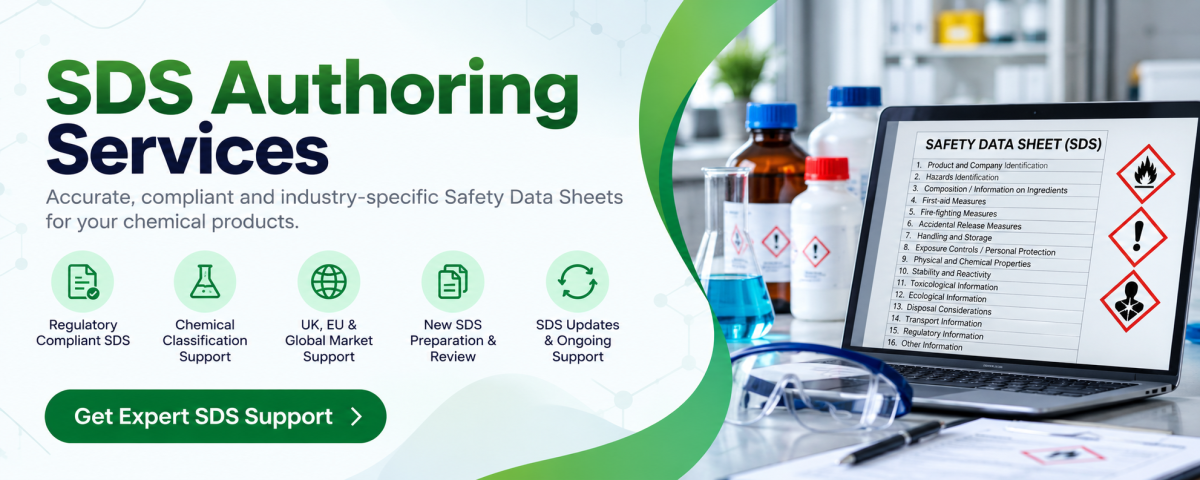
Safety Data Sheets (SDS) are an essential part of chemical safety and regulatory compliance. They provide important information about a chemical product, including its hazards, safe handling and storage requirements, emergency measures, exposure controls and disposal considerations.
For manufacturers, importers, distributors and suppliers, preparing accurate and up-to-date SDS documentation can be a complex task. This is where professional SDS authoring services can help.
Businesses may also search for SDS authoring certification when looking for qualified professionals or reliable support for preparing Safety Data Sheets. It is important to understand what SDS authoring involves, what qualifications may be relevant and how professional SDS preparation supports chemical compliance.
What Is an SDS?
A Safety Data Sheet, commonly referred to as an SDS, is a document that communicates important health, safety and environmental information about a chemical substance or mixture.
An SDS typically provides information about:
- Product identification
- Hazard identification
- Composition and ingredients
- First-aid measures
- Fire-fighting measures
- Accidental release measures
- Handling and storage
- Exposure controls and personal protection
- Physical and chemical properties
- Stability and reactivity
- Toxicological information
- Ecological information
- Disposal considerations
- Transport information
- Regulatory information
- Other relevant information
The exact requirements can vary depending on the applicable legislation, market and type of product.
What Are SDS Authoring Services?
SDS authoring services involve the professional preparation, review and updating of Safety Data Sheets based on available product information and applicable regulatory requirements.
An SDS author needs to evaluate relevant information about the product, including its composition, hazards, classification and intended use, before preparing the appropriate documentation.
Professional SDS authoring can be particularly useful for businesses managing multiple chemical products or selling products across different markets.
Why Are Accurate Safety Data Sheets Important?
An SDS is more than a technical document. It provides information that can help workers, distributors, emergency responders and other relevant users understand the potential hazards associated with a chemical product.
Accurate SDS documentation can help businesses:
- Communicate product hazards clearly
- Support safe handling and storage
- Provide appropriate emergency information
- Meet applicable documentation requirements
- Support workplace chemical safety
- Maintain consistent product information
- Reduce the risk of outdated or inaccurate safety information
Where product formulations or regulatory requirements change, SDS documentation may also need to be reviewed and updated.
What Does an SDS Author Do?
An SDS author is responsible for compiling and presenting relevant chemical safety information in the required format.
Depending on the product and regulatory market, the author may need to review:
- Product composition
- Hazardous ingredients
- Classification information
- Physical and chemical properties
- Toxicological data
- Ecological information
- Exposure controls
- Transport classifications
- Regulatory requirements
- Product-specific safety information
The author then uses the available information to prepare an SDS that is structured according to the applicable requirements.
Understanding SDS Authoring Certification
The term SDS authoring certification can be used by businesses when searching for training, qualifications or professional credentials relating to SDS preparation.
However, it is important to distinguish between certification of an SDS and qualifications or training for SDS authors.
There is not one universal global certificate that automatically makes an SDS compliant across every country or regulatory system. SDS requirements depend on the applicable legislation, product classification and market.
Businesses should therefore consider the relevant regulatory knowledge and experience of the person or consultancy preparing their SDS rather than relying solely on the presence of a certificate.
What Qualifications Should an SDS Author Have?
A competent SDS author should have an appropriate understanding of chemical hazard communication and the regulations relevant to the target market.
Useful areas of knowledge can include:
- Chemical classification
- Hazard communication
- GHS principles
- Safety Data Sheet requirements
- Chemical composition
- Toxicological information
- Transport requirements
- Exposure controls
- Labelling requirements
- Regional chemical regulations
Training or professional qualifications can provide useful evidence of knowledge, but the suitability of an SDS author should also be assessed based on their relevant experience and understanding of the applicable regulatory framework.
SDS Authoring for Different Markets
One of the challenges of SDS preparation is that requirements can differ between jurisdictions.
An SDS prepared for one market may not automatically satisfy the requirements of another market. Businesses selling chemical products internationally may therefore need to consider market-specific requirements.
For example, companies supplying products in the UK or EU need to consider the applicable chemical classification, labelling and SDS requirements for those markets.
This makes regulatory knowledge particularly important when preparing SDS documentation for international distribution.
Information Required for SDS Authoring
To prepare an SDS, an author may need detailed information about the product.
This can include:
- Product name
- Product identifiers
- Full formulation or ingredient information
- Concentration ranges
- CAS numbers where applicable
- Hazard classifications
- Physical and chemical properties
- Toxicological data
- Ecotoxicological information
- Intended use
- Handling and storage information
- Transport information
- Existing regulatory classifications
The quality and completeness of the information provided to the SDS author can directly affect the quality of the resulting document.
SDS Review and Updating
SDS authoring is not necessarily a one-time activity.
Businesses should review their SDS documentation when relevant changes occur, such as:
- Changes to product formulation
- New hazard information
- Changes in classification
- Changes in regulatory requirements
- New toxicological or ecological information
- Changes to transport classifications
- Changes in product use or intended applications
Regular review can help businesses identify SDS documents that may need to be updated.
Common Challenges with SDS Authoring
Businesses preparing SDS documents internally can encounter several challenges.
Incorrect Classification
Incorrect hazard classification can affect the information included throughout the SDS and may also have implications for product labelling.
Incomplete Product Information
If important formulation, hazard or testing information is missing, it may be difficult to prepare a complete SDS.
Outdated Information
Regulatory requirements and scientific information can change. Using outdated information can result in documentation that no longer reflects the product or applicable requirements.
Market-Specific Requirements
An SDS designed for one jurisdiction may not automatically be appropriate for another. Businesses selling internationally should consider the requirements of each relevant market.
Inconsistent Documentation
Companies with large product portfolios may struggle to maintain consistent SDS information across multiple products and versions.
Professional SDS authoring services can help businesses manage these challenges through structured review and documentation processes.
Benefits of Professional SDS Authoring Services
Working with experienced SDS professionals can provide several practical benefits.
Regulatory-Focused Documentation
Professional authors can review product information against applicable requirements and help prepare appropriate SDS documentation.
Improved Consistency
For businesses with multiple chemical products, professional support can help maintain a consistent approach to SDS preparation.
Time Savings
Outsourcing SDS preparation can reduce the workload for internal regulatory, quality or technical teams.
Ongoing Updates
Professional support can also assist with reviewing and updating SDS documents when product or regulatory information changes.
Support for International Markets
Businesses selling internationally can obtain guidance on market-specific SDS considerations rather than relying on a single generic document.
Who Needs SDS Authoring Services?
SDS authoring services can be useful for:
- Chemical manufacturers
- Importers
- Distributors
- Chemical suppliers
- Cosmetic manufacturers
- Cleaning product companies
- Industrial product manufacturers
- Biocidal product businesses
- Private-label brands
- Businesses expanding into new markets
The exact documentation requirements depend on the product, formulation, intended use and jurisdiction.
How to Choose SDS Authoring Services
When selecting an SDS authoring provider, businesses should consider:
- Relevant regulatory knowledge
- Experience with chemical products
- Understanding of applicable markets
- Ability to work with complex formulations
- SDS review and updating capabilities
- Knowledge of hazard classification
- Experience with multilingual or international SDS requirements where applicable
- Quality control and document review processes
It is also useful to provide the author with complete and accurate product information to support the preparation process.
SDS Authoring Services from Connect 4 Compliance
Preparing an accurate SDS requires a clear understanding of the product as well as the regulatory requirements applicable to the target market.
Connect 4 Compliance provides professional SDS authoring services to help businesses prepare, review and manage Safety Data Sheet documentation. Our support can help businesses understand applicable requirements, organise product information and develop appropriately structured SDS documentation.
Whether you are launching a new chemical product, reviewing existing SDS documents or expanding into a new market, professional SDS support can help you manage your documentation more effectively.
Conclusion
Safety Data Sheets play an important role in communicating chemical hazards and supporting safe product handling. Preparing them requires careful consideration of product composition, hazard information and applicable regulatory requirements.
Professional SDS authoring services can help manufacturers, importers and suppliers develop clear and appropriately structured Safety Data Sheets while supporting their wider chemical compliance responsibilities.
When searching for SDS authoring certification, businesses should also understand that there is a distinction between qualifications or training for SDS authors and certification of an individual SDS. The most important considerations are the author's relevant expertise, the accuracy of the product information and the regulatory requirements applicable to the target market.
With appropriate professional support and regular review, businesses can maintain more effective SDS documentation and better manage their chemical safety and regulatory responsibilities.
FAQs
1. What are SDS authoring services?
SDS authoring services involve preparing, reviewing and updating Safety Data Sheets using product information and the regulatory requirements applicable to the relevant market.
2. What is SDS authoring certification?
SDS authoring certification is commonly used as a search term for training or qualifications related to SDS preparation. There is not one universal certification that automatically makes every SDS compliant in every jurisdiction.
3. Who can prepare an SDS?
SDS preparation should be carried out by someone with appropriate knowledge and experience in chemical hazard communication and the regulatory requirements applicable to the product and market.
4. Does every chemical product require an SDS?
SDS requirements depend on the product, its classification, intended use and applicable legislation. Not every product is subject to identical SDS requirements.
5. When should an SDS be updated?
An SDS should be reviewed when there are relevant changes to the formulation, hazard classification, regulatory requirements or other information that affects the document.
6. Can one SDS be used worldwide?
Not necessarily. SDS requirements can vary between jurisdictions, so businesses selling products internationally should assess the requirements applicable in each target market.
Connect 4 Compliance delivers premium regulatory compliance consulting services for UK, EU, and AU markets. Whether you’re launching cosmetics, biocides, or electrical goods, we provide expert guidance, documentation, and market access support to keep your products legally compliant.







Comments (0)