

Steam Sauna vs Dry Sauna vs Infrared: What's the Real Difference?
Confused by steam sauna, steam room and infrared terms? Learn how each works, what temperatures to expect and what installation each type needs.

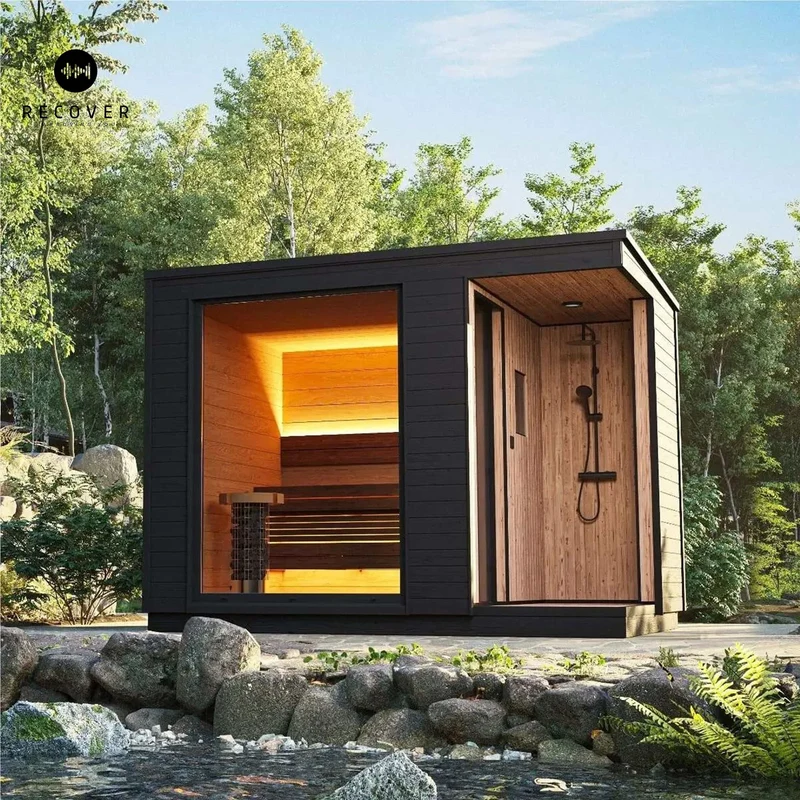
Search for a steam sauna and you'll find results about steam rooms, traditional saunas with water thrown on the stones and infrared cabins, all described with overlapping words. It's no surprise buyers end up confused. The type you choose changes the heat, the humidity, the construction needed and the experience itself.
This guide separates the terms, explains how each type works, what a steam room needs that a sauna doesn't and how to decide which suits you. It also keeps the health claims realistic, since evidence for many popular benefits is more modest than marketing suggests.
Sauna vs Steam Room: The Core Difference
A sauna is a hot, dry room. A steam room is a hot, humid one. Traditional saunas typically run around 70–100°C with low humidity, while steam rooms usually sit at about 40–50°C with humidity close to 100%.
That's why a steam room can feel intense despite its lower temperature. The air is saturated, so sweat doesn't evaporate, and your body struggles to shed heat.
The phrase "steam sauna" is used loosely. Some people mean a steam room, while others mean a traditional sauna where you add water to hot stones to raise humidity briefly. When you see the term in a listing, check which of these the seller actually means.
How a Traditional Sauna Works
A traditional sauna uses a heater, usually electric, to warm the air and a stack of stones. Throwing water on the hot stones produces a burst of steam, sometimes called löyly, which raises humidity and the sensation of heat for a short time.
Benches at different heights let you choose your temperature, since heat rises. Wood such as cedar, spruce or hemlock is common, and ventilation is built in to keep the air fresh.
Traditional saunas suit people who enjoy strong, dry heat and the ritual of adding water to the stones. They heat up faster in some designs than people expect, but they need a properly rated heater and good ventilation.
How an Infrared Sauna Works
Infrared saunas use panels that emit infrared light, which warms the body directly rather than heating the air as much. Air temperatures are typically lower, often around 45–60°C, and many people describe the heat as gentler.
Some products use "full-spectrum" panels covering several infrared wavelengths. Claims about special benefits of each wavelength vary, and the research behind them is limited, so treat dramatic promises with caution.
Infrared cabins tend to be compact and often plug into standard supply, which makes them popular for apartments. You shouldn't pour water on an infrared heater, since it isn't designed for it. A hybrid cabin combines infrared panels with a traditional stove for people who want both.
What a Steam Room Requires
Steam rooms need construction that handles constant moisture. Surfaces are typically tiled or otherwise waterproofed, with a vapour barrier, a sloped ceiling so condensation doesn't drip on bathers and a drain. A steam generator produces the humidity, and ventilation and safety controls need careful planning.
That's why steam rooms are usually built into a room rather than delivered as a ready-made cabin. They involve plumbing, waterproofing and electrical work, so they need a qualified designer and installer.
If a steam room appeals to you, ask suppliers what's included: generator, controls, waterproofing, tiling and commissioning. Prefab dry saunas are far simpler, so be sure which one you're pricing.
Which Suits You?
Choose a traditional sauna if you like intense dry heat and the option of adding steam from stones. Choose infrared if you prefer lower air temperatures, a compact footprint or easier installation. Choose a hybrid if you can't decide, though it costs more and needs more space.
A steam room suits people who enjoy humid warmth and have a bathroom or wet area where waterproof construction is practical.
Comparing traditional, infrared and hybrid saunas side by side helps you see how formats differ in size, heater type and price. Recover's collection lists those dry-heat formats, so ask any supplier directly about steam room construction if that's what you want.
Frequently Asked Questions
Is a steam room hotter than a sauna?
No. Steam rooms usually run at lower temperatures, but the high humidity makes them feel intense. Saunas are hotter and drier.
Can I add steam to a traditional sauna?
Yes, by pouring small amounts of water on the hot stones, following the heater manufacturer's guidance. Never pour water on an infrared heater or any heater that isn't designed for it.
Which is better for breathing or skin?
Responses vary. Some people find humid air comfortable, but evidence for specific medical benefits is limited. If you have asthma or another condition, speak to your doctor first.
Can I have both a sauna and a steam room at home?
Yes, in larger homes, but they need separate construction and enough space. A contractor can advise on layout and requirements.
Conclusion
Saunas, steam rooms and infrared cabins all use heat, but they differ in temperature, humidity, construction and feel. Understanding those differences makes it easier to choose and to compare listings that use the words loosely.
Decide which experience you enjoy, check what installation involves and keep expectations realistic. Whatever you choose, follow safe-use guidance and speak to a doctor if you have health concerns.

















Comments (0)