

How to Improve Garden Privacy Without Making Your Outdoor Space Feel Enclosed
Discover practical garden privacy ideas for UK homes, including timber fencing, decorative screens, trellis and planting for a more private outdoor space.

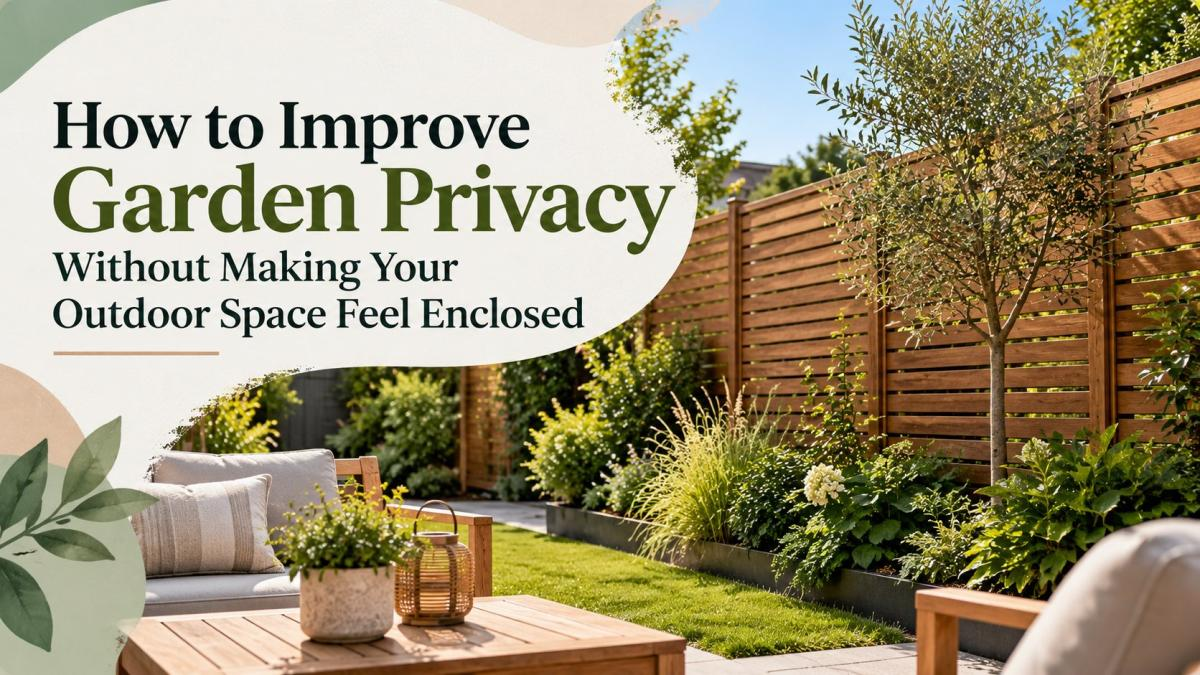
A private garden gives you somewhere to relax, entertain guests and enjoy time outdoors without feeling overlooked. However, creating privacy does not always mean installing tall, solid fencing around every boundary.
The right combination of fencing, planting and thoughtful garden design can provide screening while keeping your outdoor space attractive and welcoming. That is why fencing specialists such as William Bradley Fencing focus on choosing suitable fencing styles, assessing garden layouts and recommending practical solutions that balance privacy with appearance.
Whether you have a small courtyard or a larger family garden, several practical options can help you achieve the right balance.
Why Is Garden Privacy Important for UK Homeowners?
Garden privacy helps homeowners create comfortable outdoor spaces by reducing unwanted views from neighbouring properties, nearby pathways and surrounding roads.
In many UK residential areas, gardens sit close together, making it difficult to enjoy outdoor seating or dining areas without feeling overlooked.
A well-planned garden boundary can improve privacy while complementing the property's appearance. The key is choosing screening that suits your garden's size, layout and natural light.
7 Practical Ways to Improve Garden Privacy
Improving garden privacy involves selecting suitable fencing styles, using plants strategically and creating screening around areas where it is needed most.
1. Install Closeboard Fencing for Solid Privacy
Closeboard fencing is a practical option for homeowners who want a more private garden boundary.
Its overlapping vertical timber boards create solid screening, making it suitable for gardens overlooked from neighbouring ground-level spaces.
The design also offers a traditional appearance that complements many UK properties.
When considering timber fencing, pay attention to the height, post arrangement and ground conditions to ensure the installation is suitable for your property.
2. Choose Venetian Fencing for a Contemporary Appearance
Venetian fencing features horizontal timber slats that create a clean, modern finish.
The spacing between the slats can influence how much privacy the fence provides. Narrower gaps may reduce direct views, although the screening will depend on the viewing angle.
This style works particularly well in contemporary gardens where homeowners want an attractive boundary without the appearance of a completely solid wall.
3. Use Hit & Miss Fencing for Privacy and Airflow
Hit & Miss fencing features boards positioned alternately on opposite sides of the fence rails.
This arrangement provides partial screening while allowing some air to pass through the structure.
It can be useful in gardens where homeowners want a balance between privacy and a less enclosed appearance.
However, the level of screening depends on the board arrangement and viewing angle, so it is important to inspect the design before installation.
4. Add Trellis to Existing Fencing
Trellis panels can add decorative height and support climbing plants.
They are commonly installed above suitable fencing to create a softer transition between the garden boundary and surrounding landscape.
Climbing roses, clematis and other suitable plants can provide additional screening as they mature.
Before adding trellis, check that the existing fence can support the extra weight and wind loading. Planning restrictions may also apply to the combined height.
5. Use Tall Plants and Garden Hedges
Plants provide a natural way to improve privacy without relying entirely on fencing.
Evergreen hedges can offer year-round screening, while ornamental grasses and shrubs can soften views around patios and seating areas.
Choose plants based on their mature height, root spread and maintenance requirements.
Avoid placing large shrubs too close to fencing, where branches and roots could create problems over time.
6. Create Privacy Around Seating Areas
Not every part of your garden needs the same level of screening.
If neighbouring windows overlook your patio, consider adding a decorative screen, pergola or carefully positioned planting around that particular area.
This approach can create a more private seating space while leaving the rest of the garden open.
It is especially useful in smaller gardens where tall fencing along every boundary could reduce natural light.
7. Combine Fencing Styles for a Balanced Design
Using more than one fencing style can help divide the garden into areas with different privacy requirements.
For example, solid closeboard fencing may be suitable along a shared boundary, while decorative Venetian panels can complement a seating area.
Combining styles can also introduce visual interest without making the garden feel crowded.
The materials, heights and finishing details should work together to create a consistent appearance.
What Should You Consider Before Choosing Garden Privacy Fencing?
Before installing new fencing, assess the practical requirements of your outdoor space.
-
Privacy level: Identify which parts of the garden are overlooked.
-
Garden size: Choose a fence height and design that suits the available space.
-
Natural light: Consider whether solid screening could shade planting or seating areas.
-
Wind exposure: Select suitable posts, fixings and fence construction.
-
Maintenance: Compare the upkeep required for timber and composite materials.
-
Planning restrictions: Check whether your proposed fencing height requires permission.
Considering these factors will help you choose a boundary that provides useful screening without creating unnecessary problems.
Can Garden Fencing Improve Privacy Without Blocking Sunlight?
Yes, garden fencing can improve privacy without blocking all natural light, although the result depends on its height, position and design.
Slatted fencing, decorative trellis and selective screening can help reduce direct views while allowing some light through.
The direction of sunlight also matters. A tall fence on one boundary may create significant shade, while the same design in another position may have less impact.
For smaller gardens, targeted screening around seating areas may be more effective than increasing the height of every boundary.
Why Does Professional Garden Fencing Installation Matter?
Professional installation helps ensure that privacy fencing is secure, properly aligned and suitable for the property's ground conditions.
Fence height, post spacing, drainage and wind exposure can all influence the performance of the finished boundary.
An experienced fencing installer can assess the garden's layout, recommend suitable fencing styles and identify any installation challenges before work begins.
For homeowners across Surrey, William Bradley Fencing provides residential timber fencing, composite fencing, gates and fence repairs. Based in Walton-on-Thames, the company has over 10 years of experience serving homeowners across Weybridge, Hersham, Esher and surrounding areas.
A professional site assessment can help identify suitable materials and installation arrangements based on the garden's specific requirements.
Conclusion
Improving garden privacy does not have to mean completely enclosing your outdoor space. Closeboard fencing, Venetian panels, Hit & Miss designs, trellis and carefully selected plants can all provide different levels of screening.
The right approach depends on your garden's layout, neighbouring properties, natural light and maintenance preferences.
By combining suitable fencing with thoughtful landscaping, homeowners can create a comfortable, attractive and more private garden that remains enjoyable throughout the year.















Comments (0)