

Understanding Psoriasis Types and Treatment Options in India
Learn about different types of psoriasis, common symptoms, causes and treatment options in India. Understand available care and management approaches.

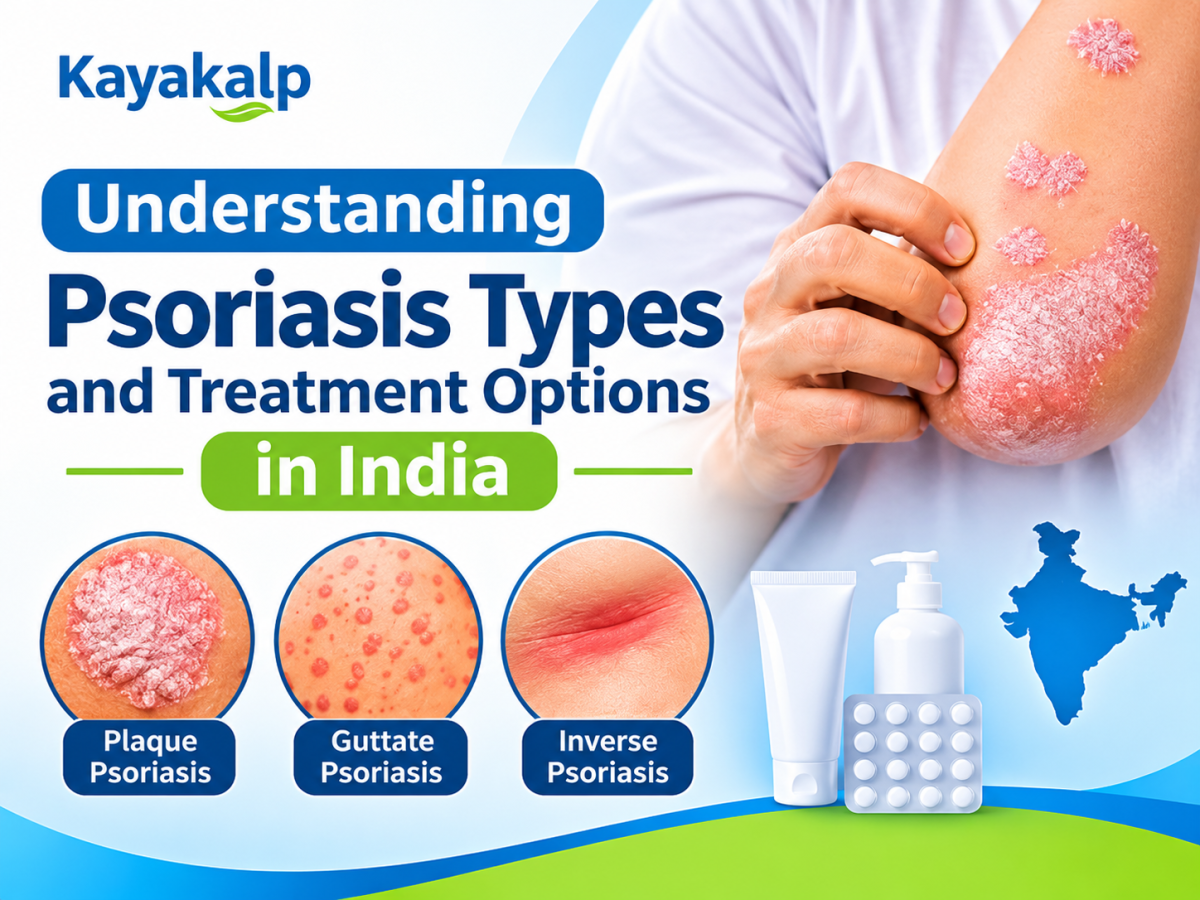
Psoriasis is a chronic skin condition that causes the skin cell cycle to speed up, leading to patches of thick, scaly skin that can appear red, flaky, or silvery depending on the type and the individual's skin tone. It affects people differently, both in where it shows up and how it behaves over time, which is why understanding the specific type a person has is an important first step before deciding on a treatment approach.
The Different Types of Psoriasis
Psoriasis is not a single, uniform condition. It comes in several recognized forms, and knowing the types of psoriasis helps patients and doctors identify which category a particular case falls into. Plaque psoriasis, the most common form, shows up as raised, well-defined patches, often on the elbows, knees, scalp, and lower back. Guttate psoriasis tends to appear as small, drop-shaped spots and is sometimes triggered by an infection. Inverse psoriasis develops in skin folds, such as under the arms or around the groin, and tends to look smoother and shinier rather than scaly because of the moisture in those areas. Pustular psoriasis is less common and involves small, pus-filled bumps surrounded by red skin.
Each type can also affect the nails, scalp, or joints to varying degrees, and some patients experience more than one type over the course of the condition. This is part of why a proper evaluation matters: the same general term, psoriasis, can look and behave quite differently from one patient to the next.
What Triggers and Affects Flare-Ups
Psoriasis is linked to the immune system, and flare-ups are often connected to triggers beyond the skin itself, including stress, certain infections, skin injuries, and in some cases dietary or lifestyle factors. Because these triggers vary from person to person, tracking what tends to precede a flare-up can be a useful part of managing the condition alongside any prescribed treatment.
Treatment Approaches in India
Patients in India have access to a range of treatment paths for psoriasis, from conventional dermatology, which may include topical steroids, light therapy, or systemic medication for more extensive cases, to herbal and Ayurvedic approaches that focus on topical formulations paired with dietary and lifestyle guidance. Many patients weigh these options based on the extent of their psoriasis, how long they have had it, and their own comfort with different types of treatment.
Anyone comparing paths forward is likely to come across information on the best psoriasis treatment in India, and it is worth remembering that what works well for one type of psoriasis, or one patient's triggers, is not automatically the right fit for another. A thorough assessment by a doctor familiar with the condition is the starting point for building a plan suited to the specific type and severity involved.
Managing Psoriasis Over the Long Term
Because psoriasis is a chronic condition, most treatment plans are built around ongoing management rather than a single course of treatment. This usually means a combination of topical or systemic treatment, attention to known triggers, and regular follow-up with a doctor to adjust the plan as needed. Patients who stay consistent with their routine and keep their doctor updated on changes tend to have an easier time managing flare-ups when they do occur.
When to Consult a Doctor
If patches of thick, scaly, or inflamed skin appear and do not resolve on their own, or if nails or joints start showing changes alongside the skin symptoms, it is worth getting a professional opinion. An accurate diagnosis of the specific type of psoriasis involved makes it much easier to choose a treatment approach that is likely to help.
Psoriasis can be a long-term companion for many patients, but with the right diagnosis, a suitable treatment plan, and attention to personal triggers, flare-ups can generally be kept under better control over time.


Comments (0)