

What are different Content Creation types and When to Use Them?
Explore content creation types, from blogs and videos to podcasts and social posts, and learn which formats fit different goals, audiences, and platforms.

A brand may spend hours creating a blog, only to realise that its audience responds better to short videos. Another may share the same post across every platform and wonder why engagement stays low. The problem is often not the idea but choosing the wrong format.
Different content creation types work for different goals and audiences. Knowing when to use blogs, videos, social media posts, podcasts, or infographics can make content more useful and engaging. For brands looking to turn ideas into the right format, content production services can also support the process.
What Are Content Creation Types?
Content creation types are simply the different ways a brand shares its message. This can be through written material, videos, audio, graphics, or interactive experiences. The best choice usually depends on the audience, platform, and purpose.
The main goal is not to use every format. It is to choose a format that makes the message easy to understand and useful for the people seeing it.
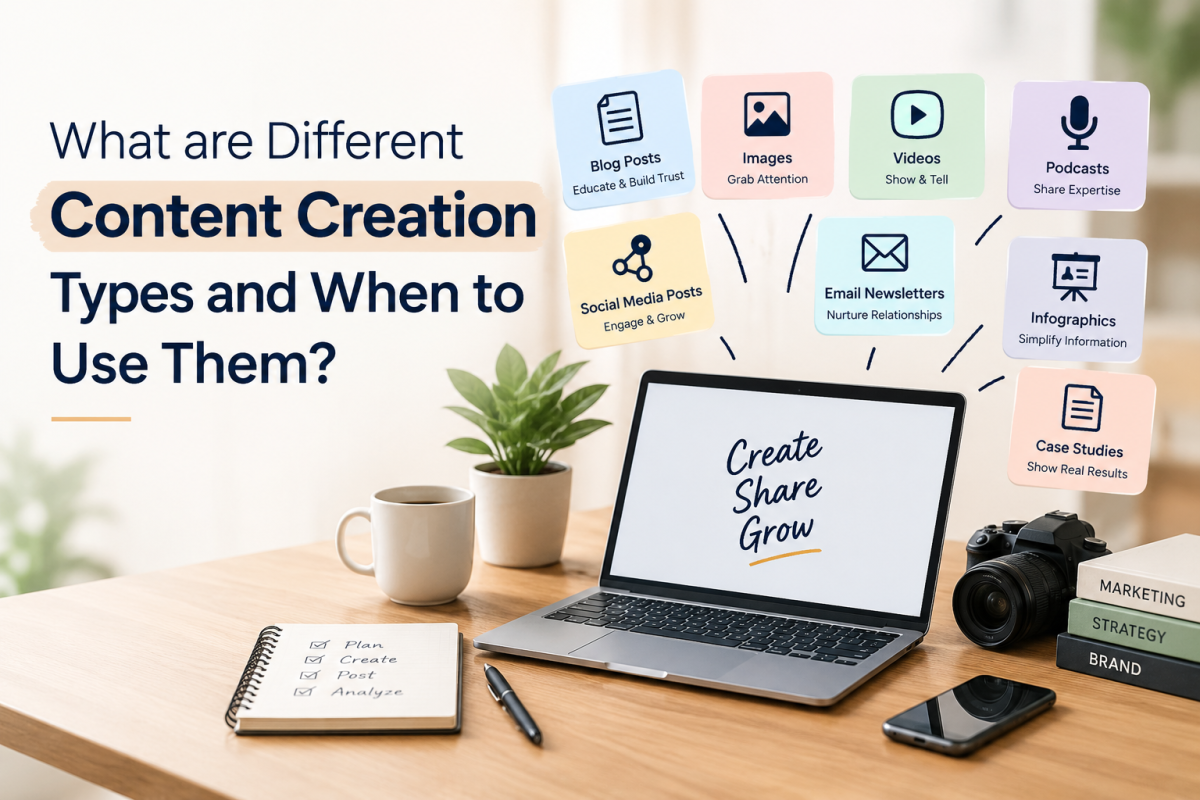
Different Types of Content Marketing Formats
Different types of content can support different marketing goals. Some help bring visitors through search, while others are better for engagement, trust, or direct communication.
Here are some common formats businesses use:
-
Written content: Blogs, articles, guides, and case studies are useful for explaining topics in detail and supporting search visibility.
-
Video content: Tutorials, product demonstrations, interviews, and brand stories can explain ideas quickly and keep viewers interested.
-
Visual content: Infographics, charts, carousels, and graphics work well when information needs to be shown in a simple way.
-
Social media posts: Short posts, reels, and stories help brands stay active and communicate regularly with their audience.
-
Podcasts: Interviews, discussions, and audio episodes are useful for sharing knowledge and developing a connection with a specific audience.
-
Email content: Newsletters, updates, and promotional messages give businesses a direct way to communicate with existing contacts.
-
Interactive content: Quizzes, polls, calculators, and similar tools encourage people to take part instead of only reading or watching.
A business does not need to use all these options. Starting with two or three suitable formats is often more practical. The important part is understanding what the audience prefers and what the business wants the content to achieve.
How to Match Content With Your Marketing Goal
The same content does not work equally well for every goal. Before creating anything, think about what you actually want people to do after seeing it. This makes choosing the right format much easier.
-
Want more search traffic? Detailed articles, guides, and case studies can help answer the questions people are already searching for.
-
Need to explain a product? A short video or demonstration can show how it works without making the audience read a long explanation.
-
Have complex information? Infographics and other visual content can make numbers, processes, and comparisons easier to follow.
-
Want more interaction? Social media posts, polls, and short-form videos can encourage people to respond and share their views.
-
Building a loyal audience? Podcasts and regular email content can help you stay connected with people who already know the brand.
-
Want people to take part? Quizzes, calculators, and other interactive formats can make the experience more engaging.
Audience behaviour should also guide the decision. A B2B service company may find detailed written resources more useful, while a lifestyle or F&B brand may have more opportunities through visual content and short videos.
Choosing the right format becomes easier when it is connected to the brand’s wider goals. A clear strategy consulting approach can help businesses understand their audience, market, and objectives before deciding where to focus their content efforts.
Picking the Most Effective Format for Your Goals
There is no one format that works for every business. The right choice depends on what you want to achieve, where you want to share it, and what resources you have.
-
Your goal: Content made for brand awareness may look different from content focused on engagement or sales.
-
Your platform: LinkedIn works well for professional insights, while Instagram is more suited to visuals, reels, and short videos.
-
Your resources: Videos and podcasts usually need more planning, time, and equipment than a simple blog post.
For a small business starting with content marketing, it can be easier to begin with written and visual formats. They are usually simpler to create and can also be adapted for social media, emails, or other platforms later.
Common Mistakes Brands Make
Many businesses choose a format just because they see other brands using it. But what works for one audience may not work for another. Some common mistakes include:
-
Creating videos without a clear message just to follow a trend.
-
Writing long articles when the audience may prefer quick and visual information.
-
Ignoring podcasts or email because they can take longer to build results.
-
Trying to publish on every platform instead of focusing on a few formats properly.
The main issue is usually a lack of planning. Before creating content, it helps to understand what the audience wants, where they spend time, and what the business wants to achieve. This makes it easier to focus on formats that have a real purpose instead of simply producing more content.
Final Thoughts
Good content is not about doing everything. It is about choosing what fits your audience, goal, and platform.
Start with a few formats, see what gets a response, and build from there. This keeps your content plan simple, focused, and easier to manage.
Frequently Asked Questions
How many content formats should a small business use?
Start with two or three. Choose formats that are easy to manage and match your audience.
Can one piece of content be reused in other formats?
Yes. A blog can become a social post, carousel, video script, or email. It saves time and keeps the message consistent.
Is video better than written content?
Not always. Video is useful for demonstrations, while written content is often better for detailed topics and search.
How often should a content strategy be reviewed?
Review it every few months. Audience interests and platform trends can change, so adjustments may be needed.
Are podcasts suitable for every industry?
No. They work better for industries where people value regular discussions, expert insights, and longer-form content.





Comments (0)