

How to Build a High-Converting Lead Generation Funnel With ClickFunnels
Learn how to create a lead generation funnel with ClickFunnels, capture qualified leads, optimize landing pages, and improve follow-up for business growth.

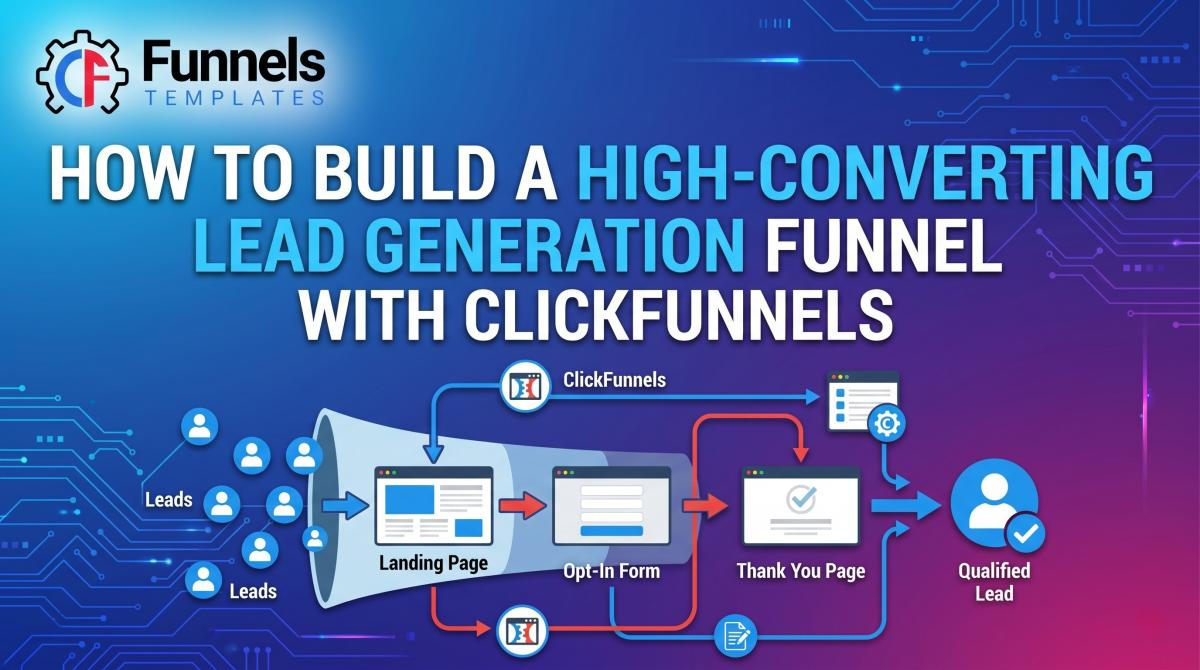
Generating website traffic is only the first step toward growing an online business. The real challenge is turning visitors into qualified leads and guiding those prospects toward becoming paying customers. Without a structured lead generation strategy, businesses can lose valuable opportunities even when their marketing campaigns attract attention.
A lead generation funnel helps solve this problem by creating a clear journey from the first interaction to lead capture and follow-up. With the right funnel strategy, businesses can attract relevant audiences, collect prospect information, nurture relationships, and create more opportunities for sales.
One platform worth exploring for building this type of marketing system is ClickFunnels. It provides tools for creating landing pages, sales funnels, and customer journeys designed around specific conversion goals.
If you're ready to build your own funnel, explore ClickFunnels here.
What Is a Lead Generation Funnel?
A lead generation funnel is a marketing system that guides potential customers through a series of steps designed to capture their interest and contact information.
Instead of directing every visitor to a general website homepage, businesses can create a focused experience that encourages a specific action, such as downloading a guide, requesting a consultation, registering for a webinar, or signing up for a newsletter.
A typical lead generation funnel includes:
-
Traffic generation: Attracting relevant visitors through SEO, paid advertising, social media, and other marketing channels.
-
Landing page: Communicating a clear offer and explaining why visitors should take action.
-
Lead capture form: Collecting essential contact details from interested prospects.
-
Thank-you page: Confirming the submission and explaining the next step.
-
Lead nurturing: Following up with relevant information to build trust and move prospects toward a purchase.
When these elements work together, businesses can establish a more organized approach to customer acquisition.
Why Businesses Need a Dedicated Lead Generation Funnel
Many businesses invest in advertising, content marketing, and social media but struggle to turn their traffic into meaningful sales opportunities.
A dedicated funnel helps address common problems by giving visitors a clear next step and connecting lead capture with a broader marketing strategy.
1. Capture More Relevant Leads
A focused landing page allows businesses to communicate one primary offer instead of overwhelming visitors with multiple messages.
For example, a digital marketing agency could offer a free marketing audit in exchange for a prospect's name, email address, and business website. This creates an opportunity to understand the prospect's needs and determine whether the agency's services are a suitable fit.
The key is to make the offer relevant to the target audience and collect only the information needed at the initial stage.
2. Improve the Customer Journey
A confusing website experience can prevent potential customers from taking action. A well-structured funnel removes unnecessary distractions and makes the next step obvious.
From the headline and value proposition to the form and confirmation page, each element should support the same objective.
ClickFunnels can help businesses create dedicated funnel pages that guide visitors through a more focused journey. You can explore ClickFunnels and its funnel-building capabilities here.
3. Turn Leads Into Sales Opportunities
Capturing contact details is only the beginning. Businesses also need a process for engaging prospects after they submit a form.
Depending on the tools and integrations used, businesses can follow up through email marketing, appointment scheduling, CRM workflows, or other communication channels.
For example, a consultant could send a confirmation email after someone requests a discovery call, share useful educational content, and provide a booking link for the next step.
Consistent, relevant follow-up helps businesses maintain relationships with potential customers without relying entirely on manual outreach.
How ClickFunnels Supports Lead Generation
ClickFunnels is a funnel-building platform designed to help businesses create marketing pages and guide prospects through conversion-focused experiences.
Here are several ways businesses can use it as part of a lead generation strategy.
Landing Page and Funnel Creation
Landing pages play an important role in converting visitors into leads. A good landing page communicates the offer quickly, explains its value, and presents a clear call to action.
ClickFunnels provides tools for building landing pages and connecting funnel steps. Businesses can create pages for free resources, consultation requests, webinar registrations, and service inquiries.
The design should match the audience's expectations and the traffic source. Someone arriving from an advertisement should see a message that aligns with the promise made in that advertisement.
Lead Capture and Opt-In Forms
Lead capture forms allow businesses to collect information from people interested in their products or services.
A useful form should be easy to complete and ask only for relevant details. Requesting too much information too early can create friction and discourage submissions.
For example, an initial form might collect a name and email address, while additional qualification questions can be asked later when appropriate.
Thank-You Pages and Next Steps
After a visitor submits a form, a thank-you page confirms that the action was completed and sets expectations.
Instead of displaying only a generic confirmation, businesses can use this page to explain how the requested resource will be delivered, invite prospects to book a call, or recommend a relevant next step.
A thoughtful confirmation experience makes the funnel feel more organized and helps visitors understand what happens next.
Funnel Testing and Conversion Optimization
Launching a funnel is not the end of the process. Businesses should regularly review its performance and identify opportunities for improvement.
Useful metrics include:
-
Landing page conversion rate
-
Number of leads generated
-
Cost per lead
-
Form completion rate
-
Lead-to-customer conversion rate
-
Revenue generated from funnel leads
Businesses can experiment with headlines, calls to action, page layouts, and offers to learn which changes improve results. Analytics and testing capabilities may require additional tools or integrations, depending on the setup.
Five Steps to Create a Better Lead Generation Funnel
Step 1: Define Your Ideal Customer
Before designing a funnel, identify the audience you want to attract.
Consider their biggest challenges, what they are trying to achieve, and what information would help them make a decision. A clear audience profile makes it easier to develop an offer that attracts relevant prospects rather than simply increasing form submissions.
Step 2: Create a Valuable Lead Magnet
A lead magnet is a resource or offer provided in exchange for a prospect's contact information.
Examples include:
-
Free industry guides
-
Checklists and templates
-
Educational webinars
-
Product demonstrations
-
Free consultations
-
Audits or assessments
Choose an offer that solves a specific problem and provides a natural introduction to your paid product or service.
Step 3: Build a Focused Landing Page
Your landing page should answer three essential questions:
-
What are you offering?
-
Why is it valuable to the visitor?
-
What should the visitor do next?
Use a clear headline, concise supporting copy, relevant proof, and a prominent call to action. Remove unnecessary distractions and ensure the page works well on mobile devices.
You can get started with ClickFunnels here to explore options for creating your own funnel.
Step 4: Plan Your Follow-Up Strategy
Develop a follow-up sequence that delivers on the promise made on your landing page.
For example, after someone downloads a guide, you might send the resource, share a practical tip, explain a related challenge, and introduce a relevant service.
Make sure your communication follows applicable consent and marketing requirements. Keep messages useful, relevant, and easy to unsubscribe from where required.
Step 5: Measure and Improve Performance
Review your funnel data regularly to understand where visitors leave and which steps produce the best results.
If many visitors arrive but few submit the form, review the offer, messaging, page experience, and traffic quality. If you generate leads but few become customers, examine your qualification process, follow-up strategy, and sales experience.
Continuous improvement helps turn your funnel into a more reliable component of your marketing system.
Who Can Benefit From a Lead Generation Funnel?
Lead generation funnels can support many different business models.
Digital marketing agencies: Capture consultation requests and qualify potential clients before sales calls.
Coaches and consultants: Offer educational resources and guide interested prospects toward discovery sessions.
Course creators: Build an email list, promote webinars, and introduce prospective students to online programs.
Local service businesses: Generate inquiries for appointments, estimates, and consultations.
SaaS companies: Encourage product demonstrations, trial registrations, and sales conversations.
Affiliate marketers: Create educational landing pages that introduce relevant solutions and direct interested readers to partner offers with appropriate disclosures.
The funnel structure should reflect the audience, offer, and buying process rather than following a one-size-fits-all template.
Lead Generation Funnel Services Versus DIY Funnel Building
Businesses generally have two options when creating a funnel: build it internally using a funnel-building platform or hire specialists to plan, design, and implement the complete system.
A DIY approach can provide flexibility and direct control over the process. It may be appropriate for entrepreneurs who have the time to learn the platform, write the copy, configure integrations, and test the funnel.
A professional funnel service can be helpful when a business needs customized design, conversion-focused copywriting, CRM integration, automation, or ongoing optimization.
CF Funnels, for example, offers lead generation funnel services covering strategy, funnel design, lead capture, nurturing, and conversion optimization. Businesses can choose a service provider for implementation while evaluating platforms such as ClickFunnels for their underlying funnel-building needs.
The right choice depends on your budget, technical experience, available time, and business goals.
Common Lead Generation Funnel Mistakes to Avoid
Even a well-designed funnel can underperform when important details are overlooked.
Unclear messaging: Visitors should immediately understand the offer and its benefits.
Too many form fields: Requesting unnecessary information can make it harder for prospects to complete the form.
Weak calls to action: Use specific language that explains what visitors will receive or do next.
No follow-up plan: Leads may lose interest when businesses fail to respond promptly or provide useful next steps.
Poor mobile experience: Pages and forms should be easy to use on smaller screens.
Ignoring performance data: Decisions based on assumptions alone can prevent meaningful improvements.
Unqualified traffic: High visitor numbers do not automatically translate into valuable leads. Targeting and offer relevance matter.
Addressing these issues creates a stronger foundation for a lead generation system that can be measured and improved over time.
Final Thoughts
A successful lead generation funnel connects audience targeting, a compelling offer, a focused landing page, lead capture, and consistent follow-up. When each step supports the same business objective, companies can create a more structured process for attracting prospects and developing sales opportunities.
ClickFunnels provides a platform for building funnel pages and organizing conversion-focused customer journeys. Whether you are a consultant, agency owner, course creator, or entrepreneur, the important step is to choose an approach that matches your goals and continuously evaluate its performance.
If you're ready to explore funnel-building tools for your business, visit ClickFunnels here and review the available features and plans.

















Comments (0)