

How Custom Mobile App Development Can Drive Business Growth: A Data-Driven Guide
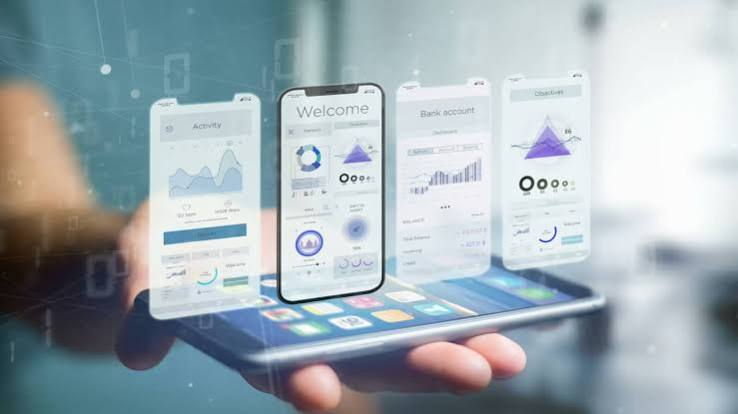
In today's digital marketplace, mobile applications help businesses improve customer experiences, simplify operations, and create new opportunities for growth. From online shopping and food delivery to healthcare and enterprise management, a well-designed application can turn complex processes into convenient digital experiences.
provides mobile app development services for startups, small and medium-sized businesses, and enterprises, covering product strategy, UI/UX design, development, testing, deployment, and ongoing support. Its portfolio includes solutions for businesses and organizations such as LG Electronics Gulf, Mubadala Investment Company, and Dubai Chamber.
1. Mobile App Development by the Numbers
Before investing in a mobile application, businesses should evaluate the development partner's experience, delivery capabilities, and project portfolio. The following figures are published on DeviceBee's website.
13+ |
700+ |
150+ |
95% |
| Years of experience | Apps delivered | Clients listed on the homepage | Reported on-time, on-budget, and quality track record |
Source: DeviceBee's published website. These are company-reported figures, not independently verified performance statistics.
These figures offer a starting point when evaluating a development company. Businesses should also review relevant case studies, project requirements, communication practices, and post-launch support before choosing a partner.
2. Which Type of Mobile App Does Your Business Need?
Different business goals require different application strategies. The table below compares common app development options and their potential business uses.
|
App type |
Suitable business uses |
Key consideration |
|---|---|---|
|
Android app |
Retail, delivery, booking, business tools |
Device compatibility |
|
iOS app |
Customer services, ecommerce, premium digital products |
Apple ecosystem requirements |
|
Cross-platform app |
Businesses targeting iOS and Android |
Shared codebase and platform needs |
|
AI-powered app |
Recommendations, chatbots, workflow automation |
Data quality and integration |
|
Enterprise app |
Employee tools, reporting, internal workflows |
Security and system integration |
DeviceBee develops native iOS and Android applications, cross-platform solutions using technologies such as Flutter and React Native, and AI-enabled applications. The most suitable approach depends on the target audience, functionality, budget, and long-term business goals.
3. The Six Stages of Mobile App Development
A successful application requires more than coding. A structured process helps businesses manage requirements, evaluate progress, and prepare for future growth.
01 Strategy and discoveryDefine business objectives, target users, core features, and project scope. 02 UI/UX designCreate user journeys, wireframes, prototypes, and intuitive interfaces. 03 Application developmentBuild the app, backend systems, APIs, and required integrations. 04 Quality assuranceTest functionality, usability, performance, compatibility, and security. 05 DeploymentPrepare the application for release and production use. 06 Maintenance and growthFix bugs, improve performance, introduce features, and maintain compatibility. |
DeviceBee offers services across this lifecycle, enabling businesses to discuss planning, design, development, launch, and ongoing technical support with one development partner.
4. Understanding Development Timelines and Costs
Budget and timeline estimates vary according to the application's complexity, features, platforms, integrations, and testing requirements. The following figures are illustrative planning ranges, not a quote from DeviceBee.
|
Project category |
Illustrative timeline |
Typical scope |
|---|---|---|
|
Basic MVP |
8–16 weeks |
Core features and initial user testing |
|
Mid-complexity app |
3–6 months |
Custom workflows and integrations |
|
Complex enterprise app |
6+ months |
Advanced systems, security, and multiple integrations |
Actual delivery times can differ significantly. DeviceBee also indicates that an MVP may take approximately 8–16 weeks, while more complex applications can require additional development time.
Before approving a budget, businesses should request a clear breakdown covering:
-
Product design and development
-
Backend infrastructure and third-party services
-
Testing and deployment
-
Security and compliance requirements
-
Maintenance and future feature development
A well-defined scope makes it easier to compare proposals and reduce unexpected costs.
5. Real-World Applications: How Mobile Technology Supports Businesses
Mobile applications can serve different purposes depending on the industry. DeviceBee's published portfolio provides examples of digital solutions developed for different organizations.
|
Example project |
Application |
Business purpose |
|---|---|---|
|
LG Electronics Gulf |
Sell Out System |
Sales performance and retail management |
|
Mubadala Investment Company |
Meeting Room Ordering System |
Workplace food and beverage ordering |
|
Dubai Chamber |
E-services application |
Digital access to organizational services |
|
ClickFood |
Food and grocery delivery |
Ordering from stores and restaurants |
|
EmiratiHub |
Employment platform |
Connecting Emirati talent with employers |
These examples illustrate how applications can support customer-facing services, workplace processes, ecommerce, and industry-specific digital platforms. The features and business outcomes of each project depend on its implementation and intended use.
6. Why Choose DeviceBee for Your Next App Project?
Choosing a development partner involves more than comparing technical skills. Businesses need a team that understands their objectives and can support the application beyond its initial release.
DeviceBee highlights the following capabilities on its website:
-
End-to-end development: Support from strategy and UI/UX design through deployment.
-
Multiple platforms: Native iOS, Android, and cross-platform application development.
-
AI integration: Development of applications with AI-powered capabilities.
-
Business-focused solutions: Applications tailored to particular users, workflows, and requirements.
-
Post-launch support: Maintenance, bug fixes, performance improvements, and feature enhancements.
Explore DeviceBee's mobile app development services to review its capabilities and approach.
Conclusion: Turn Your App Idea into a Practical Digital Solution
Mobile app development can help businesses modernize services, improve operational workflows, and create more convenient digital experiences. However, the best results begin with a clear business objective, realistic project planning, appropriate technology choices, and continuous improvement after launch.
With a portfolio spanning multiple industries and development capabilities across iOS, Android, cross-platform, and AI-enabled applications, DeviceBee is an option for businesses exploring custom digital products.
Ready to discuss your next application? Visit DeviceBee.com to explore its services and discuss your project requirements with the team.

Building the future of mobile technology and AI solutions at DeviceBee, helping startups and enterprises turn bold ideas into high-performing digital products.















Comments (0)