

Michael B Jordan Biography: Creed, Black Panther, Sinners, and Beyond (2026)
Michael B Jordan Biography: Creed, Black Panther, Sinners, and Beyond (2026)

Michael B Jordan has evolved from a promising television actor into one of the most influential figures in modern Hollywood, with a career defined by iconic roles in Creed, Black Panther, and his Oscar-winning performance in Sinners. His 2026 biography reflects not just a string of blockbuster successes but a deliberate arc of artistic growth, cultural impact, and industry leadership that has reshaped expectations for Black leading men in cinema Click here.
Early Life and Path to Acting
Michael Bakari Jordan was born on February 9, 1987, in Santa Ana, California, and raised primarily in Newark, New Jersey, where his parents instilled a strong work ethic and appreciation for the arts. His mother worked at an arts magnet school in Newark, while his father held various jobs, including running a catering business, creating a household that balanced practicality with creative ambition. Jordan faced bullying as a child, partly due to sharing a name with basketball legend Michael Jordan, but found early confidence through modeling, appearing in print ads and commercials for brands like Toys “R” Us by age ten or eleven.
He attended Newark Arts High School and briefly studied at the School of Visual Arts in New York City before committing fully to acting. His professional career began with small television roles in the late 1990s, including appearances on The Sopranos and Cosby, but his true breakout came in 2002 as Wallace in the first season of HBO’s The Wire. Wallace, a thoughtful young drug dealer whose tragic arc became one of television’s most memorable storylines, announced Jordan as a serious talent and set the stage for a career built on emotionally complex, socially resonant characters.
Creed: Reviving a Franchise and Defining a Leading Man
Jordan’s transition from television standout to film leading man was cemented with his role as Adonis “Donnie” Creed in the 2015 revival of the Rocky franchise, directed by Ryan Coogler. Coogler, who had previously worked with Jordan on Fruitvale Station, crafted a story that honored the legacy of the Rocky series while centering a new, contemporary narrative about identity, legacy, and ambition. As the son of Apollo Creed, Jordan brought physical intensity and emotional vulnerability to the role, undergoing a rigorous training regimen to convincingly portray a professional boxer while delivering a performance that balanced toughness with introspection.
Creed was both a critical and commercial success, grossing over $173 million worldwide and earning Sylvester Stallone an Oscar nomination for Best Supporting Actor. For Jordan, the film was a career-defining moment, proving he could anchor a major franchise and carry the emotional weight of a legacy property. He reprised the role in Creed II (2018) and Creed III (2023), the latter of which marked his directorial debut, further expanding his influence behind the camera. The Creed trilogy not only revitalized a beloved franchise but also established Jordan as a bankable star capable of blending commercial appeal with artistic integrity.
Black Panther and the Cultural Phenomenon of Killmonger
If Creed proved Jordan’s leading-man credentials, Black Panther (2018) cemented his status as a cultural icon. Directed again by Ryan Coogler, the film was a landmark in superhero cinema, celebrated for its predominantly Black cast, Afrofuturist aesthetic, and themes of identity, diaspora, and responsibility. Jordan’s portrayal of Erik “Killmonger” Stevens, the film’s antagonist, became one of the most discussed and analyzed villain performances in comic book history.
Killmonger was not a one-dimensional foe but a complex character whose motivations were rooted in historical injustice, personal trauma, and a radical vision for global Black liberation. Jordan’s performance balanced charisma, intelligence, and pain, forcing audiences to empathize with a character whose methods were extreme but whose grievances were deeply understandable. His museum scene, in which Killmonger critiques colonialism and the erasure of Black history, became a viral moment that transcended the film itself, sparking conversations about representation, power, and legacy.
Black Panther grossed over $1.34 billion worldwide, becoming one of the highest-grossing films of all time and earning multiple Academy Award nominations, including Best Picture. Jordan’s performance earned him widespread acclaim and a second Oscar nomination, solidifying his place among Hollywood’s elite actors. More than that, Killmonger became a symbol for a generation of Black audiences, a villain who articulated frustrations and aspirations that had rarely been given voice in mainstream cinema.
Sinners and Historic Oscar Glory
For years, Jordan was considered one of the best actors of his generation without an Oscar to his name, a gap that many attributed to timing and opportunity rather than talent. That changed with Sinners, a 2025 supernatural period thriller directed by Ryan Coogler, which became the most nominated film in Academy Award history with 16 nominations. Set in the Jim Crow-era South, the film follows twin brothers, Elias “Stack” Moore and Elijah “Smoke” Moore, both portrayed by Jordan, who return to their Mississippi hometown after World War I to open a juke joint, only to confront a terrifying supernatural evil Read
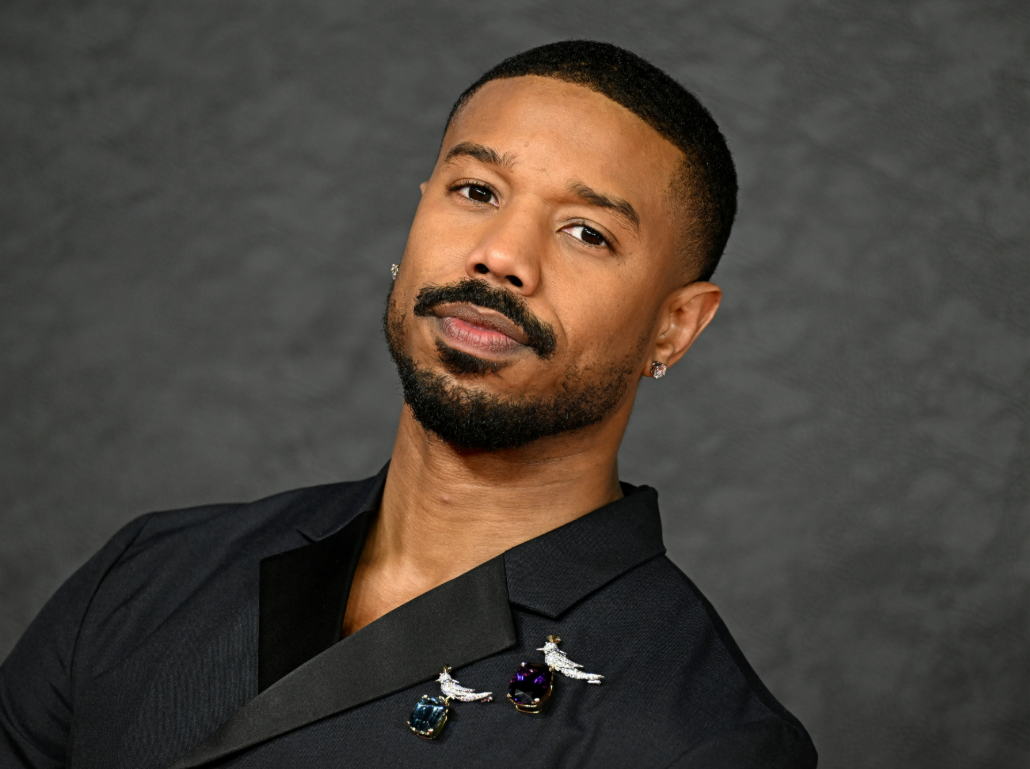
more.
Jordan’s dual performance as the twins was widely hailed as the most ambitious acting achievement of the year, requiring him to embody two distinct personalities, physicalities, and emotional arcs within the same film. Stack, the more reserved and repentant brother, contrasts with Smoke, the more impulsive and haunted twin, and Jordan navigated the complexities of their relationship with nuance and depth. The film blended horror, drama, and historical commentary, earning a 97% Rotten Tomatoes score and becoming a cultural phenomenon.
At the 98th Academy Awards on March 15, 2026, Jordan won the Oscar for Best Actor, becoming the first performer in Oscar history to win for playing dual roles. The win was a historic milestone, marking Jordan’s first Oscar and capping more than two decades of work, from child modeling to television journeyman to blockbuster star. In his acceptance speech, Jordan reflected on his journey from Newark to the Dolby Theatre, thanking his family, collaborators, and the young actors who told him they saw themselves in his roles. The win also marked a historic night for Ryan Coogler, who won his first Oscar for Best Original Screenplay, cementing their partnership as one of the most influential creative collaborations in modern cinema.
Beyond the Screen: Production, Direction, and Industry Impact
Jordan’s influence extends far beyond his performances, with significant contributions as a producer, director, and advocate for diversity in Hollywood. In 2016, he founded Outlier Society, a production company dedicated to championing diverse storytelling and inclusive hiring practices, including the use of inclusion riders to ensure representation on set. Through Outlier Society, Jordan has produced projects like Just Mercy, the Creed sequels, and various television initiatives, using his platform to uplift underrepresented voices and stories.
His directorial debut with Creed III (2023) was a critical and commercial success, grossing over $275 million worldwide and proving his ability to helm major franchises. Jordan’s approach to direction emphasized character-driven storytelling, emotional authenticity, and visual innovation, earning praise from critics and audiences alike. Beyond film, he has been a vocal advocate for inclusion in the industry, pushing for systemic changes in hiring practices and representation both in front of and behind the camera.
Jordan’s impact on Hollywood is multifaceted, influencing not just the kinds of stories that get told but how they are made and who gets to tell them. His career has become a blueprint for actors seeking to balance commercial success with artistic ambition and social responsibility, demonstrating that it is possible to be both a blockbuster star and a force for change.
Legacy and Future Projects
As of 2026, Michael B. Jordan’s legacy is already secure as one of the most important and influential figures of his generation in entertainment. His journey from a bullied kid in Newark to an Oscar-winning leading man has inspired countless young actors, especially those from underrepresented backgrounds, showing that success is possible without compromising one’s values or vision. His work with Outlier Society and his advocacy for inclusion have helped shift industry norms, making space for more diverse voices and stories.
Looking ahead, Jordan remains focused on ambitious projects that challenge him as an actor and creator, with several films and television initiatives in development through Outlier Society. His partnership with Ryan Coogler continues to be a driving force in his career, with both artists committed to pushing the boundaries of storytelling and representation. As he moves into the next phase of his career, Jordan’s influence is likely to extend even further, shaping the industry for years to come.










Comments (0)