

OST to MBOX Converter Software Free Trial: A Practical Guide
OST to MBOX Converter Software Free Trial: A Practical Guide

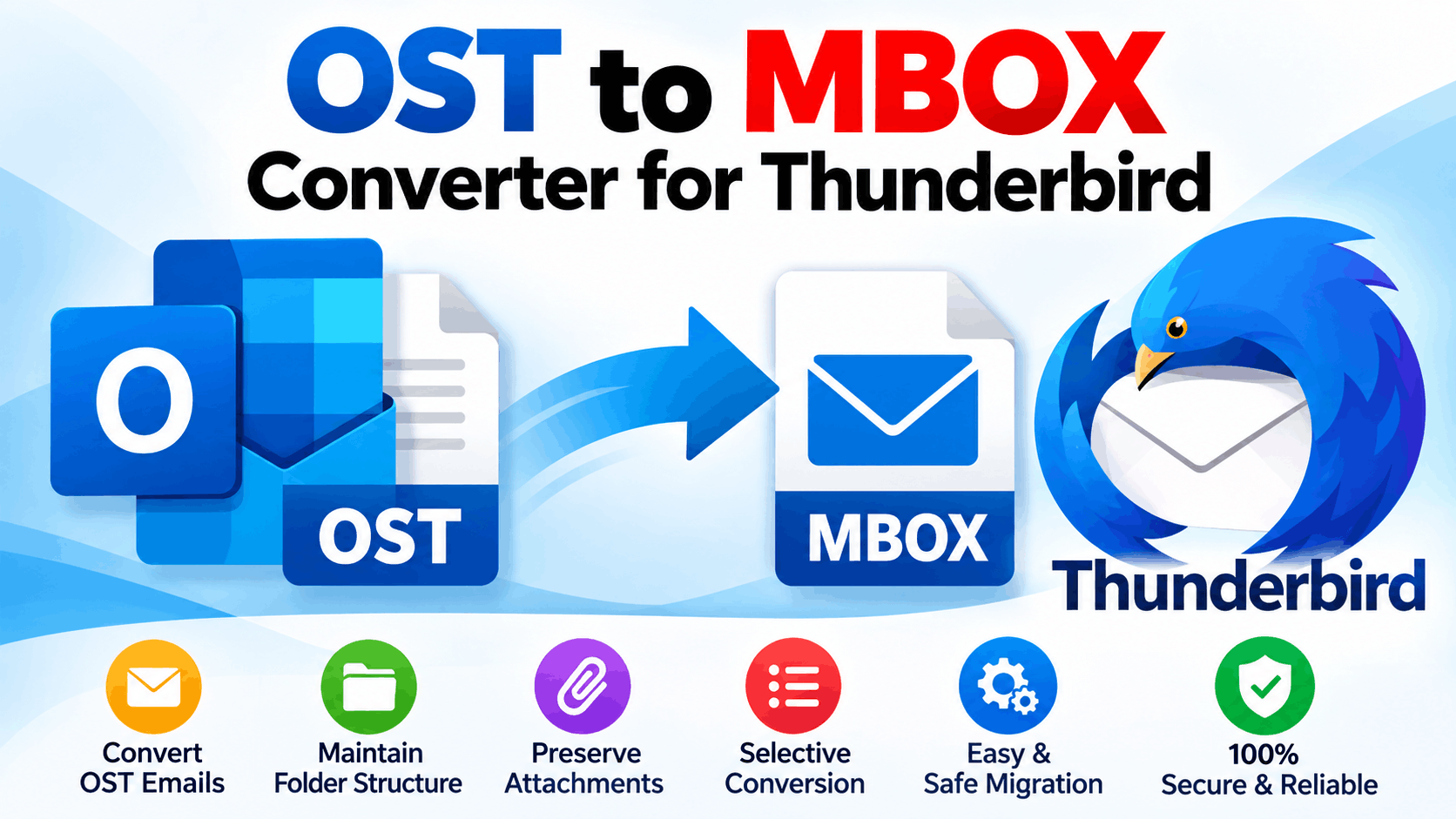
Need to move Outlook emails to Thunderbird or another MBOX-based email client, but you’re not sure whether the conversion software will work with your OST file? A free trial can be a useful way to test the software before purchasing a full license.
An OST to MBOX Converter Software Free Trial allows users to evaluate the conversion process, inspect accessible mailbox data, and understand how the software handles OST files before committing to a paid version.
This is especially useful when working with large OST files, old Outlook profiles, orphaned OST files, or mailbox data that needs to be migrated to an MBOX-compatible application.
What Is OST to MBOX Converter Software?
OST stands for Offline Storage Table. Outlook uses OST files to maintain a local synchronized copy of supported mailbox data.
MBOX, on the other hand, is a mailbox storage format used by applications such as Mozilla Thunderbird and several other email clients.
Because Outlook and MBOX-based applications use different storage formats, an OST file cannot simply be opened as an MBOX mailbox.
An OST to MBOX Converter is designed to read accessible mailbox data from an OST file and export it into MBOX format.
In simple terms:
Outlook OST → Converter → MBOX → Compatible Email Client
The converter acts as a bridge between the two mailbox formats.
Why Use an OST to MBOX Converter Free Trial?
Buying conversion software without testing it first can be risky, particularly when dealing with important email data.
A free trial provides an opportunity to evaluate the software before making a purchasing decision.
1. Test OST File Compatibility
Every OST file is not necessarily identical. Files may come from different Outlook configurations and may be healthy, orphaned, or damaged.
A trial can help determine whether the application can successfully read your particular OST file.
2. Preview Mailbox Data
Many professional conversion tools provide a preview feature.
Users can inspect folders and email messages before exporting them.
This is helpful because you can check whether important folders such as Inbox, Sent Items, Drafts, and custom folders are accessible.
3. Evaluate Conversion Quality
A trial can help users understand how the software handles email content, folder structures, and attachments.
Before purchasing, users can determine whether the output meets their migration requirements.
4. Test Large OST Files
Large mailboxes may behave differently from small files.
A free trial gives users an opportunity to evaluate processing performance with their actual data before committing to the full version.
Who Needs OST to MBOX Conversion?
OST to MBOX conversion can be useful in several situations.
Migrating From Outlook to Thunderbird
Thunderbird uses MBOX-based mailbox storage, making OST-to-MBOX conversion relevant when moving mailbox data from Outlook.
Switching Email Platforms
Users who change email clients may need to convert existing mailbox data into a format supported by their new application.
Accessing Old Outlook Data
An old OST file may contain emails and attachments that users want to preserve or migrate.
Creating an Independent Email Archive
Some users want to maintain a separate copy of mailbox information outside their original Outlook configuration.
How Does an OST to MBOX Converter Work?
The conversion process usually follows several steps.
Step 1: Select the OST File
Launch the converter and choose the OST file you want to process.
Some applications automatically detect common OST locations, while others allow manual file selection.
Step 2: Scan the File
The software analyzes the OST structure and identifies accessible mailbox data.
Depending on the application, it may identify:
- Emails
- Attachments
- Inbox
- Sent Items
- Drafts
- Deleted Items
- Contacts
- Calendars
- Custom folders
Not every converter supports every Outlook item, so checking the software specifications is important.
Step 3: Preview the Data
A preview window lets you inspect available folders and messages.
This step is particularly useful during a free trial because it provides an early indication of whether the required mailbox data can be accessed.
Step 4: Choose MBOX
Select MBOX as the output format.
If selective conversion is supported, choose only the folders you need.
Step 5: Start Conversion
The application extracts the accessible mailbox data and creates the MBOX output.
The resulting MBOX file can then be imported into a compatible email client.
What Should You Check During a Free Trial?
A trial should be more than simply checking whether the application opens.
Use it to evaluate important functionality.
Email Content
Check whether message bodies, sender information, recipients, dates, and other important fields appear correctly.
Attachments
Open several converted messages and verify whether their attachments are available and readable.
Folder Structure
Check whether important mailbox folders are preserved in a useful structure.
Selective Conversion
If you only need certain folders, test whether the application lets you select them individually.
Preview
Verify that the preview displays enough information to identify the mailbox data you need.
Output Format
Make sure the software actually provides MBOX output suitable for your intended email client.
Can You Convert OST to MBOX Without Outlook?
This is another important consideration when evaluating an OST to MBOX Converter Software Free Trial.
Some specialized converters are designed to process OST files independently of the original Outlook profile.
This can be useful when:
- The original Outlook profile is unavailable
- The email account has been removed
- The OST file is orphaned
- The user has moved to another computer
- Outlook is no longer installed
- The mailbox cannot synchronize normally
However, the ability to process an OST without Outlook depends on the particular software and the condition of the source file.
A free trial is therefore useful for testing the software with your own OST data.
Free Trial vs. Free Converter
These two terms are often confused.
A free trial generally refers to a commercial application that allows users to test some functionality before purchasing.
A free converter may be completely free but could provide fewer features or have limitations involving file size, mailbox items, or export functionality.
When evaluating software, look beyond the word “free.” Check exactly what the trial version allows you to do.
Features to Look for in Professional OST to MBOX Software
A capable conversion application may include:
- OST file scanning
- Mailbox preview
- Selective folder conversion
- Batch OST processing
- MBOX export
- Attachment preservation
- Folder structure preservation
- Large OST file support
- Multiple output options
- Compatibility with modern Windows versions
The right feature set depends on the size and complexity of your migration.
Best Practices Before Starting the Trial
Even when using a trial version, protect your original mailbox data.
1. Make a backup of the OST file.
Always keep an untouched copy of your source file.
2. Test with a copy.
Whenever possible, perform the test using a duplicate rather than the only original OST file.
3. Start with important folders.
Preview Inbox, Sent Items, and other folders containing critical information.
4. Check attachments.
Open several converted messages to verify that attachments are handled correctly.
5. Keep enough storage space.
The conversion process may require additional temporary and output storage.
6. Verify the MBOX output.
Import the resulting file into the intended email client and check the migrated data.
Final Thoughts
An OST to MBOX Converter Software Free Trial gives users an opportunity to evaluate mailbox conversion before purchasing a full license. This can be particularly valuable when dealing with important business emails, large OST files, old Outlook profiles, or migrations to Thunderbird and other MBOX-compatible email clients.
The best way to evaluate a trial is to use your own OST file and check the features that matter most: mailbox accessibility, email content, attachments, folder organization, selective conversion, and MBOX output.
Remember that successful conversion depends partly on the condition of the source OST file. A converter can process accessible data, but severely damaged or missing information may not be recoverable.
By backing up the original OST file, testing the trial carefully, previewing mailbox data, and verifying the resulting MBOX file, you can make a more informed decision about whether the conversion software fits your migration requirements.






Comments (0)