

Since much of the process of manufacturing cardboard boxes is automatic, is it clean? Are most boxes filled with dirty things?
Are cardboard bins sufficient for ordinary packaging? Learn how containers are made, handled, stored, and organized for transport in this informative guide.


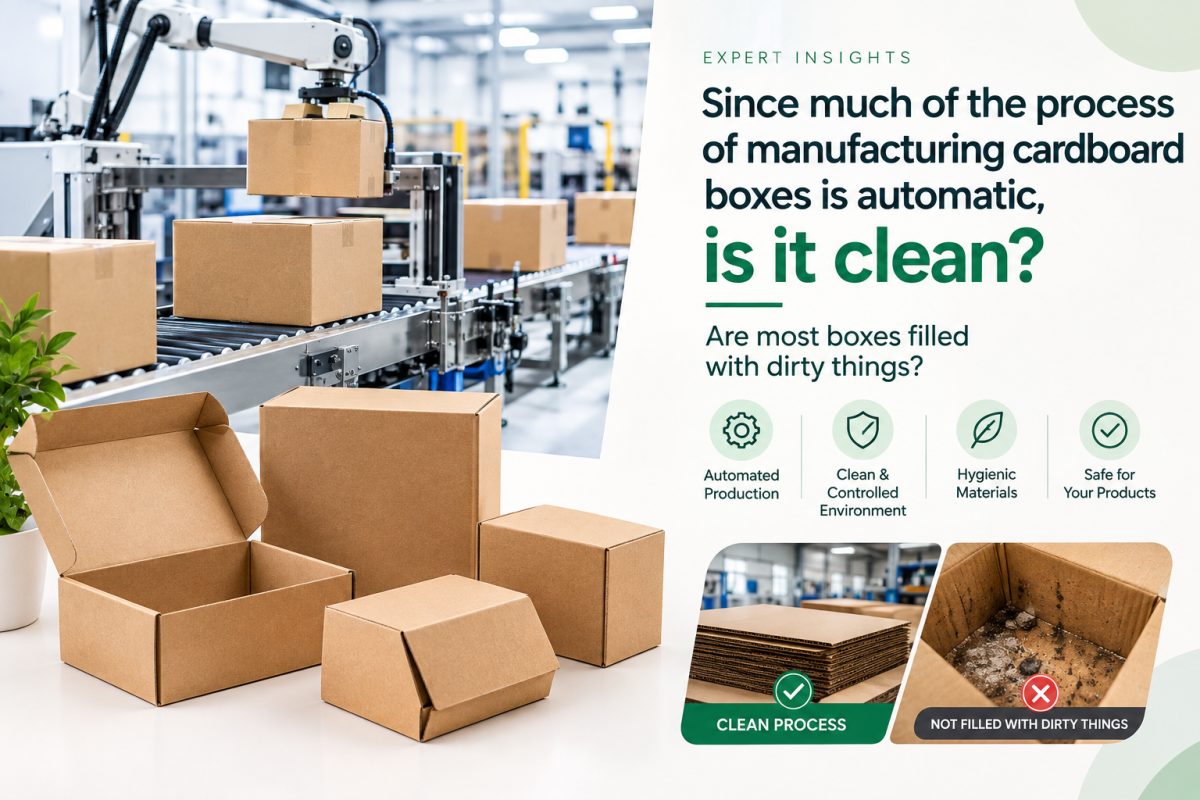
When you open a package, you probably do not think about the box itself. Yet, the carton protects your product through storage, handling, and transportation. Modern Custom Cardboard Boxes also come from relatively automated manufacturing lines. So, a critical query arises: are cardboard boxes really smooth? And do most packaging containers include dirty substances? The quick solution is more reassuring than you may expect.
How Are Cardboard Boxes Made?
Cardboard box production involves several carefully controlled steps.
Most corrugated boxes start with paper crafted from wood fibers or recycled paper. Manufacturers turn these substances into big sheets. Machines then form these sheets into the familiar corrugated structure.
A corrugated board normally includes a fluted middle layer between flat paper liners. That shape gives the box strength without making it excessively heavy.
Next, computerized equipment cuts, folds, scores, and prints the board.
Modern equipment handles a good deal of this work. As a result, employees have limited direct contact with the material during manufacturing.
Automation Helps Keep Production Controlled
Automation does more than enhance pace.
It also creates consistency.
Machines move cardboard through distinct tiers with precision. They reduce material to precise measurements. They apply adhesive where it is essential. They also fold and shape boxes in step with precise designs.
Furthermore, automatic manufacturing reduces pointless handling.
That matters a lot to avoid human contact that can introduce dirt, dust, or other contaminants. This process helps manufacturers maintain cleaner production environments.
However, automation does not mean that cardboard comes out sterile.
That difference is critical.
Clean Does Not Mean Sterile
People frequently confuse a smooth package with a sterile one.
They are not the same.
A cardboard box can look clean and continue to be appropriate for ordinary packaging. Cardboard can include small amounts of dust, paper fibers, or environmental debris.
That does not automatically make the box grimy or unsafe.
In reality, regular shipping cartons serve a practical purpose. They protect products from bodily damage, moisture, and excessive handling during transportation.
For merchandise that require strict hygiene controls, organizations use specialized packaging. They can also use further protective measures.
Does Cardboard Touch Dirty Materials?
This relies in large part on how the box gets used.
A new box leaving a production facility does not normally come into contact with grimy merchandise. The packaging itself comes from a paper-based manufacturing process.
Things change after the boxes enter the supply chain.
During transportation, boxes may also move via shipping motors, loading regions, and storage centers. Employees can also cope with them time and again. Boxes can also sit on the floor, pallets, machinery, or other shipping materials.
Therefore, used transport packaging can also gather dirt and floor debris over the years.
That does not imply each box turns into dirty.
Handling situations matter.
What About Recycled Cardboard?
Recycled substances frequently enhance other concerns.
Recycled cardboard can contain fibers recovered from previously used paper products. Manufacturers process these materials before turning them into new paper.
The recycling system eliminates many unwanted materials. Manufacturers also use screening or different strategies to put together recovered fibers.
Nevertheless, recycled cardboard isn't always automatically sterile.
For ordinary packaging, that commonly does not present a problem. The key question involves the product in the box and the level of protection it needs.
Why Box Storage Makes a Difference
Manufacturing is simply part of the story.
Storage also impacts cardboard cleanliness.
A newly produced box stored in a smooth, dry warehouse can remain in top condition. However, bad storage can expose cartons to dirt, pests, and other environmental problems.
Thus, accountable suppliers should be aware of warehouse conditions.
Boxes ought to stay dry. They ought to remain far from unnecessary floor contact. They should also have adequate protection throughout transportation.
These easy steps could make a primary difference.
Custom Boxes Can Offer Better Protection
Packaging needs vary from product to product.
A small cosmetic object does not need the same packaging method as a large electronic tool. Likewise, food-related merchandise may also require different protective measures from garments or household goods.
This is where Custom Cardboard Boxes become useful.
A custom box can fit the scale and form of the product. A closer fit can lessen needless movement within the carton. Additional inserts, liners, or protective substances can provide another layer between the product and the outer packaging.
Agencies can create packaging across the real needs of their merchandise.
What Should Businesses Consider?
Clean packaging starts with smart packaging practices.
Businesses ought to take into account several elements before choosing their packaging.
Product Sensitivity
Ask how touchy the product is to dirt, moisture, impact, or handling.
A long-lasting household item may only need simple safety. A sensitive product can also require an inner package before it enters the cardboard carton.
Storage Conditions
The best container can still go through in a negative storage environment.
Keep cartons dry and protected. Avoid unnecessary exposure to rain, humidity, dust, and direct contact with contaminated surfaces.
Transportation
Think beyond the storage.
Boxes may also travel through numerous locations before reaching the client. Strong packaging helps them resist stacking, motion, and handling.
Industry Requirements
Some industries follow stricter packaging requirements.
Businesses that package food, medical products, cosmetics, or other sensitive goods ought to comply with the applicable regulations. They should meet regulatory requirements.
What Makes Custom Boxes Canada a Practical Choice?
Canadian groups face various transport conditions.
Products may travel across cities, provinces, or long-distance shipping routes. Weather can also create extra packaging challenges.
For this purpose, Custom Boxes Canada suppliers can help groups select packaging primarily based on product needs. It should consider dimensions, shipping needs, and branding goals.
A properly sized carton can reduce wasted space. It can also improve product protection and create a more professional presentation.
In addition, custom printing can assist a bundle convey critical facts before the purchase.
So, Are Cardboard Boxes Clean?
Generally, new cardboard boxes are produced through controlled production procedures. They obtain limited manual handling. However, they are not sterile products.
That distinction needs to guide expectations.
A new carton may also comprise normal paper fibers or minor dirt. Once it enters storage and transportation, environmental exposure can increase. Therefore, agencies must store and deal with packaging responsibly.
Moreover, the cleanliness requirement ought to suit the product.
For everyday retail and transport items, fashionable cardboard packaging can provide effective protection. Corporations can combine cardboard cartons with inner packaging, liners, sealed baggage, or other protective barriers.
The Bottom Line
Cardboard boxes are not inherently dirty.
Modern manufacturing is predicated closely on automation, controlled techniques, and efficient fabric managing. The larger concern frequently comes after manufacturing. Packing containers travel via warehouses, vans, and distribution networks.
Packaging involves more than selecting a sturdy carton. Businesses should consider the product, storage environment, shipping journey, and hygiene requirements.
Hence, cardboard packaging can remain practical, protective, and presentable.







Comments (0)