

What Makes Traditional Gir Cow Ghee Different? Exploring Breed, Milk and Preparation
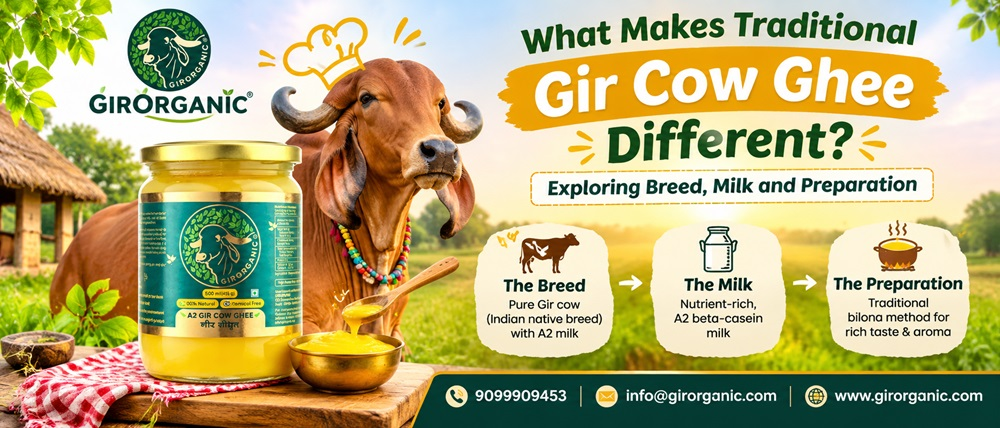
Ghee has been an important part of Indian kitchens for generations. From adding a spoonful to freshly prepared dal and khichdi to using it in traditional sweets, ghee holds a special place in Indian food culture. However, not all ghee is produced in the same way. The breed of cow, quality of milk and preparation method can influence its flavour, aroma, texture and overall characteristics.
Traditional Gir cow ghee has gained attention among Indian households because of its connection with indigenous cattle and time-honoured dairy practices. Made using milk from the Gir breed, this ghee is often associated with traditional Bilona preparation, a method that involves curd fermentation and slow churning.
But what actually makes it different from regular commercial ghee? Is it the cow breed, the milk composition or the traditional preparation process?
Let's explore the important factors that contribute to the identity of traditional Gir cow ghee and understand what to consider when choosing Pure Cow Ghee for everyday use.
1. Understanding the Gir Cow Breed and Its Importance
The first major difference begins with the cow itself. Gir cattle are an indigenous Indian breed originating from the Gir region of Gujarat. They are recognised for their distinctive physical characteristics, adaptability to local climatic conditions and importance in India's traditional dairy farming practices.
Gir cows have a long history in Indian agriculture and dairy production. Their milk is traditionally valued by households that prefer milk from indigenous cattle breeds.
Some characteristics of Gir cattle include:
-
A distinctive forehead and broad, curved horns.
-
A reddish-brown, white or mixed coat pattern.
-
Adaptability to warm climatic conditions.
-
A long-standing association with traditional Indian dairy farming.
The breed is an important part of the identity of Gir cow ghee. However, the quality of the final product also depends on animal care, feeding practices, milk handling and processing standards.
2. What Makes Gir Cow Milk Different?
Milk is the foundation of ghee, so its characteristics play an important role in determining the final product.
Gir cow milk naturally contains milk fat, proteins, lactose and other components. Its composition can vary depending on factors such as the cow's diet, age, lactation stage, health and seasonal conditions.
Understanding A2 Milk
Gir cow milk is commonly associated with A2 beta-casein protein. Beta-casein is one of the main proteins naturally present in cow's milk.
There are two commonly discussed beta-casein variants:
-
A1 beta-casein: A naturally occurring variant found in the milk of certain cattle breeds.
-
A2 beta-casein: Another naturally occurring variant found in the milk of several indigenous cattle breeds, including Gir cows.
This distinction is one reason why A2 Gir cow milk attracts attention among consumers looking for traditional dairy products.
However, it is important to understand that A2 milk is not automatically suitable for everyone with milk allergies or lactose intolerance. Scientific evidence also does not establish that A2 milk provides superior health benefits for every individual.
When choosing Pure Cow Ghee, consumers should focus on the authenticity of the milk source and the quality of the preparation process rather than relying only on marketing claims.
3. Traditional Bilona Method: The Process Behind Gir Cow Ghee
One of the most recognised aspects of traditional Gir cow ghee is the Bilona method.
Unlike many commercial processes that directly separate cream from milk, the traditional Bilona method follows a curd-based preparation process. It involves several carefully managed stages.
Step 1: Fresh Milk Collection
Fresh milk obtained from Gir cows is collected and handled hygienically. The quality of the milk is important because it forms the foundation of the final ghee.
Step 2: Boiling and Cooling
The milk is heated appropriately and then allowed to cool to a suitable temperature before adding a starter culture.
Step 3: Curd Formation
A traditional starter culture is added to the milk, allowing it to ferment and develop into curd. This stage is important because the process begins with fermented milk rather than directly separated cream.
Step 4: Traditional Churning
The curd is churned to separate butter from the liquid portion, traditionally called buttermilk.
This process may involve a wooden Bilona or other suitable churning equipment, depending on the producer's practices.
Step 5: Heating the Butter
The collected butter is heated slowly under controlled conditions. As moisture evaporates, milk solids separate and the fat becomes clarified.
Step 6: Filtering and Storage
Once the ghee reaches the desired stage, it is filtered to remove the separated milk solids and stored in clean, airtight containers.
The result is traditional Bilona ghee with its characteristic aroma, flavour and texture.
4. What Makes Traditional Gir Cow Ghee Different from Regular Ghee?
Both traditional Gir cow ghee and regular cow ghee are clarified butterfat products. However, their sourcing and manufacturing methods can differ.
|
Comparison Factor |
Traditional Gir Cow Ghee |
Regular Commercial Ghee |
|
Milk source |
Specifically sourced from Gir cows |
May come from different cow breeds |
|
Milk protein association |
Gir milk is commonly associated with A2 beta-casein |
Depends on the cattle breed |
|
Preparation |
Often made using the Bilona method |
Frequently produced through cream or butter-based processing |
|
Texture |
May develop a naturally granular texture |
Texture varies with processing |
|
Aroma |
Can have a distinctive dairy and nutty aroma |
Depends on ingredients and manufacturing |
|
Production |
May involve smaller traditional batches |
Often manufactured on a larger scale |
It is worth remembering that traditional preparation does not automatically guarantee better quality. Hygiene, milk freshness, processing temperatures and product purity remain equally important.
5. Important Characteristics of Pure Cow Ghee
When selecting Pure Cow Ghee, understanding its physical characteristics can help consumers make informed purchasing decisions.
Here are some qualities worth observing:
Natural Aroma
Good-quality cow ghee generally has a pleasant dairy aroma with buttery or mildly nutty notes. Its aroma can vary depending on milk composition and preparation techniques.
Granular Texture
Traditional ghee may develop a grainy or granular texture during cooling. This happens because milk fat contains different fatty acids that crystallise at different temperatures.
However, grain formation alone is not proof of purity or a specific cow breed.
Colour Variations
Cow ghee can range from pale yellow to deeper golden shades. Factors such as cattle feed, seasonal changes and natural pigments in milk can influence its colour.
Therefore, colour alone should never be used to determine whether ghee is authentic.
Clean Taste
Pure cow ghee should have a pleasant, characteristic flavour without unusual rancid or unpleasant notes.
6. Benefits and Everyday Applications of Traditional Gir Cow Ghee
Traditional Gir cow ghee is valued for its culinary versatility and its connection with Indian food traditions.
Here are some common ways to use it:
-
For everyday cooking: Add ghee to dal, khichdi, vegetables and traditional Indian meals.
-
For Indian sweets: Use it while preparing ladoos, halwa, besan sweets and other festive recipes.
-
For rotis and parathas: Apply a small amount to freshly cooked rotis and parathas for added flavour.
-
For rice dishes: Mix ghee with steamed rice to enhance its taste and aroma.
-
For traditional recipes: Use it in dishes such as dal baati churma and regional Gujarati preparations.
-
For tempering: Add ghee to spices to create flavourful tadka for dals and vegetables.
From a nutritional perspective, ghee is primarily a source of fat and provides concentrated energy. It contains fat-soluble vitamins in varying amounts, depending on its composition and production.
However, ghee is also rich in saturated fat. It is best consumed in moderation as part of a balanced diet rather than treated as a medicine or a product with guaranteed health benefits.
7. How to Choose Authentic Gir Cow Pure Cow Ghee
With several ghee products available in the Indian market, selecting a trustworthy option requires more than looking at packaging or price.
Consider these important points before purchasing:
-
Check the milk source: Look for clear information confirming that the ghee is made from Gir cow milk.
-
Understand the preparation method: If you prefer traditional ghee, check whether the manufacturer genuinely follows the Bilona process.
-
Look for ingredient transparency: Pure ghee should not contain unnecessary vegetable oils, artificial colours or added flavours.
-
Check certifications: Look for applicable food safety and organic certifications where relevant. Verify certification details instead of relying only on labels.
-
Review packaging: Choose hygienically packed products in properly sealed, food-grade containers.
-
Check manufacturing details: Look for manufacturing dates, batch information, storage instructions and applicable FSSAI details.
At GirOrganic, the focus is on helping consumers understand traditional Indian food products and the importance of thoughtful ingredient selection. When choosing ghee, knowing its source and preparation method can help you make a more informed decision.
8. Why Traditional Gir Cow Ghee Remains Relevant in Indian Kitchens
Despite changing food habits and modern cooking methods, traditional ghee continues to hold its place in Indian households.
Its familiar flavour, versatility and association with regional food traditions make it useful in both everyday meals and festive cooking.
For consumers who appreciate indigenous cattle breeds and traditional dairy practices, Gir cow ghee represents a connection between agricultural heritage and modern food choices.
The important thing is to choose a product based on genuine sourcing, transparent preparation and appropriate quality standards.
Frequently Asked Questions (FAQs)
1. What is special about traditional Gir cow ghee?
Traditional Gir cow ghee is made using milk from the indigenous Gir cattle breed. It is often prepared through the Bilona method, which involves converting milk into curd, churning it into butter and slowly heating the butter to obtain ghee.
2. Is Gir cow ghee always A2 ghee?
Gir cow milk is commonly associated with the A2 beta-casein protein variant. However, consumers should check the manufacturer's sourcing and testing practices if they specifically want verified A2 milk-based ghee.
3. What is the difference between Bilona ghee and regular ghee?
Bilona ghee is prepared through a traditional curd-based churning process. Regular commercial ghee may be manufactured using cream or butter separation methods. Both can produce clarified butterfat, but their processing techniques differ.
4. Why does traditional cow ghee sometimes have a granular texture?
Granular texture develops due to the natural crystallisation of milk fats during cooling. Temperature, fat composition and storage conditions influence how these crystals form.
5. How should Pure Cow Ghee be stored?
Store ghee in a clean, dry and airtight container. Keep it away from direct sunlight, moisture and excessive heat. Always use a clean, dry spoon to maintain its quality and freshness.
Conclusion
Traditional Gir cow ghee is distinguished by three important factors: its indigenous cattle source, the characteristics of Gir cow milk and the traditional methods used in its preparation.
The Bilona process, which involves curd formation, slow churning and careful heating, gives this traditional dairy product its distinctive place in Indian food culture. Its aroma, flavour and texture make it a versatile ingredient for everyday meals and festive recipes.
However, choosing genuinely good-quality ghee requires attention to more than its name or appearance. Milk sourcing, hygienic processing, ingredient transparency and responsible packaging all matter.
At GirOrganic, understanding the connection between traditional food practices and informed food choices is an important part of appreciating products such as Gir cow ghee.
When selecting Pure Cow Ghee for your family, look beyond attractive labels and focus on authenticity, preparation and quality. A well-informed choice helps you enjoy a traditional Indian ingredient with greater confidence.
GirOrganic offers a wide range of premium ghee products, including A2 ghee, desi cow ghee, and organic ghee, at Best prices. Experience the authentic taste and health benefits of our Vedic ghee, made from the milk of indigenous Gir cows. We take pride in providing the best desi ghee in India, and you can conveniently buy ghee online from our trusted platform. Choose GirOrganic for pure, high-quality ghee that will elevate your culinary experience.



















Comments (0)