

Hiking Tour in Switzerland: Best Places for Easy and Scenic Hikes
Explore the best places for easy and scenic hikes in Switzerland with Typically Swiss Tours. Discover beautiful trails, mountain views, and memorable hiking experiences.
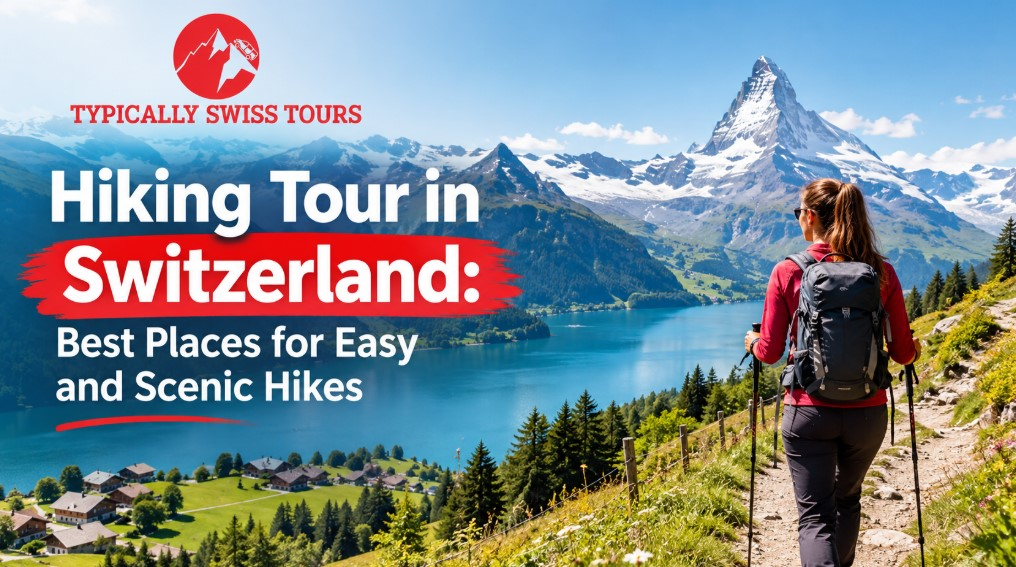
Switzerland is one of the most rewarding destinations in Europe for travelers who want to explore dramatic mountain scenery without committing to difficult multi-day treks. A well-planned Hiking Tour in Switzerland can combine alpine lakes, green meadows, mountain villages, waterfalls, panoramic viewpoints, and famous peaks with comfortable transportation and accessible walking routes.
For visitors from the USA, Switzerland is particularly appealing because many scenic hiking areas can be reached by train, cable car, mountain railway, or local bus. This makes it possible to experience spectacular Alpine landscapes while choosing trails that match your fitness level and available time.
Switzerland has more than 65,000 kilometres of waymarked hiking trails, ranging from straightforward hiking paths to demanding mountain and alpine routes. Trail markings, route classifications, public transportation, and mountain infrastructure make it possible to build an itinerary around short scenic walks as well as longer hiking adventures.
Key Takeaways
-
Easy and scenic hiking is widely available in Switzerland, particularly around destinations such as Grindelwald, Lauterbrunnen, Zermatt, and the Bernese Oberland.
-
Day hikes in Switzerland can provide spectacular mountain experiences without requiring a multi-day trek. Several routes can be reached by mountain railways, cable cars, trains, or buses.
-
Choose the trail according to its official difficulty classification, not simply its distance. A short mountain route can be considerably more demanding than a longer valley walk.
-
Summer and early autumn are popular periods for mountain hiking, but trail conditions vary significantly with altitude and weather. Higher routes can still have snow outside the main hiking season.
-
Good shoes, weather protection, water, navigation, and realistic timing are essential, even for relatively easy mountain walks.
-
A successful Switzerland hiking itinerary combines the right trail with sensible transportation, sightseeing time, weather flexibility, and accommodation in convenient mountain destinations.
Why Choose a Hiking Tour in Switzerland?
Switzerland offers an unusual combination of dramatic landscapes and practical accessibility. You can begin a walk beside a peaceful lake, climb gradually through alpine meadows, reach a panoramic viewpoint, and return to a village by cable car or mountain railway.
The scenery also changes significantly from one region to another. The Bernese Oberland is known for the Eiger, Mönch and Jungfrau mountains, deep valleys and traditional Alpine villages. Zermatt offers iconic Matterhorn views, while areas around Lake Lucerne, Lake Geneva and Ticino provide different landscapes and walking experiences.
Another advantage is the extensive trail network. Switzerland Tourism reports more than 65,000 kilometres of waymarked trails covering different levels of difficulty. Ordinary hiking trails are generally marked with yellow signs, while mountain hiking trails use white-red-white markings and require greater sure-footedness and awareness of mountain conditions.
This variety means a hiking holiday does not have to be an extreme adventure. Travelers can build an itinerary around relaxed walks, scenic half-day routes and carefully selected full-day hikes.
Best Places for Easy and Scenic Hikes in Switzerland
The best destination depends on the scenery you want to experience, how much walking you plan to do, and how comfortable you are with elevation and uneven terrain.
1. Grindelwald: Classic Alpine Scenery
Grindelwald is one of the most recognizable hiking destinations in the Bernese Oberland. Its location beneath the Eiger, Mönch and Jungfrau mountains creates opportunities for panoramic walks through meadows and mountain landscapes.
The area is especially suitable for travelers who want to combine hiking with mountain transportation. The surrounding cable cars and mountain railways make it possible to reach higher starting points without walking uphill from the valley.
The Eiger Trail is one example. Switzerland Tourism lists the route at approximately 6 kilometres with a hiking time of around 1 hour and 55 minutes. The trail provides close views of the famous Eiger North Face.
For a more relaxed experience, visitors can also explore the area around First and Bachalpsee. Grindelwald First provides access to several mountain walking routes and panoramic viewpoints.
Best for: Alpine panoramas, first-time Switzerland visitors, mountain villages, photography and flexible day hikes.
2. Lauterbrunnen: Waterfalls and Valley Landscapes
Lauterbrunnen is an excellent choice for travelers who prefer dramatic scenery without immediately heading onto a demanding mountain trail.
The valley is surrounded by steep cliffs and waterfalls, creating an impressive setting for walking. One listed route from Lauterbrunnen to Stechelberg takes approximately two hours and covers around 8 kilometres. Switzerland Tourism notes that numerous waterfalls descend from the surrounding cliffs into the valley.
For visitors looking for elevated views, the Mountain View Trail provides a panoramic route above the Lauterbrunnen Valley, with views toward the Eiger, Mönch and Jungfrau. The listed route is around two hours and 5 kilometres.
Best for: Waterfalls, valley walks, families, photographers and travelers who want spectacular scenery without planning a long trek.
3. Zermatt: Hiking with Matterhorn Views
Zermatt is one of the most famous mountain destinations in Switzerland and is particularly attractive to travelers who want views of the Matterhorn while hiking.
There are routes suitable for different abilities. Switzerland Tourism lists the 5-Seenweg Zermatt at approximately 11 kilometres and 3 hours 15 minutes, while the shorter Furi-Weg is listed at around 5 kilometres and 1 hour 10 minutes.
The Furi-Weg is particularly interesting for visitors who want a shorter walking experience accompanied by views of the Matterhorn and surrounding mountain landscape.
Zermatt also offers access to more challenging routes, so travelers should check the official difficulty classification before selecting a trail.
Best for: Matterhorn views, mountain photography, scenic trails and travelers who want a combination of hiking and village experiences.
4. Oeschinensee: A Scenic Alpine Lake
Oeschinensee near Kandersteg is another memorable destination for an easy-to-moderate hiking experience.
The lake is surrounded by steep mountain scenery, creating the kind of landscape many international visitors associate with the Swiss Alps. Access by cable car can reduce the amount of uphill walking required, allowing visitors to concentrate more of their time on the scenery.
For example, Switzerland Tourism lists the Oeschinensee circular route at approximately 4 kilometres and 1 hour 20 minutes for the winter version of the route, with conditions varying by season.
Because mountain conditions can change, travelers should always check the current route status and seasonal accessibility before setting out.
Best for: Alpine lakes, photography, shorter walks and travelers who want dramatic scenery without a long-distance trek.
What Are the Best Day Hikes in Switzerland?
The best day hikes in Switzerland depend on your location and hiking ability rather than a single universal route.
For a first Switzerland trip, destinations such as Grindelwald, Lauterbrunnen and Zermatt provide a strong combination of scenery, transportation and hiking options. A traveler staying in one of these areas can often choose a short route in the morning, enjoy lunch in a mountain village or restaurant, and continue sightseeing later in the day.
A practical approach is to select hikes according to three factors:
-
Trail difficulty: Choose a route appropriate for your actual fitness and experience.
-
Walking time: Leave enough time for photographs, rest, meals and transportation.
-
Weather and altitude: Conditions can change quickly in mountain environments.
A 2-hour hike can sometimes be more enjoyable than a demanding 6-hour route because it leaves time for sightseeing and allows flexibility if weather conditions change.
How to Choose the Right Swiss Hiking Trail
Distance alone does not tell you whether a trail is easy.
A relatively short mountain trail may include steep sections, narrow paths, uneven surfaces or exposed terrain. Switzerland Tourism distinguishes ordinary hiking trails from mountain hiking trails and alpine hiking trails according to their terrain, markings and requirements.
Before choosing a route, check:
Trail difficulty
Look at the official trail classification and read the route description. Do not assume that a short distance automatically means an easy hike.
Elevation gain
Elevation gain can have a greater impact on difficulty than distance. A route with substantial climbing may require considerably more effort than a longer, mostly level walk.
Terrain
Check whether the route includes rocky sections, narrow paths, steep areas or exposed terrain.
Weather
Mountain weather can change quickly. Rain can make paths slippery, while poor visibility can reduce the enjoyment and safety of a panoramic route.
Transport
Consider how you will reach the trailhead and how you will return. Switzerland's extensive public transportation and mountain railway network makes it possible to design flexible hiking itineraries.
When Is the Best Time for Hiking in Switzerland?
The ideal hiking season depends heavily on altitude and the specific route.
Summer, particularly June through August, generally provides warmer conditions and longer daylight hours. Autumn can bring beautiful colours, while spring offers green landscapes and blooming vegetation at lower elevations. Switzerland Tourism notes that conditions vary by season and altitude, and higher trails may remain snow-covered even when lower areas are accessible.
For many travelers, late spring through early autumn provides the widest choice of hiking opportunities, but the exact conditions should be checked shortly before the hike.
July and August can be popular for mountain travel, so travelers who prefer quieter experiences may consider planning outside the busiest periods where practical.
The key point is that there is no single date when every Swiss hiking trail becomes suitable. Altitude, snow conditions, rainfall and mountain infrastructure all matter.
What Should You Pack for a Hiking Tour in Switzerland?
Even an easy mountain walk deserves proper preparation.
Comfortable hiking shoes with good grip are important because trails can be uneven or slippery. A lightweight rain jacket, warm layer, sun protection and sufficient water are also useful.
Switzerland Tourism recommends sturdy footwear, protection from sun and rain, warm clothing, an up-to-date map and basic emergency equipment. It also recommends carrying a mobile phone for emergencies.
For a typical day hike, a practical daypack may include:
-
Water and a small amount of food
-
Weatherproof outer layer
-
Warm layer
-
Sunglasses and sunscreen
-
Comfortable hiking shoes
-
Phone and navigation information
-
Basic first-aid supplies
-
Portable power bank
-
Any personal medication you normally need
Pack according to the route rather than carrying unnecessary equipment.
Also Read : What should you pack for a Switzerland hiking tour in different seasons.
Hiking Safety Tips for Switzerland
Beautiful scenery should never replace sensible preparation.
Check the weather before leaving and review the current condition of your selected trail. Give yourself additional time rather than planning to arrive at the final transport connection with only a few minutes to spare.
Stay on marked trails and turn around if weather conditions, fatigue or trail conditions make continuing inappropriate. Switzerland Tourism specifically advises hikers to plan their route, assess their abilities realistically, monitor weather changes and turn back in time when necessary.
It is also sensible to tell someone about your route, particularly if you are hiking alone.
Swiss hiking signs provide useful information about route types. Yellow signs indicate ordinary hiking trails, while white-red-white markings identify mountain hiking trails. Blue-white-blue markings identify alpine hiking trails, which can involve considerably more demanding terrain and require appropriate experience and equipment.
How to Plan a Hiking Holiday in Switzerland from the USA
Travelers flying from the USA should think about their Switzerland itinerary as a combination of destinations rather than trying to fit every famous mountain into one trip.
A balanced itinerary might include several nights in the Bernese Oberland, followed by time in another region such as Valais or around Lake Lucerne. This allows hiking to become part of the holiday instead of turning the entire trip into a demanding trekking schedule.
For first-time visitors, it is often useful to stay close to a well-connected mountain destination. This reduces unnecessary travel time and gives you multiple hiking options within the same area.
Another practical strategy is to keep at least one flexible day in the itinerary. If rain affects a planned mountain hike, the day can be moved or replaced with sightseeing, museums, village exploration or another lower-altitude activity.
Switzerland's public transportation network can also make hiking logistics easier. Many hiking areas can be reached using trains, buses, boats or mountain railways, allowing visitors to combine transportation and walking rather than relying entirely on a rental car.
Is a Guided Hiking Tour in Switzerland Worth Considering?
A guided hiking experience can be useful when travelers want local knowledge, route planning support or a more structured experience.
A knowledgeable guide can help with route selection, timing, local geography and adapting the itinerary to changing conditions. This can be particularly useful for visitors who are unfamiliar with Alpine terrain or want to spend their trip focusing on scenery rather than navigation.
For travelers planning a private Switzerland experience, Typically Swiss Tours can be considered when creating a customized itinerary around hiking, sightseeing and other Swiss experiences.
The most useful guided itinerary is one built around the traveler's actual interests and abilities rather than simply adding the longest or highest trail available.
Common Mistakes to Avoid on a Switzerland Hiking Trip
One common mistake is trying to complete too many hikes in a short holiday. Switzerland's mountain regions look close together on a map, but travel time, cable cars, trains and elevation changes can add up.
Another mistake is choosing a route because of its photographs without checking the actual trail classification. A spectacular viewpoint may require a more demanding walk than expected.
Ignoring weather is another problem. Mountain conditions can change rapidly, and a route that looks comfortable in sunshine can become significantly less pleasant in rain, wind or poor visibility.
Finally, do not underestimate rest time. A scenic hike is not a race. Leaving time for photographs, food and enjoying the landscape often creates a better travel experience than trying to complete every route as quickly as possible.
Planning Your Switzerland Hiking Experience
A successful hiking itinerary should balance scenery, walking ability, travel time and personal interests.
For example, someone visiting Switzerland for the first time might choose Grindelwald for classic Alpine views, Lauterbrunnen for waterfalls and valley scenery, and Zermatt for Matterhorn landscapes. Another traveler might prefer lakeside walks, quieter villages or shorter family-friendly routes.
The advantage of working with a specialist travel company is the ability to organize these elements into a coherent itinerary rather than treating every hike as a separate activity.
Typically Swiss Tours can help travelers explore Switzerland through customized travel experiences that combine destinations, sightseeing and outdoor activities according to their interests.
For current trail conditions, route classifications and seasonal access, travelers should also consult official Swiss tourism and local destination information before departure. Switzerland Tourism maintains extensive hiking information and route resources.
Frequently Asked Questions About Hiking in Switzerland
1. What is the best hiking tour in Switzerland for beginners?
Beginners should generally start with a well-marked route that matches their fitness level and avoids unnecessarily steep or exposed terrain. Areas such as Grindelwald and Lauterbrunnen offer a wide selection of scenic walks, making it easier to choose a suitable route.
2. Are there easy day hikes in Switzerland?
Yes. Switzerland has many short and moderate hiking routes that can be completed in a few hours. Destinations such as Grindelwald, Lauterbrunnen and Zermatt offer routes with different distances and difficulty levels, allowing travelers to plan a day around hiking and sightseeing.
3. What month is best for hiking in Switzerland?
Summer is generally a popular period for mountain hiking because of warmer temperatures and longer daylight hours. Early autumn can also be attractive because of changing foliage and generally pleasant walking conditions. However, trail accessibility varies by altitude and weather, so current conditions should always be checked.
4. Do I need hiking boots in Switzerland?
Sturdy hiking shoes or boots with good grip are recommended, particularly on uneven or mountain trails. Switzerland Tourism specifically recommends solid, slip-resistant footwear for hiking.
5. Can I hike in Switzerland without a car?
Yes. Many hiking destinations are accessible by train, bus, boat, cable car or mountain railway. Switzerland's transportation network allows travelers to reach numerous trailheads without renting a car.
6. Are Switzerland hiking trails suitable for families?
Many trails can be suitable for families, but suitability depends on the children's ages, walking ability, terrain and weather conditions. A relatively short valley or panoramic trail may be more appropriate than a steep mountain hiking route.
7. Is hiking in Switzerland expensive?
The cost depends on the itinerary. Hiking itself can be inexpensive when using public trails, but transportation, cable cars, accommodation, food and guided experiences can increase the overall trip cost. Planning accommodation and mountain transportation together can help create a more predictable travel budget.
8. How difficult are hiking trails in Switzerland?
Swiss trails range from straightforward walking paths to demanding alpine routes. Official trail markings help distinguish different levels of difficulty. Mountain hiking trails can be steep, narrow or exposed, while alpine hiking trails may involve snowfields, scree or more technical terrain.
9. Can I combine hiking with sightseeing in Switzerland?
Absolutely. This is one of the practical advantages of planning a hiking-focused Switzerland itinerary. A traveler can spend part of the day hiking and use trains, cable cars or other transportation to visit villages, viewpoints or attractions nearby. A flexible itinerary makes it easier to adapt to weather and energy levels.
Conclusion
A Hiking Tour in Switzerland does not have to mean a difficult expedition through the high Alps. Some of the country's most memorable experiences can come from a carefully selected half-day or full-day walk through an alpine valley, beside a mountain lake or beneath famous peaks.
Grindelwald, Lauterbrunnen, Zermatt and Oeschinensee are just a few places where travelers can experience Switzerland's landscapes on foot. The key is to select routes based on difficulty, elevation, weather, walking time and transportation rather than choosing a trail simply because it looks impressive in photographs.
For travelers from the USA who want to combine scenic hiking with comfortable travel and authentic Swiss experiences, a thoughtfully planned itinerary can make the journey much more enjoyable.
Explore Switzerland with Typically Swiss Tours and plan a hiking-focused itinerary around the landscapes, destinations and experiences you want to discover.
Typically Swiss Tours founded over 6 years ago has built a very strong reputation through delivering successful day or multi day tours for clients. There are over 300 all 5* reviews on line (100% record) showing the level of organization and delivery of tours. The idea is to give the customer maximum satisfaction by showing them the beauty and culture that Switzerland has to offer. Visit: https://www.typicallyswisstours.com/





Comments (0)