

What Are Dental Veneers, and How Do They Change the Appearance of Teeth?

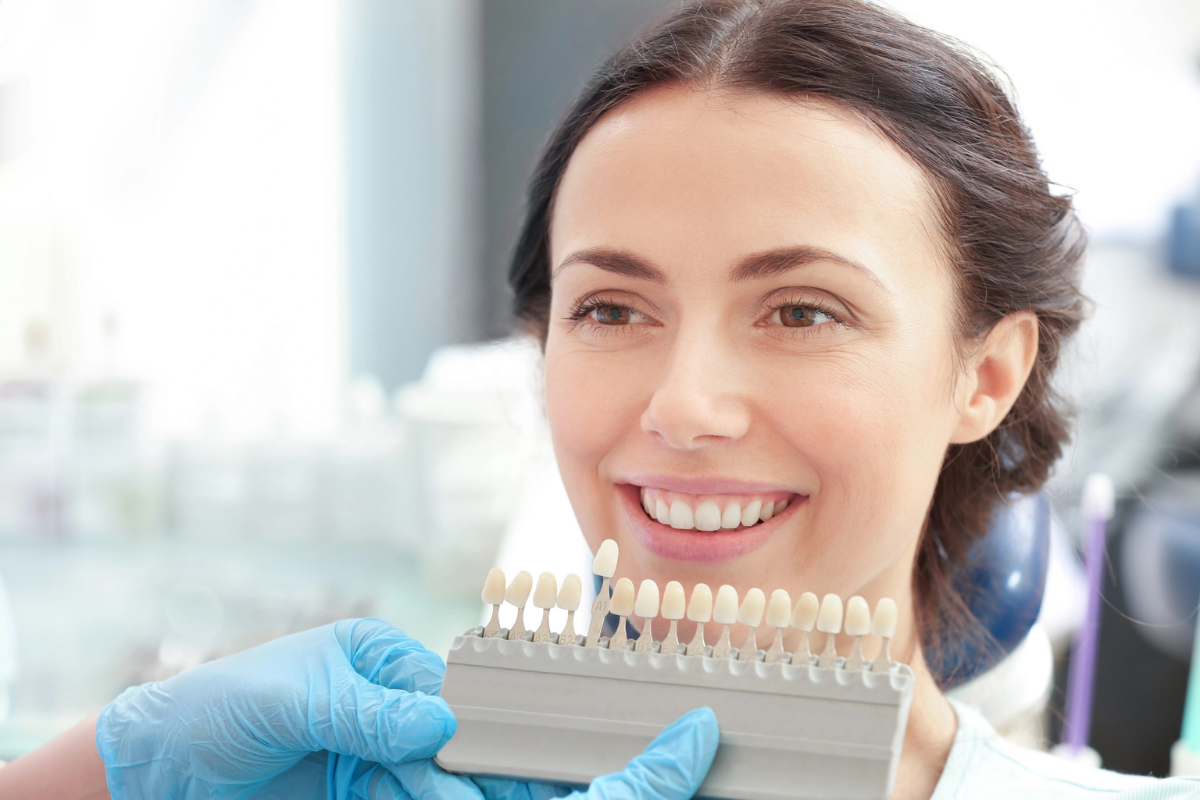
While most people want attractive teeth that they are proud to smile with, stained, stained, broken, misaligned, crooked or gapped teeth can sometimes discourage even the most confident smile. For years many will try to hide a smile in photos or put on a closed mouth look in public because they don't want others to notice imperfections. With dental veneers, you don't have to wait for your new smile or suffer with multiple hours of treatment or extensive procedures.
What Are Veneers?
A veneer is a super-thin shell of tooth-colored material (usually a half to a millimeter thick), which is bonded to the front of the tooth. Think of a made-to-fit cover that you get to pick the color of, which can be fabricated to match the color of your natural teeth so it looks like an all-natural tooth.
Veneer Varieties
When it comes to veneers there are generally two main types, porcelain and composite veneers. Porcelain veneers are made in a dental lab and are highly resistant to stain while providing a highly natural translucent look. Composite veneers are made directly onto the tooth using a tooth-colored resin, are normally completed in a single visit and tend to be less costly. In addition you may come across no-prep/minimal-prep veneers, ultra-thin versions that require little or no adjustment of the existing tooth surface (but which aren't suitable for every patient).
What Veneers Are Able to Treat
Withveneers, you can treat an incredible amount of cosmetic problems: Veneers Can Cover Up:
Deep stains that whitening can't lift
Chipped or mildly cracked teeth
Spaces of small size between teeth
Worn or shortened edges
Teeth that are slightly misaligned or crooked
Smaller or irregularly shaped teeth
Veneers are often used by people to correct a single problem as they can tackle multiple issues at a time.
How Veneers Transform Your Smile
That's because we're in complete control of every step, from overall size and shape to color and surface textures, ensuring that each restoration is designed to complement your face and naturally balance your smile. And because porcelain more closely mimics the refractive index of natural tooth enamel, it helps make your restoration look radiant and naturally luminous.
Veneer Process Step By Step
And this is where it all begins. Your dentist considers your teeth, teeth and goals; They may even need to take X-rays, radiographs, and digital images. So here is a place to chat about the shape and color of your teeth and what you expect.
Preparation visit: we take off a small amount of the tooth surface (usually approximately half a millimeter) to ensure the veneer will sit perfectly flat on your tooth. The lab receives your impressions or scans and creates the veneer over 1-2 weeks. A temporary veneer can be worn until then.
At the final appointment, your dentist will confirm the fit and color of each veneer, then with a strong dental adhesive and curing light "glues" each veneer in place. Final fine-tuning will be performed to ensure the bite is comfortable.
The Benefits of Veneers
Veneers are similar to the natural tooth, are highly resistant to staining and are very durable. High quality porcelain can last for ten to fifteen years or even longer with good maintenance. Veneers are much less destructive as only part of the tooth is prepared in comparison to crowns, which covers the whole tooth, and you can see the result in advance.
Things to Think About
Veneers are permanent because some of the natural tooth enamel has already been removed. If you have decayed or decayed, gums infected with gum disease or teeth worn down by grinding, you will need further treatment. Veneers can crack by biting into hard foods, and as it is a cosmetic treatment, most insurance will not cover it. Discuss everything with your dentist.
Caring for Your Veneers
Floss twice daily using a non-abrasive toothpaste and see your family dentist for a dental cleaning twice a year. Avoid chewing ice, chewing on pens or biting your fingernails, and wear a mouth guard if you have a habit of grinding your teeth. Drink coffee, tea and red wine only in moderation to decrease staining on natural teeth.
Conclusion
Improve your smile and your teeth by covering them with natural-looking, long-lasting veneers. Veneers are perfect for good-care teeth and gums that have realistic expectations. And, if you're thinking of combining several treatments, request a Smile Makeover Simi Valley to learn more about how veneers, whitening and other dental treatments can be combined to achieve your smile goals.
FAQs
1. How long do dental veneers last?
Well-made porcelain veneers can last anywhere from ten to 15 years or more while composite veneers usually last around five to seven years.
2. Are veneers painful?
You should not experience any discomfort when the operation is carried out using local anaesthesia. It is common to experience a little tenderness following an operation which will settle within a few hours.
3. Is it possible to whiten veneers?
Incorrect. Veneers cannot be bleached, so prepare by choosing a color and bleaching your natural teeth.
4. Are veneers bad for your teeth?
Standard veneers require a slight reduction of a paper thin layer of your tooth - an alteration to your teeth that is permanent, but minor and precisely executed.
5. Are veneers covered by insurance?
Unlikely, they're considered cosmetic. You might have them covered if they have to be repaired due to a chipped tooth.
















Comments (0)