

3D Printing in Hobart: Custom Components for Libraries, Archives and Collection Management
Libraries, archives and collection-management facilities require carefully designed physical systems to store, organise, protect and display valuable materials. Books, documents, photographs, objects and specialised collections often involve unusual dimensions that cannot always be accommodated by standard commercial accessories.
Introduction
Libraries, archives and collection-management facilities require carefully designed physical systems to store, organise, protect and display valuable materials. Books, documents, photographs, objects and specialised collections often involve unusual dimensions that cannot always be accommodated by standard commercial accessories.
A library may need a custom display holder, while an archive could require a specialised storage insert or equipment bracket. Exhibition teams may also need temporary mounts or prototype components for displaying collection items.
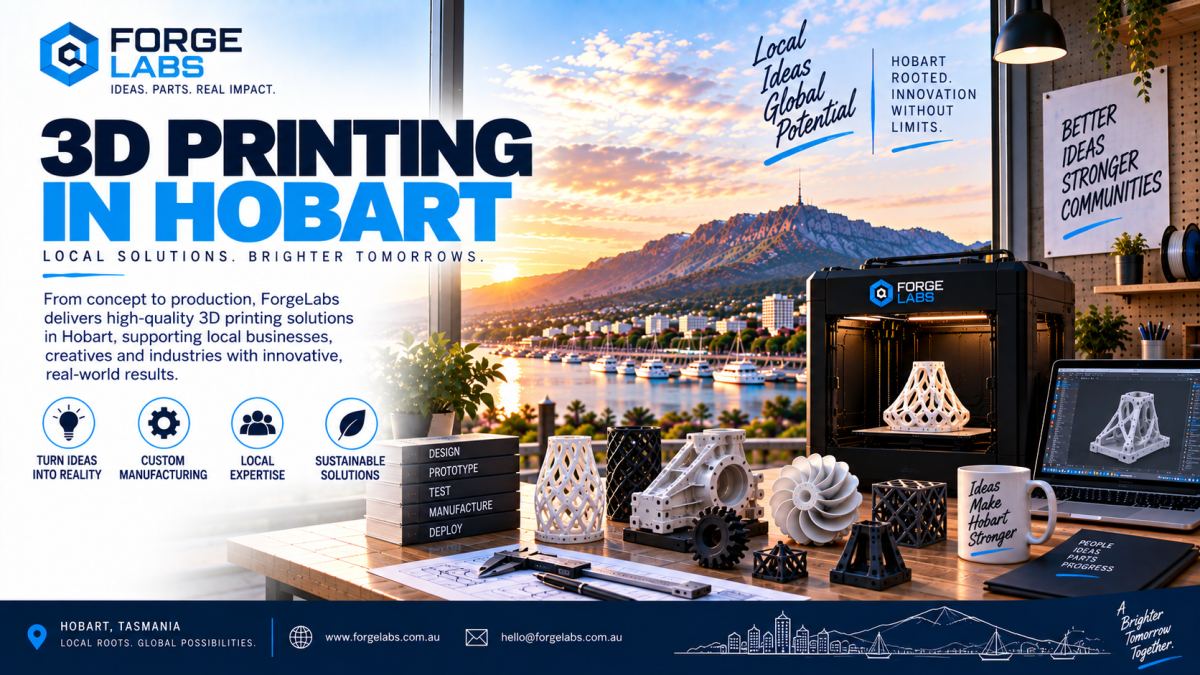
This is where 3D printing in Hobart can provide a practical manufacturing solution. Additive manufacturing allows custom components to be designed around specific dimensions and produced in small quantities without requiring conventional tooling.
For libraries, archives, museums, universities and collection-management organisations, 3D printing can support prototyping, customisation and selected low-volume manufacturing.
Why Libraries and Archives Need Custom Components
Collection environments often contain materials of different sizes, shapes and handling requirements.
Standard storage products are designed for broad use, but specialist collections may require more precise physical solutions.
Custom 3D printed components can support:
- Collection organisers
- Display supports
- Storage inserts
- Equipment brackets
- Label holders
- Cable guides
- Protective covers
- Exhibition prototypes
Because these components can be digitally designed, their dimensions can be matched closely to the intended application.
Custom Book and Document Display Stands
Libraries and archives sometimes display selected publications or documents for exhibitions, educational programs or public engagement.
A standard display stand may not provide the ideal angle or support.
A custom 3D printed stand can be designed around the dimensions and presentation requirements of a specific item.
The design can be adjusted to provide suitable support while maintaining a visually clean appearance.
For valuable materials, conservation requirements should guide the final display design.
Archive Storage Inserts
Archive boxes can contain materials with different dimensions, including photographs, folders, documents and other collection items.
Custom inserts can help organise these materials within a larger storage container.
A 3D printed prototype can be developed around the required dimensions and tested before a larger quantity is produced.
Where materials come into direct contact with collection objects, conservators should assess material compatibility before permanent use.
Custom Label Holders
Collection storage systems often require clear identification.
A custom label holder can be designed to fit a particular shelf, box, tray or display system.
3D printing makes it possible to create holders in dimensions suited to the existing infrastructure.
If the storage configuration changes, a new version can be digitally created and produced.
Library Shelving Accessories
Libraries can contain shelving systems with different dimensions and configurations.
Specialised accessories may be useful for organising equipment, signage or operational materials.
Custom 3D printed clips, holders, spacers and organisers can be developed around the shelving layout.
These small components can address specific operational needs without requiring an entire shelving system to be redesigned.
Exhibition Display Components
Museums, galleries and libraries often create temporary exhibitions.
Each exhibition can have different display requirements.
3D printing allows exhibition designers to create custom mounts, stands and supporting components around the dimensions of individual objects.
A prototype can be produced and evaluated before the final display arrangement is installed.
This can be especially useful when only a limited number of specialised components are required.
Custom Object Supports
Collection objects may vary significantly in shape and size.
A conventional display support may not provide the desired positioning or stability.
A custom prototype can be designed around the object's geometry.
3D printing can help exhibition designers test different support configurations before selecting the final design.
For valuable or fragile objects, the final support should be reviewed according to relevant conservation and handling requirements.
Equipment Mounts for Collection Facilities
Archives and libraries use computers, scanners, cameras, environmental monitors and other equipment.
Some devices may require custom brackets or holders to fit into an existing workstation.
A 3D printed mount can be designed around the equipment and available space.
This can help improve the physical arrangement of specialised work areas.
Custom Scanner and Photography Accessories
Digitisation projects often involve scanners and photography equipment used to capture collection materials.
A specific project may require a custom positioning aid, cable guide, equipment stand or prototype fixture.
3D printing makes it possible to develop these components around the actual digitisation workflow.
This can be useful where commercial accessories are too generic for the application.
Digitisation Equipment Prototyping
Digitisation systems can combine cameras, lighting, positioning mechanisms and computer hardware.
When developing a new setup, physical prototypes can help determine how equipment should be positioned.
A custom 3D printed bracket or support can be tested before a more permanent structure is fabricated.
This helps reduce the risk of discovering physical integration problems during the final setup.
Custom Cable Management
Modern libraries and archives can contain significant amounts of electronic equipment.
Scanning stations, computer workstations, displays and environmental monitoring systems may all require organised cabling.
Custom cable clips and routing guides can be designed for specific desks, racks and equipment layouts.
Because the components are produced from digital designs, they can be adjusted as the workspace changes.
Environmental Monitoring Hardware
Archives and collection spaces may use environmental monitoring devices to track conditions relevant to stored materials.
Sensors may require mounting brackets or protective housings.
A custom 3D printed mount can be created around the device and its installation location.
Designers can test different orientations to determine the most practical configuration.
The final installation should comply with the equipment manufacturer's specifications and any relevant conservation requirements.
Custom Storage for Library Equipment
Libraries use many smaller tools and accessories that need to remain organised.
A custom workstation organiser can be designed around the exact dimensions of the equipment.
For example, a specialised holder could be developed for particular tools, cleaning accessories or digitisation equipment.
This allows the storage solution to match the workflow rather than relying solely on generic products.
Rapid Prototyping for Exhibition Design
An exhibition component can look suitable in a digital rendering but reveal practical problems when physically installed.
A prototype helps designers evaluate:
- Scale
- Stability
- Positioning
- Object visibility
- Assembly
- Accessibility
- Overall appearance
The design can then be modified and reprinted before the exhibition opens.
This iterative approach can be particularly useful for temporary installations.
Custom Components for Educational Displays
Libraries and cultural institutions increasingly create educational displays that encourage visitors to interact with objects and information.
These displays may require custom holders, stands, interactive components or demonstration models.
3D printing can support rapid prototyping of these physical elements.
Designers can create multiple versions and evaluate how visitors interact with the display before finalising the installation.
Supporting Accessible Display Design
Exhibition and public-learning environments may require displays to be accessible to a broad audience.
Custom display components can be designed to position information or objects at appropriate heights and angles.
A 3D printed prototype can help designers assess physical accessibility before producing the final installation.
The precise requirements depend on the environment and intended audience.
Reverse Engineering Existing Collection Accessories
Older storage and display systems may contain plastic components for which CAD files are no longer available.
Where appropriate, an existing non-critical component can be measured or digitally captured.
The geometry can then be recreated and modified for a new application.
This can provide a practical alternative when a small replacement part is difficult to source.
Material Selection for Collection Environments
Material choice requires particular care around cultural and archival collections.
A material that performs well mechanically may not necessarily be appropriate for prolonged proximity to sensitive collection materials.
Potential factors include:
- Chemical stability
- Surface characteristics
- Dust generation
- Long-term ageing
- Cleaning requirements
- Object-contact compatibility
- Environmental conditions
For archival and conservation applications, the suitability of the finished component should be evaluated by the relevant collection professionals.
Prototyping Custom Protective Housings
Library and archive equipment may include sensitive electronics or specialist devices.
A custom protective housing can be developed around the equipment dimensions.
The prototype can include openings for cables, controls and ventilation while protecting the device from accidental contact.
This can help during the development of specialised collection-management equipment.
Small-Batch Manufacturing for Cultural Institutions
Libraries, archives and museums may need only a limited number of specialised components.
A project could require several display supports, a small collection of organisers or a limited series of equipment brackets.
Additive manufacturing can be well suited to these requirements because production can occur directly from digital files.
This avoids the need to establish large-scale tooling for relatively small quantities.
Custom Components for Heritage Projects
Heritage projects can involve objects, buildings and collections with unique dimensions.
Standard commercial components may not always work within these constraints.
3D printing can help create prototypes for display supports, documentation equipment and other non-invasive accessories.
The ability to customise geometry can make it easier to work around existing conditions.
Rapid Prototyping for Digitisation Projects
Digitisation initiatives often evolve as teams gain experience with their collections.
Equipment positioning, workflow and storage requirements can change over time.
3D printing allows physical components to evolve with those requirements.
A custom fixture can be redesigned as the digitisation process becomes more efficient.
This creates a flexible connection between digital workflow development and physical equipment design.
Forge Labs for Library and Archive Applications
Forge Labs provides additive manufacturing support for prototypes, custom components and selected low-volume production requirements.
For libraries, archives, museums and collection-management organisations, 3D printing can support specialised display components, storage accessories, equipment mounts, prototype fixtures and organisational hardware.
Working from digital CAD models allows custom components to be refined before final production.
Conclusion
Libraries, archives and cultural collections often contain materials and equipment that require specialised physical solutions.
3D printing in Hobart provides a flexible way to develop custom display stands, archive inserts, equipment mounts, label holders, digitisation accessories, cable-management components and exhibition prototypes.
For cultural institutions, additive manufacturing can support rapid experimentation while making small quantities of specialised components more accessible.
With careful consideration of conservation, material compatibility and application-specific requirements, 3D printing can become a valuable tool for improving collection management, exhibition development and specialised library operations.
Frequently Asked Questions
What library components can be 3D printed?
Potential applications include book display stands, label holders, shelf accessories, workstation organisers, equipment brackets and selected non-critical replacement parts.
Can 3D printing be used for archive storage?
Yes. Custom storage inserts, organisers and support components can be prototyped around specific collection-storage requirements.
Can museums use 3D printed exhibition components?
Yes. 3D printing can be useful for display stands, object supports, mounts and prototype exhibition hardware, subject to appropriate conservation review.
Can 3D printing support digitisation projects?
Yes. Custom camera mounts, scanner accessories, equipment fixtures and cable-management components can be developed for specialised digitisation workflows.
Are all 3D printing materials suitable for archival use?
No. Material compatibility must be evaluated carefully when components are used around sensitive collection materials.
How can Forge Labs help cultural institutions?
Forge Labs can support libraries, archives and museums with custom prototypes, specialised components and selected low-volume additive manufacturing projects.
At forgelabs, we provide professional 3D printing services in Australia for businesses, startups, engineers, and creators. We help turn ideas into real products with clean, accurate, and reliable results. We offer FDM 3D printing, resin printing, nylon parts, metal 3D printing, and full support services like CAD design, 3D scanning, and reverse engineering. From rapid prototyping to custom parts and small batch production, we handle every project with care and attention to detail. forgelabs proudly serves Melbourne, Sydney, and all of Australia. Our clients trust us for fast turnaround, strong materials, fair pricing, and clear communication. If you are looking for the best 3D printing services in Australia, then you are at right place







Comments (0)