

Biohazard Cleanup Services Phoenix AZ: What Happens During the Cleanup Process?
Understand what happens during professional biohazard cleanup, from the initial property assessment and contamination control to safe material removal, deep cleaning, disinfection, and final inspection.

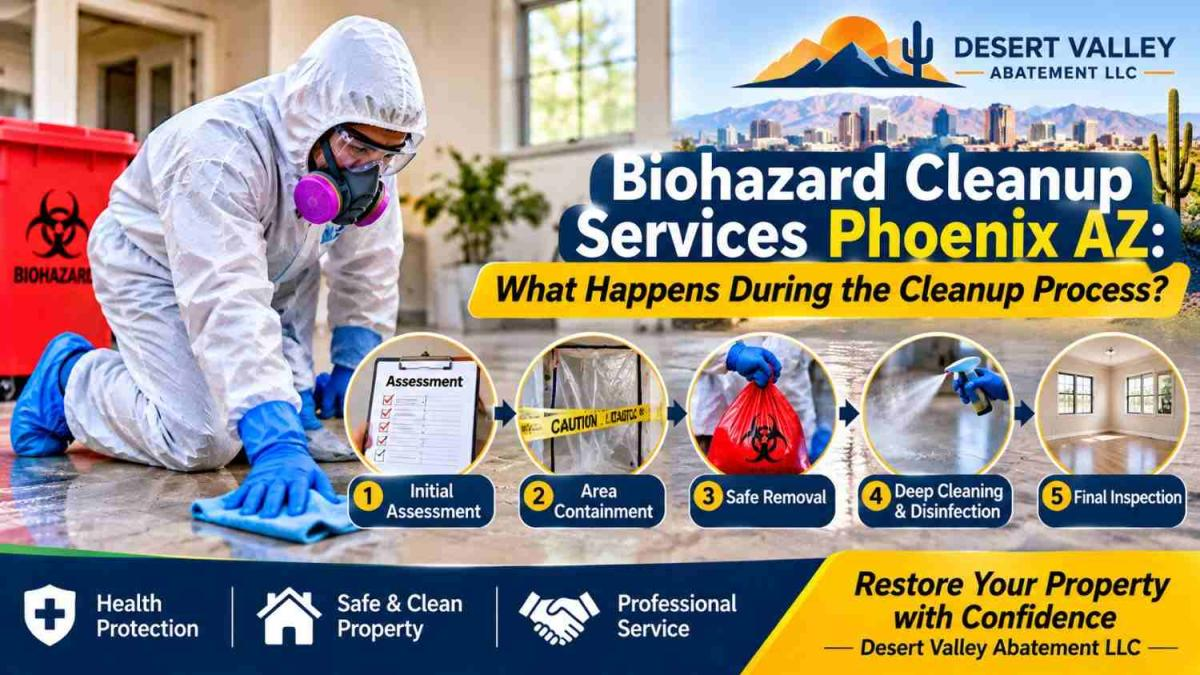
Discovering blood, bodily fluids, or potentially infectious contamination inside a home or commercial property can be distressing. Beyond the visible mess, these situations may involve biological materials that require specialized handling, cleaning, and disposal. Professional Biohazard Cleanup Services Phoenix AZ help property owners address contamination through controlled procedures designed to reduce exposure risks and restore affected spaces. Desert Valley Abatement LLC understands that biohazard incidents require a careful, respectful, and safety-focused response rather than ordinary household cleaning.
Whether contamination follows an unattended death, an accident, an injury, or another unexpected event, knowing what happens during professional cleanup can help property owners make informed decisions.
What Are Biohazard Cleanup Services?
Biohazard cleanup involves the assessment, removal, cleaning, and appropriate disposal of materials that may pose biological health risks. These materials can include blood, bodily fluids, human tissue, and contaminated porous or nonporous surfaces.
Unlike routine cleaning, biohazard remediation requires procedures based on the type and extent of contamination. A surface may look clean while biological residue remains in cracks, flooring, furnishings, or other hard-to-reach areas.
Professional cleanup focuses on identifying affected locations, controlling access, removing contaminated materials when necessary, and applying suitable cleaning and disinfection procedures.
Situations That May Require Professional Biohazard Cleanup
Not every incident requires the same level of remediation. However, the following situations may call for specialized services.
1. Unattended Death Cleanup
When a person passes away and is not discovered immediately, bodily fluids and decomposition-related contamination may affect flooring, furniture, walls, and nearby materials.
The extent of contamination depends on the circumstances, the time involved, and the building's layout. Porous materials may require removal if they cannot be adequately cleaned and disinfected.
Professional technicians assess the affected areas and determine the appropriate remediation approach while treating the situation with discretion and respect.
2. Blood and Bodily Fluid Cleanup
Accidents, injuries, and traumatic incidents can leave blood or other bodily fluids on floors, furniture, walls, and personal belongings.
These materials should not be handled casually because exposure may present biological risks. Household cleaning products and ordinary wiping methods may not be suitable for all contamination situations.
Professional assessment helps determine which surfaces can be cleaned and which materials require removal.
3. Crime Scene Cleanup
After law enforcement and other authorized agencies have released a scene, property owners may need assistance addressing biological contamination.
Crime scene cleanup can involve blood removal, contaminated material disposal, surface disinfection, odor-related treatment, and documentation. Cleanup should not interfere with an active investigation or disturb evidence before the scene has been officially released.
4. Hoarding-Related Biohazards
Some severely neglected properties contain animal waste, bodily fluids, spoiled organic matter, or other biological contamination. These conditions can create sanitation concerns and may require more than general junk removal.
A professional assessment helps identify affected surfaces, access limitations, waste categories, and any additional hazards that need attention.
5. Sewage and Biological Contamination
Sewage backups and contaminated water incidents may introduce harmful microorganisms into a property. Affected flooring, drywall, insulation, and furnishings may need specialized cleaning or removal depending on the contamination category and extent.
The source of contamination should be addressed, and materials should be evaluated before the property is considered safe for normal use.
What Happens During the Professional Biohazard Cleanup Process?
A structured cleanup process helps ensure that contamination is assessed and managed systematically. The exact procedures vary by incident, but most projects involve several important stages.
Step 1: Initial Contact and Incident Information
The process generally begins when the property owner or responsible party contacts a cleanup provider.
The provider may ask questions about the type of incident, location, approximate size of the affected area, visible contamination, and whether emergency services or law enforcement are still involved.
This information helps determine the likely scope of work and whether an on-site assessment is needed. Property owners should share relevant details without attempting to clean or disturb the affected area.
Step 2: On-Site Inspection and Risk Assessment
Before cleanup begins, trained personnel assess the affected space. They look for visible biological contamination, potentially affected surrounding surfaces, porous materials, concealed areas, and access limitations.
The inspection helps establish the work boundaries and determine whether materials such as carpeting, mattresses, upholstery, drywall, or flooring need to be removed.
The assessment should also consider other hazards, including sharp objects, chemical residues, structural damage, or poor ventilation.
Step 3: Area Isolation and Safety Preparation
Once the scope is established, the work area may be separated from unaffected spaces. Barriers, warning signs, controlled entry, and other protective measures help limit unnecessary access.
Technicians select personal protective equipment based on the anticipated exposure risks. This may include protective clothing, gloves, eye protection, and appropriate respiratory protection.
The goal is to protect workers, occupants, and other people who might otherwise enter the contaminated area.
Step 4: Removal of Contaminated Materials
Materials that cannot be adequately cleaned may need to be removed. This can include heavily contaminated carpeting, padding, mattresses, upholstery, sections of drywall, or other porous items.
Removal decisions depend on the material, contamination level, and applicable procedures. Not every affected item automatically needs disposal.
Contaminated waste must be packaged, handled, transported, and disposed of in accordance with applicable requirements. It should not simply be placed in ordinary household waste.
Step 5: Cleaning and Disinfection
After necessary removal, technicians clean affected surfaces to remove visible biological matter and other residues.
Cleaning and disinfection are related but different processes. Cleaning removes soil and organic material, while disinfection uses an appropriate product under specified conditions to address microorganisms on suitable surfaces.
Product selection, surface compatibility, concentration, and contact time matter. Applying a disinfectant without proper pre-cleaning or following the manufacturer's directions may reduce its effectiveness.
Step 6: Odor Assessment and Treatment
Some incidents produce persistent odors, particularly when contamination has reached porous materials or concealed spaces.
Odor treatment should address the source rather than simply cover the smell with fragrance. Depending on the circumstances, this may involve removing affected materials, cleaning surfaces, and using suitable odor-control methods.
If odors remain, further investigation may be necessary to identify hidden contamination or materials that were not accessible during the initial work.
Step 7: Final Inspection and Project Documentation
After cleanup, the work area is reviewed to check whether the agreed scope has been completed. Depending on the incident, project requirements, and client needs, documentation may include the work performed, materials removed, disposal arrangements, and any applicable verification records.
A visual inspection alone does not establish that every biological hazard has been eliminated. Where specific testing or independent verification is appropriate, the need for it should be discussed before the project begins.
Why Ordinary Household Cleaning May Not Be Enough
Cleaning visible contamination with household products may appear convenient, but it can leave important problems unresolved.
Incomplete removal: Blood and bodily fluids can enter seams, cracks, porous flooring, and upholstered materials.
Cross-contamination: Using the same cloth, mop, or cleaning equipment across different surfaces may spread contamination.
Incorrect disinfectant use: Products differ in their effectiveness, approved applications, and required contact times.
Exposure risks: Direct contact, splashes, or inappropriate handling can expose people to potentially infectious material.
Improper disposal: Contaminated waste may require special packaging and disposal procedures.
Professional biohazard remediation is designed to address these concerns through a planned process rather than relying on ordinary surface cleaning.
How Much Do Biohazard Cleanup Services Cost in Phoenix AZ?
Biohazard cleanup costs vary according to the incident and the work required. A small, accessible area may involve less labor and material removal than a large property with extensive contamination.
Key pricing factors include:
-
Type of incident: Unattended death, blood cleanup, sewage contamination, and hoarding situations can require different procedures.
-
Size of the affected area: Larger spaces generally require more labor, supplies, and time.
-
Contamination severity: Deeply absorbed or widespread contamination may require additional removal and treatment.
-
Material type: Porous items can be more difficult to remediate than suitable nonporous surfaces.
-
Accessibility: Concealed spaces, tight access points, and multiple affected rooms can increase complexity.
-
Waste disposal: Packaging, transportation, and disposal requirements can affect the final estimate.
-
Additional restoration: Replacing flooring, drywall, or other building materials may be separate from cleanup.
Ask for an itemized estimate that distinguishes cleanup, material removal, disposal, odor treatment, and reconstruction. Clarify whether testing or independent verification is included or billed separately.
How to Choose a Biohazard Cleanup Company
Choosing a qualified provider is important because biological contamination requires careful procedures and responsible handling.
Ask About Training and Relevant Experience
Find out whether technicians have appropriate training for the specific type of cleanup. Ask how the company handles bloodborne pathogens, personal protective equipment, contamination control, and waste management.
Confirm Insurance and Applicable Requirements
Ask for proof of appropriate insurance and verify any licenses, registrations, or permits required for the work. Requirements may vary according to the services performed and the materials involved.
Request a Written Scope of Work
The proposal should identify the affected areas, removal procedures, cleaning and disinfection methods, waste handling, and services that are not included.
Discuss Privacy and Discretion
Biohazard incidents can involve sensitive personal circumstances. Ask how the provider manages access, communication, and property information.
Avoid Unrealistic Guarantees
A responsible provider should explain the proposed process and its limitations. Be cautious of claims that a property can always be declared completely safe through a single cleaning method or a visual inspection alone.
What Should Property Owners Do Before the Cleanup Team Arrives?
A few simple precautions can help prevent additional exposure.
-
Keep children, pets, and visitors away from the affected area.
-
Avoid touching blood, bodily fluids, or contaminated objects.
-
Do not attempt to scrub, sweep, or vacuum biological contamination.
-
Avoid moving furniture or belongings from the affected space.
-
If possible, limit access without entering the contaminated area.
-
Inform the cleanup provider about known hazards and any ongoing investigation.
-
Follow instructions from emergency responders or relevant authorities.
If someone has had direct exposure to potentially infectious material, they should seek prompt medical guidance rather than waiting for the cleanup process.
Frequently Asked Questions
1. What types of materials are included in biohazard cleanup?
Services may address blood, bodily fluids, human tissue, certain animal waste, sewage-related contamination, and affected building materials. The exact scope depends on the incident and the provider's qualifications.
2. Can biohazard contamination be cleaned without removing flooring?
Sometimes. Nonporous surfaces and certain flooring materials may be suitable for cleaning and disinfection. However, heavily contaminated porous materials may need removal if effective remediation is not possible.
3. How long does professional biohazard cleanup take?
The timeline depends on the affected area, contamination severity, materials involved, and disposal requirements. A provider can give a more realistic estimate after inspection.
4. Does biohazard cleanup include odor removal?
Odor assessment and treatment may be included or offered as a separate service. Effective odor control requires addressing the contamination source rather than simply masking the smell.
5. Is biohazard cleanup the same as regular deep cleaning?
No. Regular cleaning generally addresses dirt and everyday household residue. Biohazard remediation involves specialized assessment, protective measures, biological material handling, disinfection, and appropriate waste disposal.
6. Can occupants remain in the property during cleanup?
It depends on the location and extent of contamination, the containment plan, and the work being performed. The provider should explain whether occupants need to stay away from the affected room or temporarily leave the property.
Conclusion
Biohazard incidents require a careful response because visible contamination may not reveal the full extent of the problem. A professional cleanup process typically includes initial assessment, area isolation, controlled material removal, cleaning, disinfection, odor evaluation, and final review. Property owners should prioritize trained personnel, clear project documentation, responsible waste handling, and procedures appropriate to the specific incident. Desert Valley Abatement LLC encourages property owners to seek qualified assistance when biological contamination affects a home or building. Acting carefully and avoiding DIY disturbance can help reduce exposure risks and support a more responsible property recovery process.















Comments (0)