

Different Types of Industrial Valves: Radiator, Gate and Globe Valves


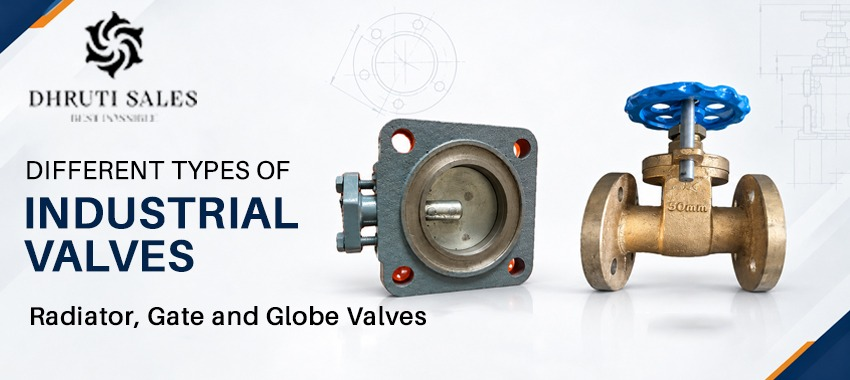
Valves are key components in heating systems, a water system, and industrial fluid handling systems. Valves are used to regulate, control, or shut off the flow of liquids in pipework and auxiliary equipment. The types of valve you should select depends on the system goal, flow rate regulation requirements, service conditions, and installation needs.
In heating, a radiator valve is used to control the flow of water through a radiator valve. Gate and globe valves are used in pipeline systems and serve other functions. Explore the differences among the three to help maintenance teams, contractors and industrial buyers to decide which product is right for them.
Understanding Different Types of Valves
The design of a valve is based upon the operation that it needs to perform. Some valves are built to open or close fluid flow; others are used to allow the operator to control the flow rate or control the temperature of the heating equipment.
The decision is made on a number of considerations such as type of fluid, pressure, temperature, size of pipes and the frequency at which they are operated. One specific valve that is good at one application is not necessarily good at another.
Before selecting a valve, know the operating requirements of the system, and ensure the product selected is appropriate for the installation. Knowing the functions of various valves will help avoid selecting an inappropriate valve and costs of having to replace it.
Radiator Valves and Their Applications
A radiator valve controls the volume of hot water that passes into and through a radiator in a central heating system. It also controls the amount of heat that the radiator can give off to the room in which it is fitted.
These valves are used in heating installations in buildings when the radiators are connected to the hot water system. Using these valves, it is possible to regulate the water supply as per the requirements of the system.
In selecting the correct type of radiator valve, the installer must take into account the pipe connection, the layout of the fittings, the maximum temperature and the pressure rating, in addition to the nature of the heating equipment. The type of valve will also be determined by the necessity for simple manual control or temperature control.
Installation is just as important. All connections must be appropriate to the pipework and the valve installed as per the manufacturers instructions. Regular inspection can help to pinpoint problems such as leakage, restricted movement or other operational issues.
Gate and Globe Valves: Functions and Applications
Exploring industrial valve options? Discover the types, uses, and benefits of radiator, gate, and globe valves. Read more on dhrutisales.co.in













Comments (0)