

How to Choose Quality Aromatic Raw Material Online
Choosing quality aromatic raw materials online requires checking ingredient purity, product specifications, supplier reliability, and quality documentation. Compare prices, request samples, and verify suitability for your intended application. Whether sourcing aromatic ingredients, candle making material online, or hydrosol in bulk, choose reliable suppliers to support consistent product quality and business growth.

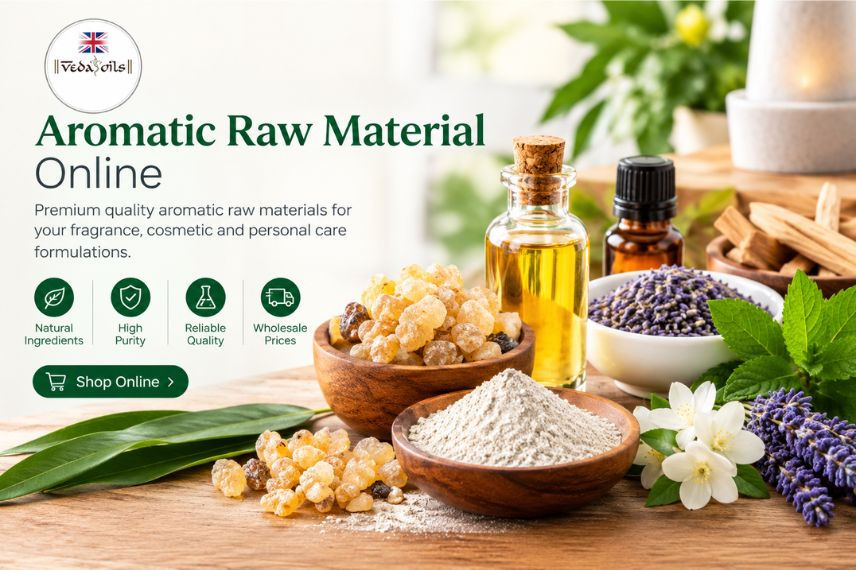
Choosing the right ingredients is essential for creating high-quality perfumes, skincare products, aromatherapy blends, and home fragrances. Whether you are a manufacturer, small business owner, or DIY enthusiast, sourcing reliable ingredients can influence product quality, consistency, and customer satisfaction. When buying Aromatic raw material online, it is important to evaluate product specifications, supplier transparency, documentation, and suitability for your intended application.
VedaOils UK offers a range of essential oils, fragrance oils, cosmetic ingredients, and other materials for different formulation needs. Understanding what to check before purchasing can help you make informed sourcing decisions.
Understand Your Product Requirements
Before ordering any aromatic ingredient, identify how you intend to use it. Different applications require different ingredient properties, fragrance profiles, and quality standards.
For example:
-
Perfume manufacturing: Look for suitable fragrance ingredients, aroma compounds, and essential oils with clearly stated specifications.
-
Skincare and personal care: Select ingredients intended for cosmetic use, with appropriate safety documentation and usage guidance.
-
Aromatherapy: Consider essential oils with botanical names, ingredient information, and batch-specific quality records.
-
Home fragrance: Explore fragrance oils and compatible ingredients designed for products such as room sprays and diffusers.
Understanding your formulation requirements helps you choose products that meet your technical and commercial needs.
Check Ingredient Quality and Purity
Ingredient quality should be one of your main considerations when sourcing aromatic materials. Product names and marketing claims alone cannot establish purity or suitability.
When evaluating a supplier, check the following details:
-
Ingredient identity: Confirm the product name, botanical name where applicable, and ingredient composition.
-
Purity information: Review available specifications and any relevant purity testing.
-
Batch consistency: Ask whether the supplier provides batch numbers and quality-control records.
-
Storage requirements: Check the recommended temperature, packaging, and protection from light or moisture.
-
Intended application: Ensure the material is suitable for your intended formulation.
For essential oils and other complex aromatic ingredients, a Certificate of Analysis (COA) and, where appropriate, a Gas Chromatography–Mass Spectrometry (GC-MS) report can provide useful information about composition and quality. Documentation should relate to the specific product and batch whenever possible.
Evaluate the Supplier's Reliability
A dependable supplier should provide clear product information, transparent business policies, and accessible customer support. This is particularly important when sourcing ingredients for commercial manufacturing.
Before purchasing Aromatic raw material online, review the supplier's product descriptions, available technical documents, contact details, shipping policies, and return conditions.
Consider these questions:
-
Does the supplier explain the intended use of each ingredient?
-
Are product specifications and safety documents available?
-
Can you request samples before placing a bulk order?
-
Does the supplier offer consistent packaging and batch identification?
-
Are wholesale quantities and pricing clearly explained?
Suppliers that communicate clearly can make the sourcing process easier for businesses that need dependable ingredients for ongoing production.
Compare Prices Without Compromising Quality
Price matters, especially for manufacturers and businesses purchasing ingredients regularly. However, the lowest-priced product is not always the most suitable choice.
Compare suppliers using the same criteria, including ingredient type, concentration, purity specifications, packaging size, shipping charges, and documentation.
For bulk purchases, calculate the total cost per unit rather than comparing only the advertised price. Also consider minimum order quantities, delivery times, storage requirements, and the potential cost of inconsistent raw materials.
A balanced purchasing decision considers quality, traceability, supplier reliability, and overall value.
Consider Related Ingredients for Your Business
Depending on your product range, you may need additional materials alongside aromatic ingredients.
Candle Making Material Online
Businesses producing scented candles can source candle making material online, including candle wax, wicks, fragrance oils, containers, and moulds. Ensure that the fragrance oil is suitable for the specific wax and candle application. Follow the supplier's recommended fragrance load and conduct appropriate burn and performance tests before commercial production.
Hydrosol in Bulk
Skincare and personal care manufacturers may also require hydrosol in bulk for suitable cosmetic formulations. Hydrosols are aromatic waters generally obtained during the distillation of botanical materials. Before ordering, check the botanical source, production method, preservative status, microbiological quality, packaging, and storage instructions. Because hydrosols contain water, appropriate microbial controls and shelf-life information are especially important.
Buying compatible ingredients from reliable suppliers can simplify sourcing, although each material should still be assessed for its own intended use.
Order Samples Before Buying in Bulk
Samples can help you evaluate an ingredient before committing to a large purchase. This is useful for perfume makers, candle manufacturers, skincare brands, and businesses developing new products.
Test samples for relevant properties, such as fragrance character, compatibility, stability, appearance, and performance in your intended formulation. For commercial use, establish clear acceptance criteria and retain batch information for traceability.
When purchasing Aromatic raw material online, sample testing can reduce the risk of selecting an ingredient that does not meet your formulation requirements.
Choose a Supplier That Supports Your Business Growth
As your business grows, your ingredient requirements may change. You might need larger quantities, additional documentation, consistent specifications, or a wider product range.
VedaOils UK provides ingredients and supplies for applications across aromatherapy, personal care, cosmetics, and candle making. When evaluating VedaOils UK or any other supplier, review the relevant product specifications, request documentation where needed, and confirm that the material suits your particular formulation.
A thoughtful sourcing process can help you maintain product consistency, manage purchasing costs, and build more reliable production workflows.
(FAQs)
1. What should I check before buying aromatic raw materials online?
Check the ingredient identity, quality specifications, intended application, available documentation, packaging, supplier reputation, and storage instructions before placing an order.
2. What is a COA in raw material purchasing?
A Certificate of Analysis (COA) is a document containing specified test results for a product or batch. It helps buyers assess whether the material meets the stated quality specifications.
3. Why is GC-MS testing important for essential oils?
GC-MS testing helps identify and estimate the relative amounts of volatile compounds in an essential oil. It can support quality assessment, but it does not independently prove every aspect of purity or product safety.
4. Can I buy aromatic raw materials in bulk?
Yes. Many suppliers offer bulk quantities for manufacturers, formulators, and businesses. Confirm the minimum order quantity, batch documentation, packaging, and storage requirements before purchasing.
5. Where can I buy candle-making ingredients online?
You can compare specialist suppliers such as VedaOils UK for candle wax, wicks, fragrance oils, and other candle-making materials. Check compatibility and product instructions before using any ingredient.
6. What should I check when buying hydrosol in bulk?
Review the botanical source, production method, microbiological specifications, packaging, shelf life, and storage requirements. Confirm whether preservatives are present and whether the hydrosol is suitable for your intended application.
7. How can I select a reliable online supplier?
Choose a supplier with clear product descriptions, accessible customer support, relevant quality documents, transparent pricing, and traceable batch information where applicable.
Conclusion
Choosing suitable aromatic ingredients requires more than comparing prices. Product specifications, batch documentation, supplier reliability, application compatibility, and sample testing all contribute to informed purchasing decisions. By evaluating these factors carefully, businesses can source ingredients that better meet their quality and production requirements.
Whether you need essential oils, fragrance ingredients, Aromatic raw material online, candle-making supplies, or hydrosols for cosmetic formulations, prioritise transparent specifications and reliable sourcing to support your long-term business goals.

VedaOils UK provides essential oils, fragrance oils, aromatic raw materials, body massage oils, candle wax, and cosmetic ingredients for diverse applications. We focus on offering quality supplies at competitive wholesale prices for businesses, manufacturers, skincare brands, and DIY enthusiasts creating beauty, wellness, and home fragrance products.












Comments (0)