

HRMS Software for Startups in Gandhinagar: A Complete Guide to Scalable HR Management
HRMS Software for Startups in Gandhinagar helps growing businesses streamline employee management, attendance, payroll, leave, shift scheduling, time tracking and workforce operations. An integrated HRMS can centralize employee data, reduce repetitive HR work and provide better workforce visibility as startups expand.
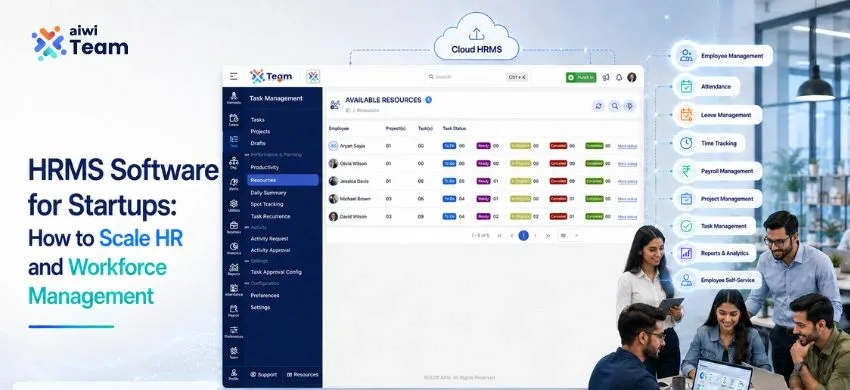
Startups and growing businesses in Gandhinagar are increasingly managing more complex teams, departments, working arrangements, and business processes. As employee numbers increase, HR administration can quickly become more difficult than it was during the early stages of the company.
A business with five employees may manage employee information through a spreadsheet. Attendance can be checked manually, leave can be requested through messages, and payroll can be calculated using a simple file.
The same process becomes much harder with 50 or 100 employees.
HR teams may need to maintain employee profiles, organizational structures, attendance records, leave balances, payroll information, salary structures, shifts, working hours, holidays, documents, and reports.
This is where HRMS software for startups in Gandhinagar can provide a more structured approach.
What Does an HRMS Do?
Human Resource Management System software centralizes HR and employee-related operations.
Instead of maintaining separate spreadsheets and applications, an HRMS can provide a centralized platform for managing:
-
Employee information
-
Attendance
-
Leave
-
Payroll
-
Working hours
-
Shifts
-
Employee self-service
-
HR reports
-
Organizational structures
-
Workforce management
-
Projects and tasks
The exact features differ between platforms, so businesses should evaluate software according to their requirements.
Why Growing Startups Need Centralized HR
The main challenge with manual HR is not necessarily the spreadsheet itself.
The bigger problem is that information becomes fragmented.
For example:
Employee Data → Excel
Attendance → Spreadsheet
Leave → Email
Payroll → Separate Tool
Projects → Another Application
Reports → Manual Compilation
Every time information needs to move between systems, HR may need to verify and update it.
A centralized HRMS can create a more connected workflow.
Employee Management
As a startup grows, its organizational structure usually becomes more complex.
A company may add departments, managers, locations, roles, and different employee types.
An employee management system can centralize employee profiles and organizational information.
This can help HR maintain a more consistent employee database.
It also creates a foundation for connected processes such as attendance, leave, payroll, and reporting.
Attendance Management
Attendance is one of the first HR processes that many growing startups automate.
Manual attendance becomes increasingly difficult when employees work across different locations or schedules.
A modern attendance management system can provide digital check-in and check-out, working-hour records, attendance reports, regularization workflows, and shift-based attendance depending on the platform.
For companies with remote or hybrid teams, mobile or web attendance can also be useful.
The important point is to select an attendance process that matches the company's workforce model.
Leave Management
Leave requests can generate a significant amount of routine HR communication.
An employee may send a message to a manager, the manager may approve it, and HR may then have to update a spreadsheet.
An online leave management system can make the process more structured.
Employees can submit leave requests through the platform, managers can review them, and HR can maintain leave balances and records.
The system may also support leave policies, approval workflows, carry-forward rules, and attendance integration.
Payroll Management
Payroll is one of the most important HR processes for a startup.
Employees expect salary payments and payslips to be handled consistently.
HR teams may need to manage salary structures, earnings, deductions, working days, leave, payroll records, and other payroll information.
When attendance and leave information is available within the same HR environment, payroll administration can become more connected.
Businesses should configure payroll according to their internal policies and applicable requirements.
Time Tracking and Workforce Management
As startups become more project-oriented, time tracking can provide additional visibility.
Employees may work on multiple projects and tasks during a week.
A time tracking system can help record working time and associate it with relevant projects or tasks where required.
This can be useful for:
-
Software companies
-
Agencies
-
Consulting firms
-
Service businesses
-
Remote teams
-
Project-based organizations
Workforce management can go beyond basic HR administration by connecting employees, schedules, attendance, time, tasks, projects, and reporting.
Productivity Information
Some organizations also require employee productivity monitoring.
Depending on the platform, this may include activity tracking, screenshots, application information, mouse and keyboard activity, time utilization, or project activity.
However, companies should define clear policies before implementing such functionality.
Employees should understand what information is collected, why it is collected, when monitoring takes place, and who can access relevant information.
Productivity information should also be interpreted carefully.
For example, an employee may spend substantial time in meetings, planning, research, customer communication, or other activities that are not fully represented by application activity.
Remote and Hybrid Workforce
Modern startups may employ people from different cities or locations.
A centralized cloud HRMS can provide a common environment for managing employees regardless of whether they work from an office or remotely.
For a growing organization, this can help HR maintain consistent processes across different working arrangements.
Attendance, leave, payroll, employee information, and workforce reports can be managed through digital workflows rather than relying entirely on physical records.
AIWI Team for Startups
AIWI Team is an all-in-one HRMS and workforce management platform designed for startups, SMEs, and growing businesses.
The platform brings together employee management, attendance, leave, payroll, time tracking, productivity, project management, task management, organizational management, reporting, and workforce-related capabilities.
For companies searching for HRMS software in Gandhinagar, the platform can be evaluated according to actual workforce needs.
Businesses can also read the detailed HRMS software for startups and workforce management guide for more information about centralizing HR and workforce operations.
How to Select the Right HRMS
Before purchasing HRMS software, startups should identify their current administrative problems.
For example:
-
Is payroll taking too much time?
-
Are attendance records maintained manually?
-
Are leave requests coming through multiple channels?
-
Are employee records duplicated?
-
Do managers lack workforce visibility?
-
Does the company need shift scheduling?
-
Are employees working remotely?
-
Is project-level time tracking required?
-
Does HR need automated reports?
-
Will the employee count increase significantly?
Once these requirements are identified, businesses can compare HRMS platforms more effectively.
Scalability Matters
A startup should consider not only today's workforce but also future growth.
A platform should ideally be able to accommodate:
More employees
Additional departments
Different reporting structures
More complex permissions
Multiple working arrangements
Additional shifts
Greater payroll requirements
More reporting needs
Future workforce processes
Selecting a system only because it works for the current team may create another migration problem later.
Employee Self-Service
Employee self-service can reduce repetitive HR communication.
Depending on the platform, employees may be able to:
View attendance
Apply for leave
Check leave balances
Access payslips
Review relevant employee information
Track working time
This can allow HR teams to focus on administrative and strategic work rather than answering routine questions throughout the day.
Building a Digital HR Workflow
A practical startup HR workflow can gradually move from:
Spreadsheets → Manual Approvals → Separate Tools
toward:
Centralized Employee Data → Digital Attendance → Online Leave → Connected Payroll → Time Tracking → Workforce Reports
Not every organization needs every module immediately.
Startups can begin with the processes causing the most administrative work and gradually expand their HRMS usage.
Conclusion
For startups and growing companies in Gandhinagar, HRMS software can provide a foundation for more organized workforce administration.
As employee numbers increase, attendance, leave, payroll, employee records, working hours, projects, tasks, and reporting become increasingly interconnected.
Managing each process separately can create unnecessary administrative work.
An integrated HRMS can centralize these functions and provide a scalable framework for workforce management.
AIWI Team combines HRMS and workforce management capabilities including employee management, attendance, leave, payroll, time tracking, productivity, projects, tasks, and reporting.
Businesses should evaluate these capabilities against their own workforce structure, operational requirements, employee experience, and future growth before selecting the software that fits their organization.
I’m AIWI Team, an all-in-one HRMS and workforce management platform built to help businesses simplify the way they manage people, productivity, and daily operations. AIWI Team brings essential workplace tools together in one platform, including employee management, attendance, leave management, payroll, time tracking, task management, project management, productivity tracking, workforce management, and reporting. Our goal is simple: help startups, SMEs, and growing businesses reduce manual HR work, improve workforce visibility, and create more organized and productive workplaces. Whether your team is remote, hybrid, or office-based, AIWI Team provides the tools you need to manage your workforce more efficiently and support business growth.

Comments (0)