

Plastic injection molding company: How to Maintain Consistent Production in Pakistan
Discover how plastic injection molding companies maintain production consistency. Understand material handling, machine settings, mould conditions, quality inspections and common manufacturing defects.

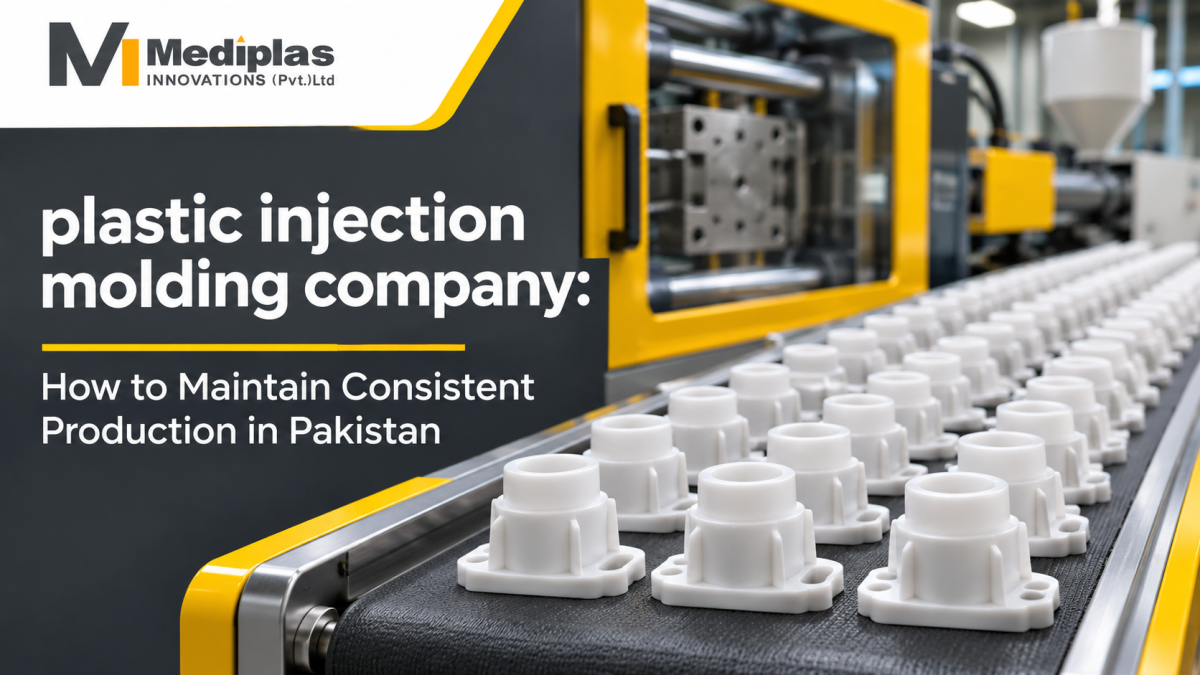
Consistent plastic parts matter to manufacturers, product owners, and packaging businesses. Producing them repeatedly requires careful planning. Material preparation, mould condition, machine settings, and inspection all influence the result. Choosing a plastic injection molding company involves more than comparing machinery or prices. Buyers should understand how a supplier manages production from the first sample to the final batch.
Why Production Repeatability Matters in Plastic Injection Moulding
Repeatability means producing parts that meet the same agreed requirements across production runs. Small dimensional differences can affect assembly, appearance, or product use.
Part-to-Part Consistency and Product Fit
Components should match approved drawings and samples within agreed tolerances. Consistent dimensions help parts fit during assembly and reduce production adjustments. Appearance also matters when components remain visible. Identify critical dimensions and visual requirements before production.
Waste, Delays and Downstream Effects
Variation can lead to rejected parts, rework, and production interruptions. A packaging line may slow down if closures do not fit containers. Assembly teams may need extra checks when components vary. Clear specifications and process monitoring help identify issues earlier.
How a plastic injection molding company Controls the Production Process
A plastic injection molding company should understand how material, machine, mould, and product design work together. Settings must suit the selected resin and component. A setting that works for one material may not suit another. Buyers should ask how the supplier establishes and monitors production conditions.
Material Preparation and Resin Handling
Material should be identified and handled according to its technical requirements. Some resins are moisture-sensitive and may need drying before processing. Storage and handling can also affect material quality. Confirm the selected grade before production.
Machine Settings and Process Window
Injection pressure, speed, melt temperature, and holding pressure influence how material fills the mould. The correct settings depend on the resin, part geometry, machine, and tooling. Changes during process development should be assessed and recorded. A defined process window supports stable production.
Mould Temperature, Cooling and Cycle Stability
Mould temperature and cooling time influence how a part solidifies and releases. Uneven cooling can contribute to warpage or dimensional changes. Requirements depend on material properties and mould design. Cycle time should support consistent parts, not simply the fastest output.
Moving from First-Off Sample to Repeat Production
The first production sample helps confirm whether the process meets agreed requirements. It should be reviewed before full production approval. Buyers and suppliers should agree on inspection criteria and the approval process. This provides a reference for later batches.
First Article and Sample Approval
Assess the first article against the approved drawing and product brief. Checks may include dimensions, weight, appearance, fit, and functional features. Record any deviation and discuss its impact. Production approval should follow when the sample meets agreed acceptance criteria.
Monitoring Production and Managing Changes
Relevant process and quality checks should continue during production. Material batches, mould maintenance, machine settings, or design changes can affect results. Review changes before introducing them. Clear records help investigate problems and maintain consistency across batches.
Common Injection Moulding Defects and Their Possible Causes
Defects can arise from material, tooling, design, or process conditions. Identifying the visible problem is only the first step. The supplier should investigate possible causes before changing settings or modifying the mould.
Short Shots, Flash and Sink Marks
A short shot occurs when the mould cavity does not fill completely. Possible causes include restricted material flow, unsuitable settings, or venting issues. Flash is excess material escaping along a mould parting line. It may relate to mould condition, clamping, or process settings. Sink marks are depressions that can develop as thicker areas cool. Part design, packing, and cooling may contribute.
Warpage, Burn Marks and Dimensional Variation
Warpage is unwanted distortion after a part cools. Uneven cooling, material shrinkage, and part geometry can contribute. Burn marks may appear when trapped air or overheated material affects the surface. Dimensional variation can result from changes in material, process conditions, tooling, or measurement methods. Suppliers should document corrective actions and verify the results.
Quality Checks Buyers Should Discuss with a Supplier
Quality checks should reflect the component's function and agreed specifications. Visual review alone may not be enough for parts with critical dimensions. Agree on inspection methods and nonconforming-part handling before production.
Dimensional and Visual Inspection
Dimensional inspection compares selected measurements with the drawing or specification. Visual inspection can identify surface marks, flash, incomplete filling, or colour differences. Functional checks may suit parts that must fit, close, or connect with other components. Agree on measurement methods and acceptance limits in advance.
Records, Acceptance Criteria and Change Control
Written specifications help buyers and suppliers work from the same requirements. Records may include approved samples, inspection results, material details, and process changes. Acceptance criteria should identify critical features and acceptable variation. Review the impact of any drawing or material change before production.
Questions to Ask Before Selecting a Supplier in Pakistan
Share the component drawing, intended use, material preference, and expected quantities. Ask whether the available machine and moulding process suit the part. Discuss tooling responsibility, sample approval, inspection, and production planning. Discuss technical details, not only price.
Process Capability and Equipment Suitability
Ask about experience with similar components and materials. Confirm whether machine clamping force and shot capacity suit the mould and part. Assess these specifications against the project. Also ask how the supplier handles mould trials, process development, and maintenance.
Technical Communication and Corrective Action
Ask who reviews samples, approves changes, and communicates quality concerns. Discuss how defects are investigated and corrective actions verified. Agree on a contact process for production questions. Clear communication helps address issues early.
Frequently Asked Questions
How can a supplier maintain consistency between production batches?
Use approved specifications, suitable materials, stable tooling, monitored settings, and planned inspections. Record changes and investigate variation before production continues.
What causes flash in injection-moulded parts?
Flash occurs when material escapes through a gap in the mould. Possible factors include mould wear, clamping conditions, or unsuitable settings.
Why is cooling time important in injection moulding?
Cooling allows the part to solidify before ejection. Inadequate or uneven cooling can affect dimensions, surface quality, and shape.
What information should be included in an approved sample?
Include the drawing revision, material details, critical dimensions, appearance requirements, and inspection results. Keep the approved sample as a reference.
Why should injection moulding process settings be monitored?
Settings influence filling, packing, cooling, and part release. Monitoring helps identify changes that may affect quality or repeatability.
Selecting a Supplier for Consistent Plastic Manufacturing
Consistent production depends on suitable tooling, material handling, process controls, and clear specifications. Review these areas before approving a supplier. Mediplas Innovations (Pvt.) Ltd. provides product development, mould fabrication, injection moulding, and post-processing. Contact the team to discuss your component requirements and production plans.


Comments (0)